

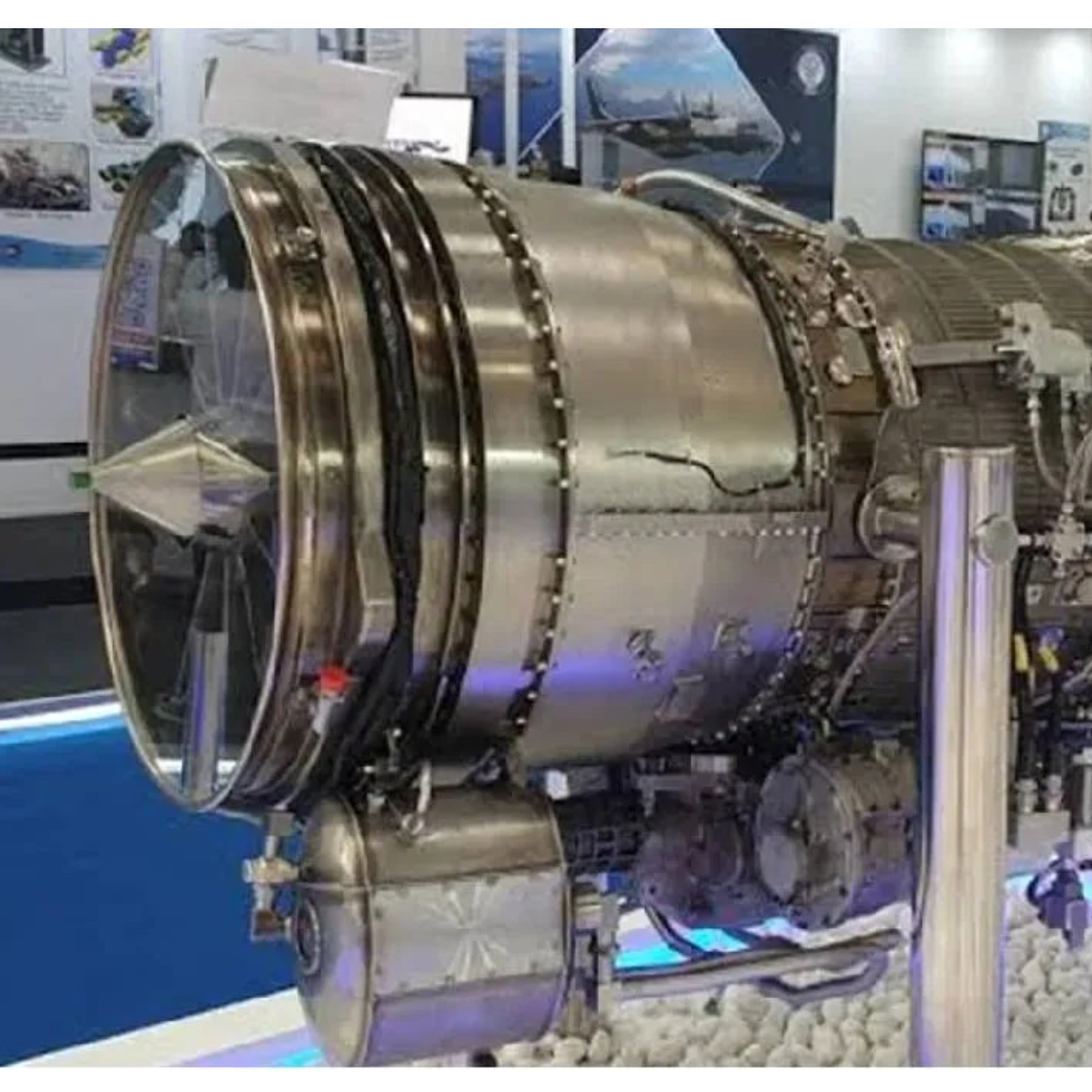
India appears to have learnt from the underfunding of its indigenous military gas turbine engine programme, with the funding estimates publicly discussed for its plan to codevelop a more contemporary engine aligning more closely with global benchmarks for such power plants.


The Kaveri engine project, sanctioned by the government in 1989, was intended to make India self-sufficient in this critical technology, with the power plant envisioned to power the country’s indigenous combat aircraft, the Tejas.
The Gas Turbine Research Establishment (GTRE), a laboratory under the Defence Research and Development Organisation (DRDO), was tasked with developing the engine. While a working engine and several milestones — including nine complete prototype power plants and multiple flight tests — were achieved, it ultimately failed to deliver the thrust required for the Tejas to meet its intended performance parameters.
A derivative of the Kaveri engine is now being taken forward to power the country’s planned unmanned combat aerial vehicle, with no prospect in sight of it powering the Tejas or its planned variants.
The technical challenges — from metallurgy to design — were formidable, but an analysis of the funding allocated to the project suggests that limited resources may have been another bottleneck that affected the programme’s eventual fate.
A sum of ₹2,105 crore had been allocated by the government for the programme over the years as of November 2021. This amounts to about $0.23 billion — barely one-seventh of the roughly $1.71 billion in today’s dollars that was allocated for the development of the American GE Aerospace F404 engine in the 1970s. A variant of that same engine now powers the Tejas and its more advanced version, the Mark-1A (Mk1A).
Delays in GE’s delivery of these engines have, in fact, played a significant role in delaying the Mk1A programme. This experience, the renewed push to develop an indigenous stealth fighter — the advanced medium combat aircraft (AMCA) — and the broader global shift towards defence self-reliance have brought the development of a contemporary military aero engine back into focus.
This time, however, there appears to be greater recognition of the scale of resources required. Developing a high-thrust indigenous jet engine capable of powering a fifth-generation stealth fighter would require an investment of up to ₹50,000 crore ($5.49 billion), Department of Defence Research and Development (DDR&D) Secretary and DRDO Chairman Samir V Kamat said in January 2025. This is broadly comparable to the roughly $7.3 billion estimated development cost of the Pratt & Whitney F135 engine that powers the American F-35 stealth strike fighter. The American programme itself had originally been pegged at about $4.87 billion before development delays and cost overruns drove up the final bill.
Although the amount estimated by Kamat would be spread over multiple years and include the creation of critical testing infrastructure, it nevertheless underscores the inadequacy of current defence research and development (R&D) spending. Yet this apparent recognition of the scale of investment required has not so far been matched by a substantial increase in resource allocation.
At just 4.98 per cent, the share of the DDR&D in the defence budget — excluding allocations for the Ministry of Defence (civil) and pensions — fell to a 10-year low this year. R&D spending needs to rise to between 10 and 15 per cent of the defence budget, according to experts.
The planned fifth-generation engine, expected to be codeveloped with France for a future AMCA variant, remains years away. In the meantime, dependence on foreign engines is likely to persist. Beyond the Tejas Mk1A, all of India’s ongoing combat aircraft programmes — including the Tejas Mark-2 and the first variant of the AMCA — are planned around American power plants.
Two other data points — India could potentially spend ₹65,400 crore in purchasing approximately 1,100 engines up to 2035, and that nearly a third of the defence services capital outlay is allocated for aircraft and engines — also underline the urgency of mastering this technology.
Kaveri funding barely one-seventh
Projected engine purchases could exceed 60% of Tejas fleet cost
Source link
#Lessons #Kaveri #Indias #aeroengine #ambitions





