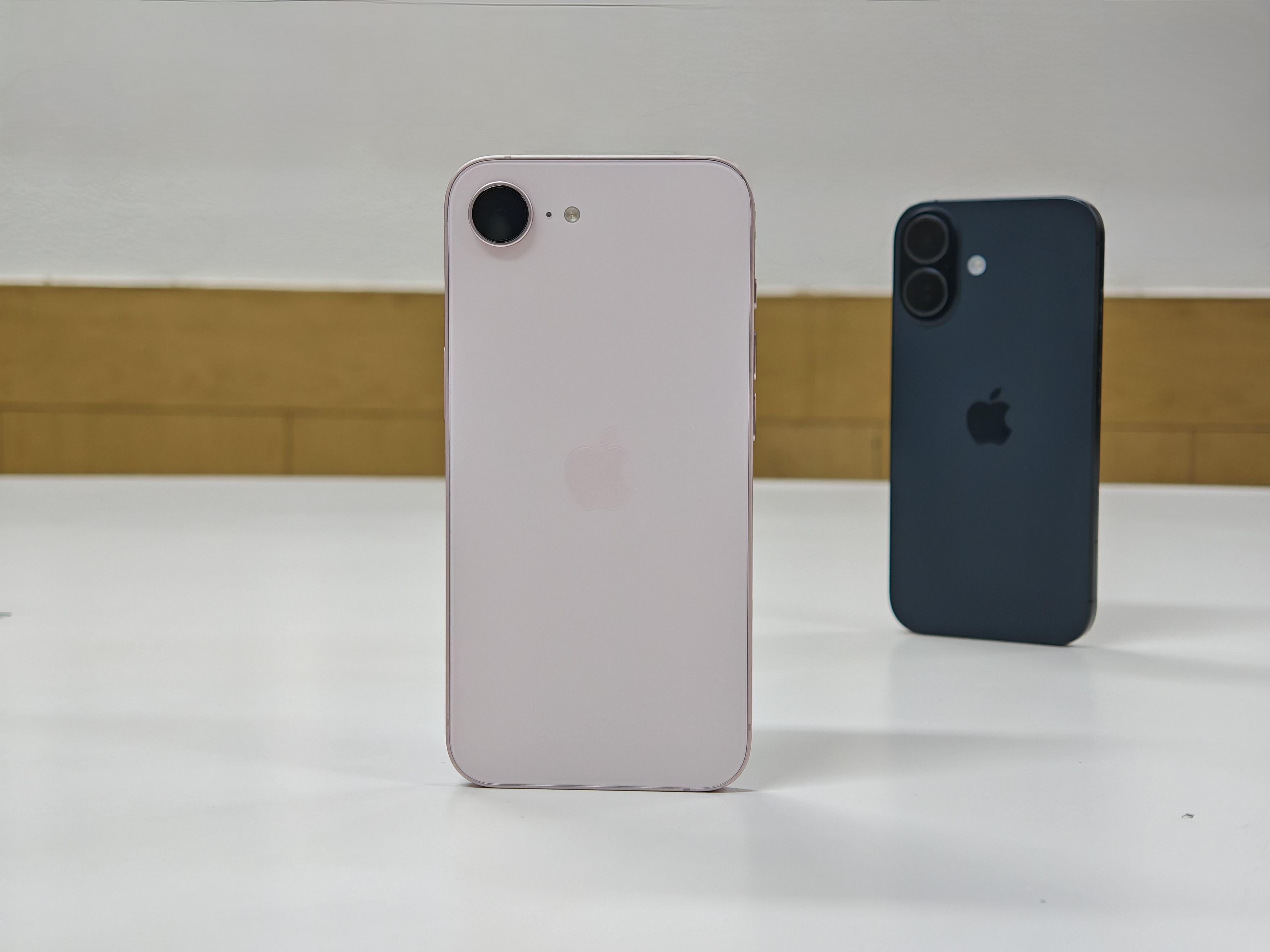
Apple’s iPhone “e” model, which debuted last year as part of the iPhone 16 family, felt like that one friend who insists they are low maintenance but still expects things done a certain way. With the iPhone 16e, that meant living with a very specific set of compromises — a dated display, a single camera, and no MagSafe support. It worked, but it always felt like Apple was holding something back.
Now comes the iPhone 17e, and it feels like Apple is loosening that grip a little.


This is still not a “full” iPhone experience in the way the iPhone 17 is. But it is no longer trying as hard to remind you of that either.
What has been upgraded
The biggest upgrade is performance. With the move to the A19 chip, app launches are quick, animations stay fluid, and even heavier tasks do not push the phone into thermal discomfort. While performance was not much of an issue on the iPhone 16e either, aligning the entry-level iPhone with the same chip cycle as the higher-priced models allows it to remain eligible for the latest features and updates for longer.
It should be noted that the A19 chip on the iPhone 17e has one less GPU core than the version on the iPhone 17; however, the difference in real life is hard to notice.
Then there is storage. Apple doubling the base storage to 256GB sounds like a small specification bump, but it removes one of the more frustrating compromises from before. You no longer feel like you need to upgrade just to make the phone usable long-term.
MagSafe is another addition that quietly improves the experience. It is not just about charging — though faster wireless charging does help — it is about how the phone fits into Apple’s ecosystem. Accessories snap on properly, alignment is consistent, and features like StandBy are more usable.
How is the experience
In typical Apple fashion, the strength of the iPhone 17e is not any single feature. It is how everything comes together.
Performance is smooth and predictable. This is not a phone that surprises you with bursts of speed; it simply does not get in your way. Apps open reliably, multitasking holds up, and even gaming is more stable than you might expect from something positioned as an “entry” iPhone.
The camera follows a similar philosophy. You still get a single 48MP sensor, and that limitation is obvious if you are coming from a base iPhone model like the iPhone 15 or iPhone 16. There is no ultra-wide flexibility, and you are mostly working with 1x and 2x crops.
But within those limits, the camera performs well. Photos are sharp, colours are consistent, and results are predictable in the same way that makes iPhones easy to rely on. Portrait processing has improved, edge detection is cleaner, and the ability to adjust focus after the shot adds some flexibility.
Battery life is another quiet strength. Much like the 16e, the 17e comfortably lasts through a full day, often stretching beyond that with lighter use. The addition of MagSafe and slightly better efficiency make the overall charging and usage cycle feel more complete.
Running iOS 26, the experience is smooth, stable, and familiar. Apple Intelligence features are present and work reliably, even if they still feel less ambitious compared to what Android is doing right now. But they integrate cleanly, and more importantly, they do not get in your way.
What it misses compared to the iPhone 17
For all the improvements, the iPhone 17e still carries some very deliberate limitations.
The display is the most obvious one. At 60Hz, it immediately feels dated next to the iPhone 17. Once you have used a higher refresh rate screen, going back is noticeable — scrolling feels less fluid, animations feel slightly slower, and the lack of an always-on display adds to that sense of compromise.
The design also reminds you where this sits in the lineup. There is no Dynamic Island, just the older notch. Bezels are thicker. And while the build quality is excellent, it lacks the more modern front-facing design of the iPhone 17.
Then there is the camera system.
The single-lens setup works well, but it is limiting. No ultra-wide means fewer creative options, and no advanced video features like Cinematic mode make it less appealing if you care about shooting more than just casual clips.
Even smaller things add up — no Camera Control button, no Center Stage for the front camera, and slightly weaker GPU performance compared to the iPhone 17.
None of these are deal-breakers individually. But together, they make it clear that this is still a carefully positioned device.
Should you consider it?
-
Price: Rs 64,900 (256GB storage)
The iPhone 17e feels like the most complete version of Apple’s “essentials” iPhone so far. If you are upgrading from an older iPhone, especially something like an iPhone 11 or 12, this will feel like a significant step forward. It is faster, more reliable, and far easier to live with day to day.
But the comparison that matters most is with the iPhone 17.
Because once you look at the two side by side, the trade-offs become clearer. The iPhone 17 offers a better display, a more flexible camera system, and a more modern overall experience. And for many users, those differences will justify the extra price.
The iPhone 17e, then, is for a very specific kind of user — someone who wants a simple, reliable iPhone that covers the basics well, feels premium enough, and lasts long without trying to do too much.
Source link
#switched #iPhone #17e #months #iPhone #Heres #learned