The Reserve Bank of India (RBI) and the central government unveiled a package of measures on Friday aimed at attracting foreign capital amid the West Asia crisis, with economists estimating the steps could generate up to $50 billion in inflows — potentially enough to cover much of the country’s projected balance of payments (BoP) gap in 2026-27 (FY27).
The government has exempted foreign portfolio investors (FPIs) from income tax on interest income and capital gains from government securities (G-secs), with retrospective effect from April 1 this year, in a bid to deepen the sovereign bond market and draw in overseas capital. Foreign institutional investors (FIIs), including foreign portfolio investors (FPIs) registered with the Securities and Exchange Board of India (Sebi), were previously taxed at 20 per cent on securities income, with short-term capital gains taxed at 30 per cent and long-term gains at 12.5 per cent under the Income-tax Act, 2025.


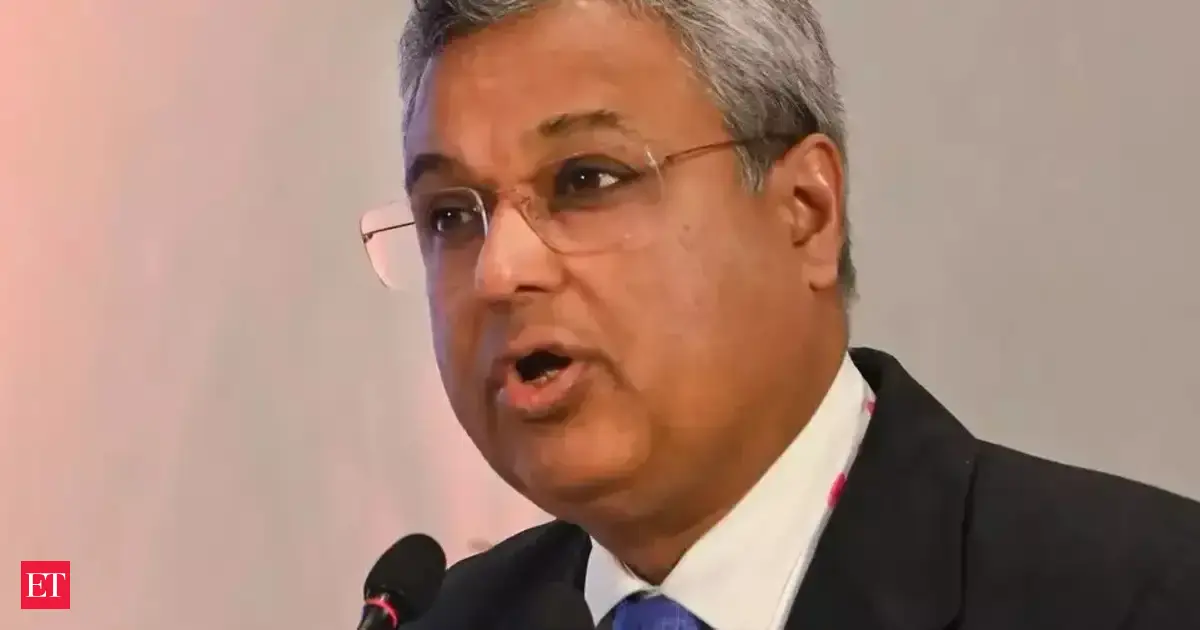
The RBI, meanwhile, announced a concessional foreign-exchange swap facility to encourage external commercial borrowing (ECB) issuance by public sector undertakings (PSUs), alongside a scheme designed to attract three- to five-year foreign currency retail term deposits through banks. “While these measures are expected to strengthen our balance of payments, we will continue to make the right policy adjustments to further promote exports and attract and incentivise capital inflows,” said RBI Governor Sanjay Malhotra.
The central bank also broadened the universe of fully accessible route (FAR) securities to include all new issuances of 15-year, 30-year and 40-year government bonds. In addition, it scrapped limits on short-term investment, concentration and individual security exposure for FPI investments under the general route. “These measures, along with the tax benefits provided by the government this morning, should help attract foreign capital for government borrowing,” said Malhotra.
The push to attract overseas capital comes against a backdrop of pressure on the rupee, particularly since the start of the West Asia conflict in late February. India’s external position has deteriorated as global crude prices surged following the blockade of the Strait of Hormuz, a critical shipping corridor for energy supplies.
Sakshi Gupta, principal economist at HDFC Bank, said the combined effect of the measures could bridge the $40 billion-$50 billion BoP gap projected for FY27, based on assumptions of a current account deficit of 2.1 per cent of GDP and average crude oil prices of $90 a barrel.
“While the exact quantum of capital inflows from each individual measure is difficult to quantify at this stage, the combined impact could certainly help bridge the $40 billion-$50 billion gap on the balance of payments that we had estimated for FY27,” Gupta said.
According to Indranil Pan, chief economist at YES Bank, “$35 billion-$45 billion appears a reasonable estimate, almost enough to close the anticipated BoP gap for FY27.”
When similar measures were introduced more than a decade ago, cumulative ECB inflows reached $12 billion, while foreign currency non-resident (bank), or FCNR(B), deposits totalled $26.6 billion in 2013-14.
Economists said the latest package could prove even more effective if global conditions improve, particularly if tensions in West Asia ease. They noted that the current framework differs from the 2013 scheme by seeking to attract foreign capital through multiple channels rather than relying primarily on FCNR(B) deposits. Although interest-rate differentials are narrower than they were in 2013, the RBI has offered stronger incentives by agreeing to absorb the full hedging cost for banks raising FCNR(B) deposits and by granting exemptions from cash reserve ratio (CRR) and statutory liquidity ratio (SLR) requirements.
Analysts also argued that the measures reduce the likelihood of domestic interest-rate policy being constrained by global monetary conditions, giving the RBI greater room to calibrate rates according to domestic economic needs.
“By announcing these capital inflow measures, it has reduced the risk that domestic interest-rate decisions would have to move in tandem with global policy,” said Gaura Sen Gupta, chief economist at IDFC First Bank, who also estimates inflows of $40 billion-$50 billion because of the latest measures. “This gives the central bank greater flexibility to set rates based on domestic conditions. It reduces the risk of large rate hikes because, on the currency front, they have done what was required.”
Source link
#RBI #govt #charm #offensive #draw #billion #global #flows