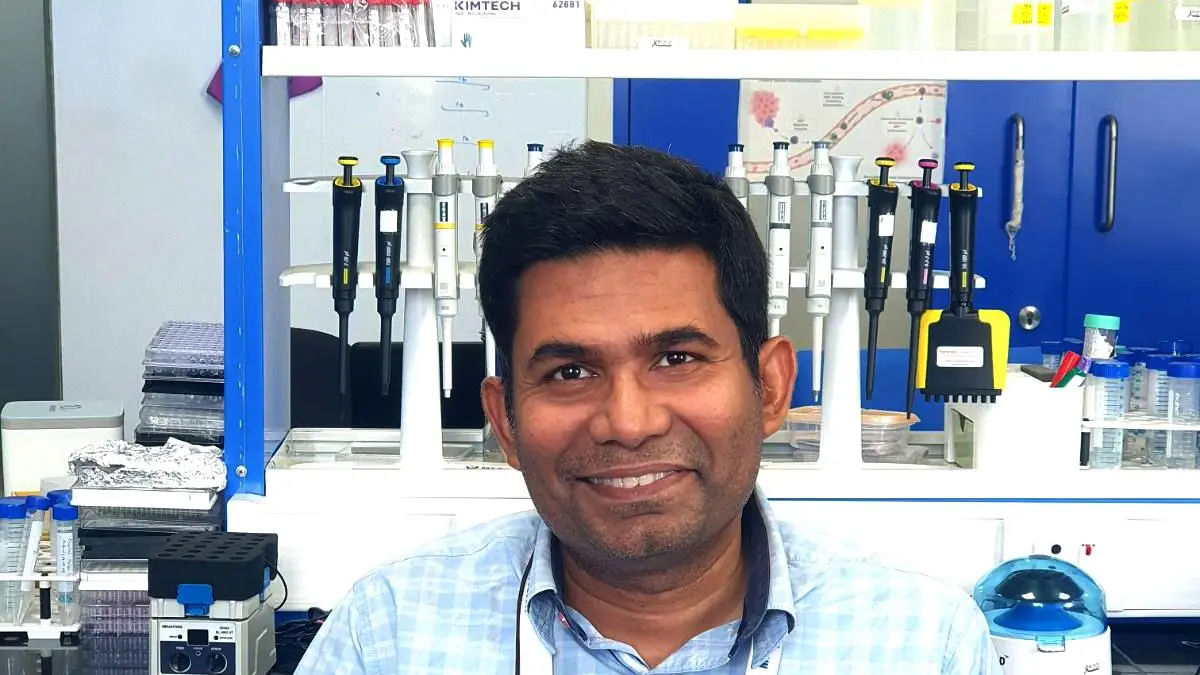
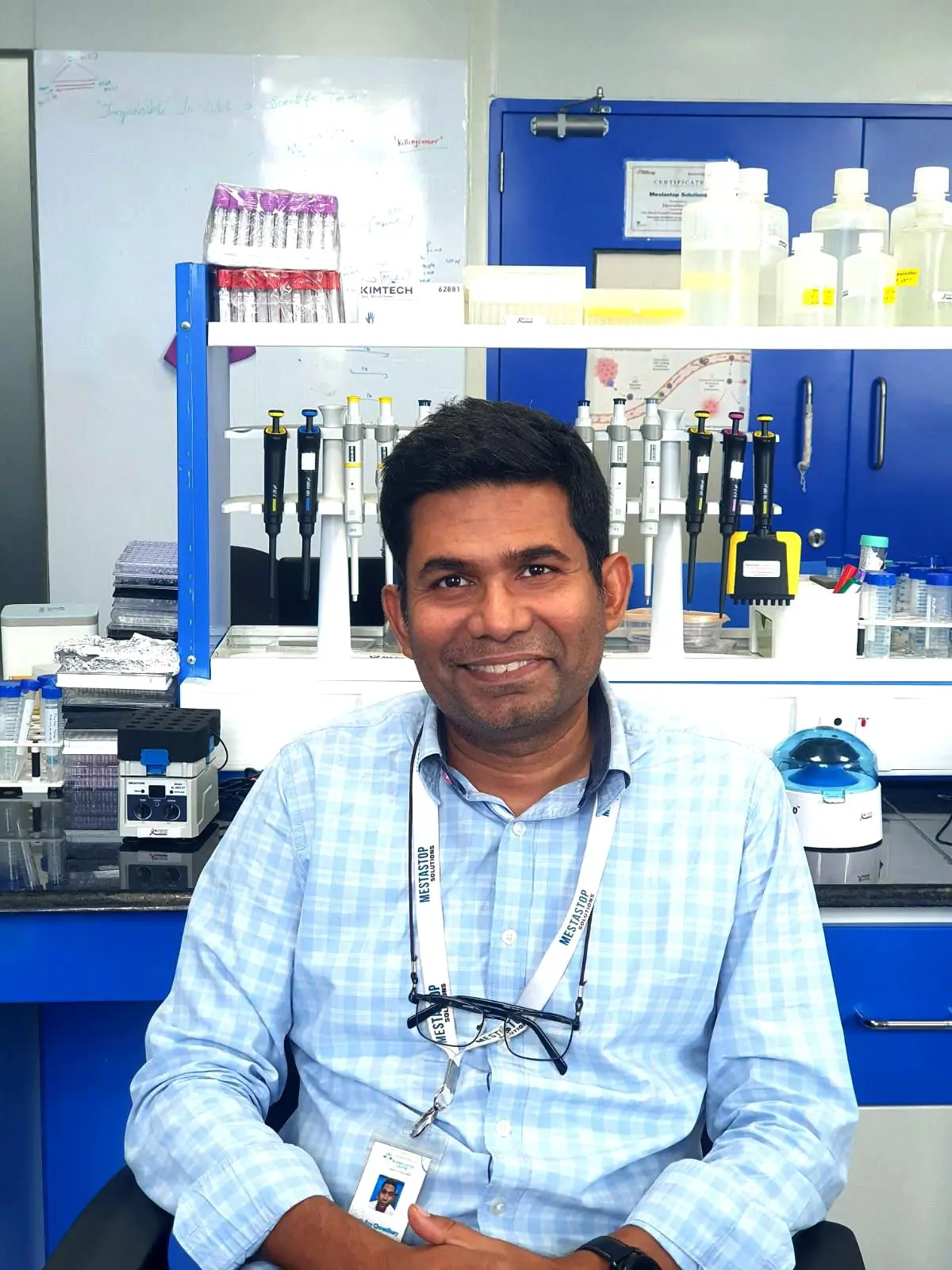
PREVENTIVE TECH. Arnab Roy Chowdhury, founder of Mestastop
Bengaluru-based biotech startup Mestastop is preparing to launch a phase II clinical trial aimed at delaying metastasis in colorectal cancer — widely viewed as the biggest gap in oncology care.



While most cancer treatments today focus on shrinking primary tumours, nearly 90 per cent of cancer deaths occur due to metastasis — the spread of cancer cells to new organs. Mestastop founder Arnab Roy Chowdhury says this disconnect in cancer therapeutics drove him to launch the company to build tools that directly target the biology of metastasis.
He points out that conventional oncology has been shaped by the belief that metastasis risk rises with tumour burden, leading to decades of focus on killing fast-growing tumour cells. But the treatments designed to either eliminate tumours or block the movement of cells from the primary site have not halted metastasis.
Preventive platform
Mestastop’s research came up with a different insight: Only a specific subset of cancer cells can metastasise, and their success is determined not by their ability to escape from the primary tumour but by their ability to adapt and survive in a secondary organ. “Our therapies are focused on preventing this adaptation and stopping the formation of metastatic colonies,” he says.
To do this, Mestastop has developed three integrated platforms: METAssay recreates the entire metastasis process on a lab bench, breaking it into 30 steps that reveal the differences in the behaviour of cancer cells and metastasis-prone cells; METSCAN analyses primary tumour cells across these steps and correlates them with long-term clinical outcomes in patients, using machine learning to identify the key events that drive metastatic success — data that can guide both drug discovery and patient stratification; and METVivo, which speeds up preclinical validation by compressing what traditionally takes four to six months into a six-week, high-throughput animal model.
Trial stage
The company is moving to clinical trials with two repurposed drugs, originally approved for non-oncology indications, which its platforms flagged as strong anti-metastatic candidates. Retrospective analysis showed that cancer patients who took one of these medicines experienced statistically significant improvements in survival and delayed metastasis. With regulatory requirements completed, Mestastop plans to enrol at least 60 post-surgery colorectal cancer patients into a two-year treatment regimen, with results expected in about three years.
Mestastop’s business model centres on licensing its platforms and assets to pharma and biotech partners, earning upfront payments, milestones and royalties. But building a metastasis-focused biotech in India has required patience. “A comparable company globally could raise $50 million — we’ve raised $2 million in seven years,” Chowdhury says. Even so, he believes the science will ultimately speak for itself.
More Like This
Published on April 12, 2026
Source link
#Biotech #firm #takes #battle #metastasis