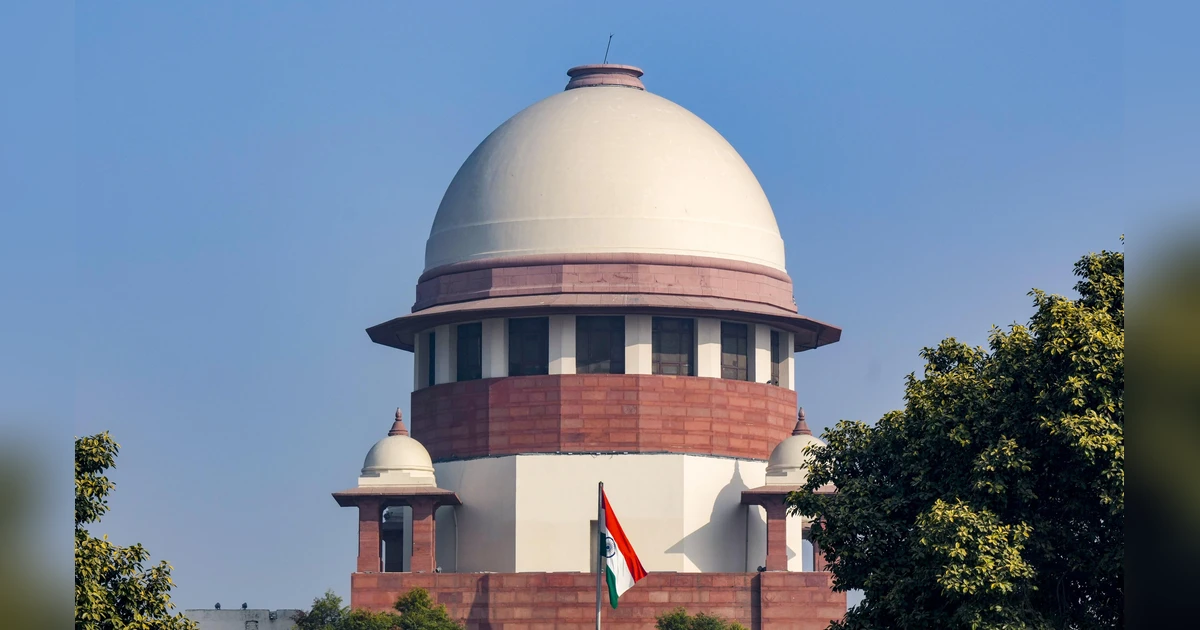
The Supreme Court on Monday declined to set aside the approval of a ₹1,950-crore settlement scheme designed to compensate traders affected by the 2013 payment crisis at the National Spot Exchange Limited (NSEL).


A Bench of Justices PS Narasimha and Alok Aradhe dismissed an appeal challenging the decisions of the National Company Law Tribunal (NCLT), Mumbai, and the National Company Law Appellate Tribunal (NCLAT), both of which had upheld the settlement arrangement proposed by NSEL.
The appeal was filed by creditor LJ Tanna Enterprises Private Limited, which holds around 0.26% of the voting share among creditors.
Senior Advocate Dama Seshadri Naidu, appearing for the creditor, argued that although the company accepted that it would be bound by the scheme sanctioned under Section 230 of the Companies Act, such approval should not prevent it from pursuing remedies under other laws, including the Maharashtra Protection of Interest of Depositors (MPID) Act and the Prevention of Money Laundering Act (PMLA).
He submitted that assets worth more than ₹2,200 crore had already been attached under these statutes and that the proceedings under those laws were initiated earlier and operated independently of the company law process.
Naidu sought liberty for the creditor to continue pursuing those remedies without affecting the implementation of the settlement plan approved by a large majority of creditors.
The controversy stems from the 2013 collapse of NSEL, which led to payment defaults of nearly ₹5,600 crore and impacted around 13,000 investors. To resolve claims arising from the crisis, the exchange proposed a settlement under Section 230 of the Companies Act, under which, approximately 42.34% of admitted claims would be repaid through recovery and deployment of attached assets.
NCLT’s Mumbai bench had approved the arrangement on November 28, 2025, recording that it had secured overwhelming creditor backing, with more than 90% of creditors by number and about 91.35% by value voting in favour of the proposal.
LJ Tanna Enterprises subsequently challenged the decision before the NCLAT, contending that the scheme effectively diluted statutory attachments made under the MPID Act and compelled dissenting creditors to relinquish remaining claims, while withdrawing pending proceedings.
The appellate tribunal rejected the challenge on January 15, 2026, noting that the appellant’s voting share was only 0.26%, and therefore, fell short of the statutory threshold required to question the scheme. It also observed that once a settlement plan receives approval from the requisite majority of creditors, it becomes binding on all stakeholders, including those who opposed it.
Upholding these findings, the Supreme Court declined to intervene and dismissed the appeal.
Senior advocate Abhishek Manu Singhvi represented National Spot Exchange Limited.
Source link
#declines #interfere #1950crore #NSEL #settlement #scheme