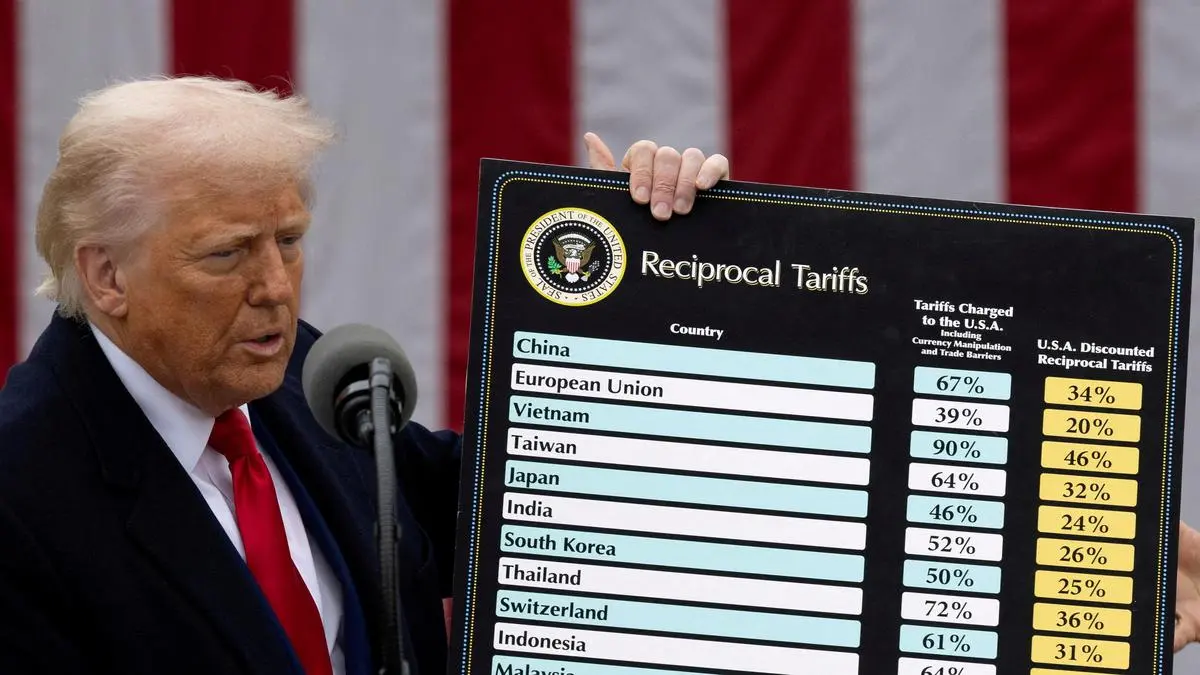
US President Donald Trump has announced sweeping new tariffs, including a 100% duty on certain branded pharmaceutical imports, as part of a broader overhaul of trade policy. The move aims to push foreign drugmakers to lower prices and shift production to the US. (A file photo)
| Photo Credit:
Carlos Barria
U.S. President Donald
Trump ordered 100% tariffs on certain branded pharmaceutical
imports and overhauled steel, aluminum and copper duties on
Thursday as his administration sought to move on from the
collapse of the broad global tariffs he announced exactly one
year ago.


The new tranche of tariffs is aimed partly at rebuilding
duties lost when the Supreme Court struck them down in February.
But they drew criticism from some business groups for adding
potential new cost pressures at a time when the war on Iran has
spiked energy prices for consumers.
In a new proclamation revealing the results of a
long-awaited national security investigation into pharmaceutical
imports, Trump said foreign manufacturers of patented products
must agree to make deals with the U.S. government to cut
prescription-drug prices and commit to moving production to the
United States.
They must do both to avoid tariffs altogether and will face
a 20% tariff if they simply move some manufacturing to the U.S.,
according to an administration official. Those who do neither
would face a 100% duty.
The tariffs will not apply to drug imports from all
countries. Branded drug tariffs will be capped at 15% under
trade deals with the European Union, Japan, South Korea and
Switzerland.
The U.S. and Britain also finalized a separate
pharmaceuticals tariff deal that guarantees zero tariffs on
British-made pharmaceuticals for at least three years as Britain
builds out production in the United States.
An administration official said large pharmaceutical
companies would have 120 days to comply before the 100% tariff
rates kicked in, and smaller producers would have 180 days.
METALS RATE REDUCED
Trump also issued a separate metals tariff proclamation that
halved the duty rate to 25% on many derivative products made
with steel, aluminum and copper, and dropped them altogether on
products with minimal metals content.
The move kept in place the 50% duty on commodity imports of
steel, aluminum and copper. But according to the official, the
Trump administration will now apply this rate to the U.S. sales
price of the metals – not the declared import value, which the
official said had often been kept artificially low.
The metals changes are aimed at simplifying an overly
complicated tariff regime that gave importers headaches in
trying to determine the value of the metal content of thousands
of derivative products, from tractor parts to stainless steel
sinks and railroad equipment.
Products with minimal metals content of less than 15% by
weight, such as a dental floss container with a tiny steel
cutter blade, will no longer be subject to these tariffs. The
White House also said it will cut duties on certain
metal-intensive industrial and power-grid equipment to 15% from
50% through 2027 to aid a broad industrial and data-center
build-out.
The change in the metals tariffs would be effective just
after midnight on Monday, the order said.
PIVOT FROM ‘LIBERATION DAY’
The changes came on the one-year anniversary of Trump’s
“Liberation Day” announcements of “reciprocal tariffs” ranging
from 10% to 50% on imports from all trading partners and even
some uninhabited islands. The tariffs under the International
Emergency Economic Powers Act kicked off months of retaliation
from China, trade negotiations with other countries and court
challenges from importers.
The U.S. Supreme Court in February declared the IEEPA-based
tariffs illegal, prompting a lower court order for the U.S.
Customs and Border Protection agency to devise a plan to refund
some $166 billion in tariffs collected over a year.
Jamieson Greer, the U.S. trade representative, on Thursday
defended the IEEPA tariffs as a “reset button” for a broken
global trading system and credited the tariffs with driving
companies to build new factories in the U.S. and forcing trading
partners to grant concessions for U.S. exports.
“The best is yet to come as President Trump’s tariff program
incentivizes domestic production, raises workers’ wages, and
reinforces our critical supply chains,” Greer said in a
statement.
INDUSTRY REACTION
The U.S. Chamber of Commerce said that a full year of
Trump’s higher tariffs has already raised prices and added cost
pressures for many industries, and warned that the latest
announcements could spur further price increases.
“A new, complex tariff scheme on pharmaceuticals will raise
healthcare costs for American families,” the Chamber’s policy
chief Neil Bradley said in a statement.
“Changes to metals tariffs will likewise raise prices for
consumers and add pressure to manufacturing, construction, and
energy — industries that are already reeling from higher input
costs and ongoing supply-chain challenges,” Bradley added.
But Steel Manufacturers Association president Philip Bell
praised the administration for “right-sizing” the metals
derivatives list and updating its valuation methodology to
ensure that tariffs “remain precisely targeted to support the
revitalization of the American steel industry without
undermining broader economic goals.”
Published on April 3, 2026
Source link
#Trump #imposes #tariffs #pharmaceuticals #revamps #metals #duties