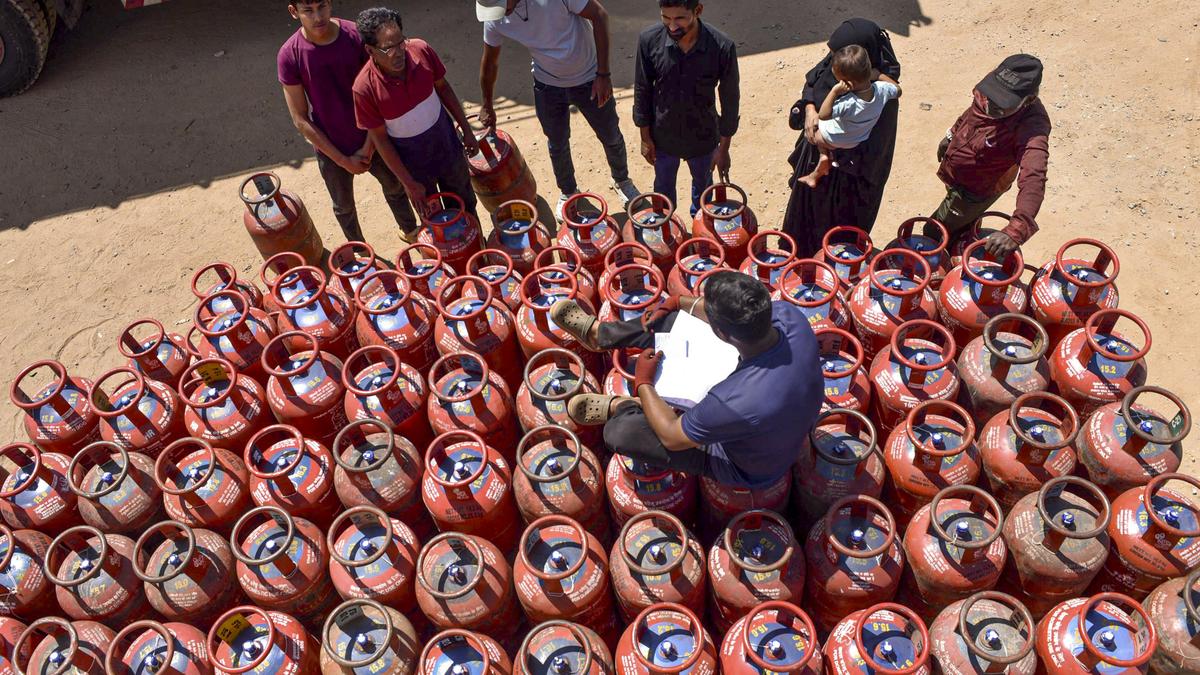
LPG: Crippling import dependence
| Photo Credit:
–
As the crisis in the Middle East deepens and regional instability threatens critical energy corridors such as the Strait of Hormuz, global oil markets are entering a period of prolonged volatility. For India, the vulnerability isn’t just at the petrol pump — it is in the “Blue Flame” of our kitchens.



While India has made massive strides in solar energy, the nation remains critically tethered to imported LPG. To survive this new era of oil shocks, India must stop treating its organic waste as a municipal burden and start harvesting it as a strategic fuel reserve.
The strategy: From municipal silos to modular units
The era of massive, centralized waste-to-energy plants is being superseded by Modular Urban Biogas (MUB). Today’s systems are plug-and-play, IoT-enabled, and compact enough to fit in a parking lot. To bypass the historical failure of “last-mile segregation,” India must adopt a Staircase Strategy.
Phase 1: The Bulk Engine
We must begin with Bulk Waste Generators (BWGs) — cloud kitchens, hotel clusters, and corporate canteens. These hubs produce consistent, high-calorie organic “fuel” that can be processed at the source. Under the ₹1 Lakh Crore Urban Challenge Fund (UCF), we can de-risk an “Energy-as-a-Service” model where startups/SMEs can install modular units at zero upfront cost, providing businesses with fuel at rates lower than the fluctuating market price of commercial LPG.
Phase 2: The household loop
Once the bulk infrastructure is stabilized, the model can scale to Household Organic Waste. The city of Indore has already provided the global textbook for this transition. By achieving 95%+ purity in source segregation through digital governance and GPS-tracked collection, Indore proves that household waste can be converted into Bio-CNG for public transport. Our urban pilots should adopt these ‘Indore Standards’ — using property tax incentives and smart-bin technology — to turn entire residential sectors into self-sustaining energy loops.
The pilot: High-synergy corridors
This transition should begin in Vertically Aligned jurisdictions — regions like Uttar Pradesh and Gujarat where administrative goals are synchronized.
• Varanasi: As a spiritual epicentre, its hospitality sector can power pilgrim focused infrastructure using on-site digesters.
• NOIDA: With its dense concentration of corporate canteens and tech parks, NOIDA is the ideal laboratory for Phase 1 commercial scalability before transitioning to Phase 2 residential loops.
Conclusion: Energy sovereignty via urban dignity
The transition to modular biogas is no longer just an environmental goal; it is a national security imperative. From the ancient ghats of Varanasi to the modern sectors of NOIDA, turning waste into energy ensures that India’s kitchens keep burning even when global oil taps tighten. 2047 is the deadline for energy independence; the “Blue Flame” in our own backyards is the fuel that will get us there.
The writer is Director of Venture Building, NTUitive (NTU Innovation and Entrepreneurship, Singapore
Published on March 15, 2026
Source link
#Turning #Indias #kitchens #energy #wells