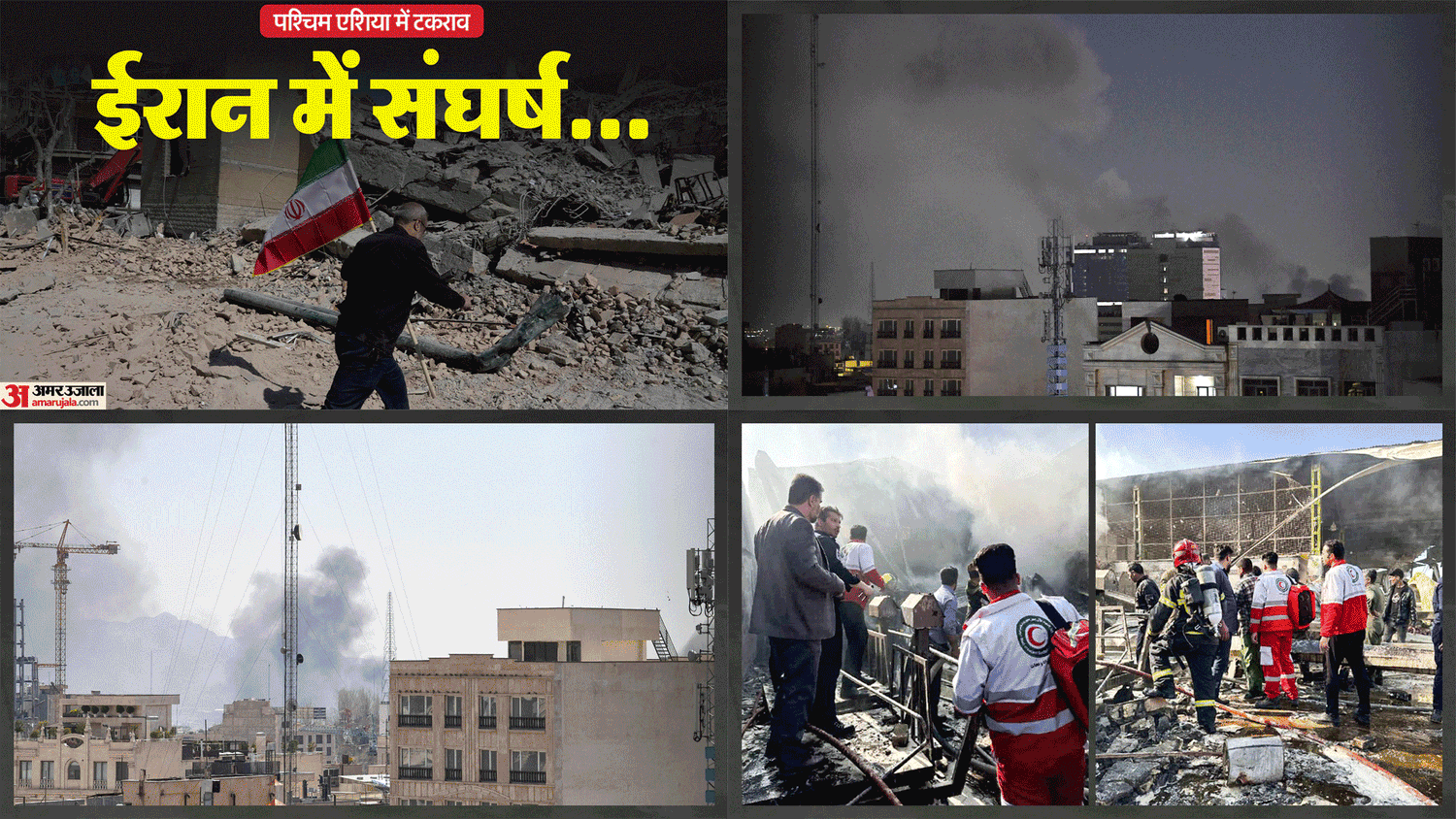
A report released by the WTO last Thursday says that world trade is set to slow in 2026 after stronger-than-expected growth in 2025, driven by a surge in AI-related trade and investment. The report warns that the West Asia conflict could further reduce trade growth if energy prices remain elevated, noting that it would also put pressure on food supplies and services trade due to travel and transport disruptions.


The WTO Secretariat has released briefing notes on main issues, such as agriculture, development, ecommerce, fisheries subsidies, intellectual property, investment facilitation for development and reform of the WTO and its dispute settlement mechanism. The notes underscore deep divisions among members. With consensus required for decision-making, any member can effectively veto outcomes. The main worry is that the current US administration’s ‘America First’ approach and its increasing resort to unilateral tariffs continue to strain the multilateral trading system. Geopolitics drives its trade policy.
The 13th Ministerial Conference (MC13) in Abu Dhabi in 2024 delivered continuity rather than breakthroughs. The WTO members extended the moratorium on customs duties on electronic transmissions and adopted some development-oriented decisions. The status of the key MC13 issues underscores the difficulty of securing outcomes. The dispute settlement system remains dysfunctional, with no agreement yet on restoring a binding appellate mechanism. Negotiations on fisheries subsidies have made limited progress towards bringing the first phase into force, but the more contentious disciplines on overcapacity and overfishing continue to divide members. On agriculture, positions remain deeply entrenched, particularly on public stockholding for food security—a matter of critical importance for India—and on the broader framework of domestic support. All such unfinished issues now shift to MC14, when the WTO is no longer operating in a relatively stable global economy but in one marked by geopolitical rivalry, economic nationalism, and supply chain realignments.
The immediate flashpoint at MC14 is likely to be the future of the ecommerce moratorium, which is due to expire at this meeting. Developed countries support its extension, citing the need for a predictable digital trade environment. India and South Africa argue that it constrains tariff policy space and leads to revenue losses as digital trade expands. Many countries, including India, say that investment facilitation is a non-trade issue and therefore, outside the purview of WTO. With little getting done at the WTO, more countries are turning towards bilateral/regional free/preferential trade agreements and plurilateral initiatives—agreements among subsets of members—such as those on services domestic regulation and investment facilitation. While these enable progress where full agreement is elusive, they also raise concerns about inclusiveness and erosion of multilateralism. Most countries are therefore calibrating their expectations accordingly.
In this fractured geopolitical and economic landscape, MC14 is unlikely to deliver grand bargains. At best, it may preserve a delicate consensus and prevent further erosion of the multilateral trading system—an outcome that, in today’s circumstances, may itself count as a success. Preserving multilateralism may now matter more than reforming it.
Email: tncrajagopalan@gmail.com
Source link
#WTO #MC14 #West #Asia #war #disruptions #unilateralism #temper #expectations