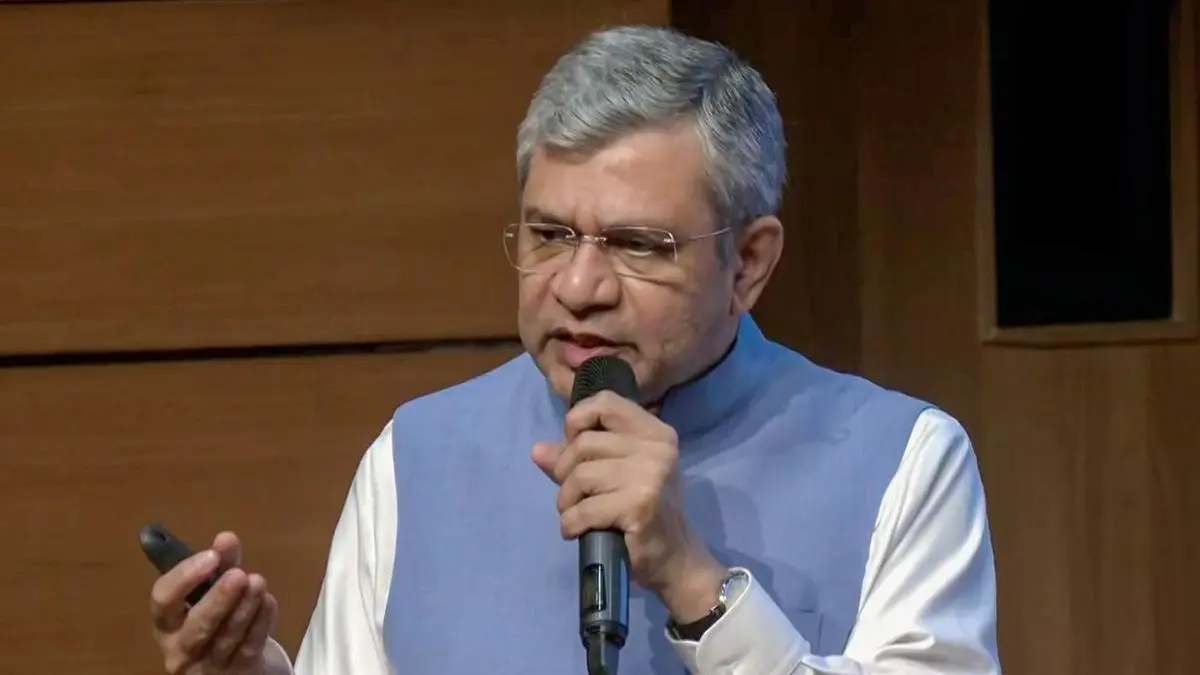
Ashwini Vaishnaw, Minister of Electronics and IT(file picture)
| Photo Credit:
ANI
The Ministry of Electronics and Information Technology has proposed a fresh set of amendments to the Information Technology (Intermediary Guidelines and Digital Media Ethics Code) Rules, 2021 (IT Rules, 2021), widening the government’s oversight over online content and expanding the scope of entities that could face regulatory action.


The Ministry has invited feedback/comments from stakeholders on the draft amendments, the most critical part of which is that they seek to bring user-generated news content by individuals who are not formally classified as publishers under the regulatory framework. This effectively expands the regulatory net to cover platforms hosting news-related content from influencers and independent creators, indirectly bringing such content within the oversight framework. MeitY has set April 14 as the last day of submission of any feedback.
Key change
The key change affecting individuals arises from amendments to Part III (Rule 8), which governs the applicability of Part III of the IT Rules, clarifies that oversight provisions extend to intermediaries hosting news and current affairs content posted by users who are not formally recognised as publishers. Earlier, Part III primarily applied to recognised digital news publishers and OTT platforms. The revised wording means that platforms hosting news-related posts by ordinary users, including commentary, analysis, or public affairs content, may now fall within the oversight framework. For individuals, this represents an indirect but significant shift, as their news-related posts could trigger regulatory scrutiny through platform-level compliance mechanisms.
According to the Internet Freedom Foundation (IFF), a non-profit internet advocacy organisation, these proposed amendments need to be ‘immediately withdrawn’ and every member in our citizenry should demand their roll back and stand with the Constitution of India”.
Other key features of the proposed amendments include amendments in Part II: clarification in Rule 3(1)(g) and 3(1)(h) that retention obligations are without prejudice to requirements under other laws; and insertion of Rule 3(4) mandating compliance by intermediaries with Ministry-issued clarifications, advisories, directions, SOPs, codes of practice and guidelines, forming part of due diligence under Section 79.
The IFF said Rule 3(4) creates a sweeping power for MeitY to issue binding instruments such as clarifications, advisories, directions, SOPs, codes of practice, and guidelines that intermediaries must comply with as a condition of safe harbour under Section 79 of the IT Act.
“Even though Rule 3(4)(b)(ii) states that such ‘advisories’ etc. need to ‘clearly specify the statutory provision or legal basis under which it is issued’, since these are not required to be published or made public there is every likelihood these will be issued with secrecy and hence may just in a tautological manner refer back to Section 79(3)(b) of the IT Act,” it added.
Meanwhile, Ashwini Vaishnaw, Minister of Electronics and IT, said that there are rising concerns over artificial intelligence (AI)-generated deepfakes, while also noting that social media platforms have scaled up efforts on deepfake takedowns. He termed deepfakes a new menace and a threat to society.
“A lot of content has started coming in the nature of deepfakes. Because of whatever changes have happened in the AI world, a huge quantity of deepfakes have started coming in the social media… the entire world, and the social media platforms themselves have significantly ramped up their efforts at removing the deepfakes,” Vaishnaw said.
Published on March 30, 2026
Source link
#Draft #Rules #widen #govt #oversight #usergenerated #news #content