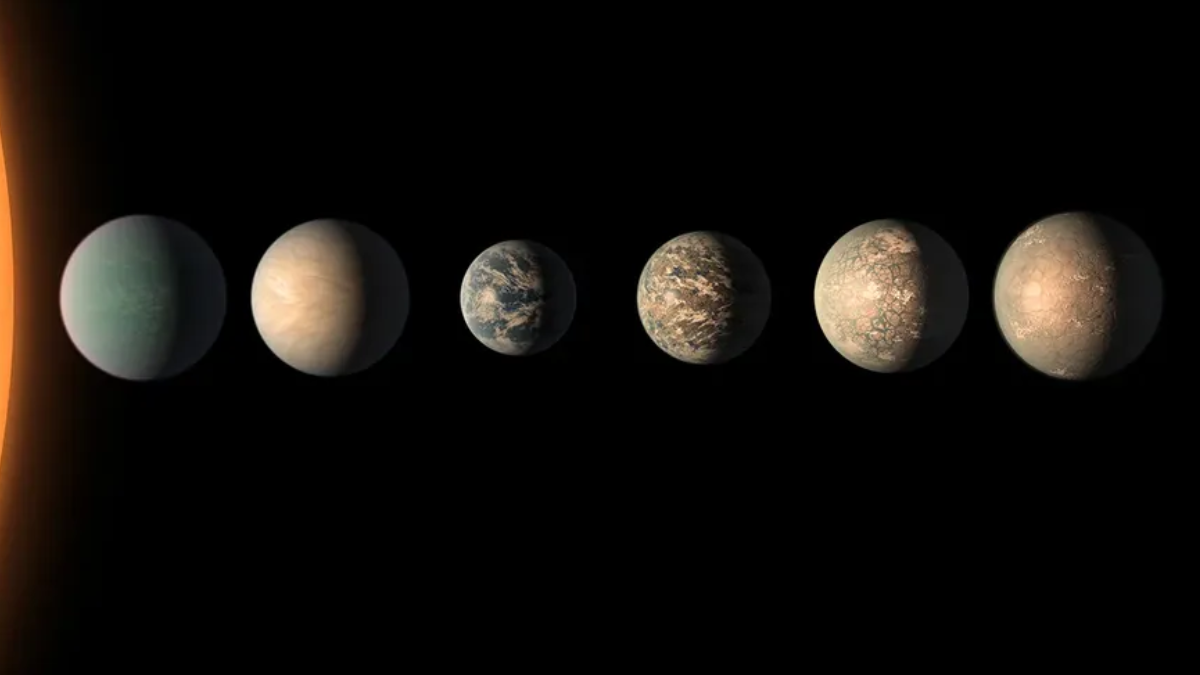
Scientists have long understood that thousands of planets exist beyond our solar system; however, knowing that a world exists is not the same as knowing whether it can sustain life. That has all changed thanks to a team of researchers led by Professor Lisa Kaltenegger of Cornell University’s Carl Sagan Institute. By poring through information regarding more than 6,000 planets that exist outside of our own solar system, researchers found 45 planets that are considered rocky and are located in their star’s habitable zone.
How Scientists Narrowed the Search
According to the study, the team used information from the now-defunct ESA Gaia space mission and NASA’s Exoplanet Archive to determine how much energy each planet receives from its star, a critical factor for liquid water to exist on its surface. While our planet is in the habitable zone, Venus and Mars are at the inner and outer limits, respectively. When these limits are applied to other star systems, the team got 45 candidates in the broad habitable zone, with 24 in a narrower range.



The Best Targets and What Comes Next
Among the notable ones are the TRAPPIST-1 planets that orbit a red dwarf star located 40 light-years away. Study co-author Gillis Lowry has focused on two Earth-like candidates: TRAPPIST-1 e and TOI-715 b, which is a super-Earth located in a conservative habitable zone. Another notable one is Proxima Centauri b and LHS 1140 b.
These candidates are being scanned using next-generation observatories such as James Webb, Extremely Large Telescope, and Habitable Worlds Observatory. While being located in the habitable zone does not necessarily mean that life exists there, it is where we have to begin.
Source link
#Scientists #Identify #EarthLike #Planets #Solar #System