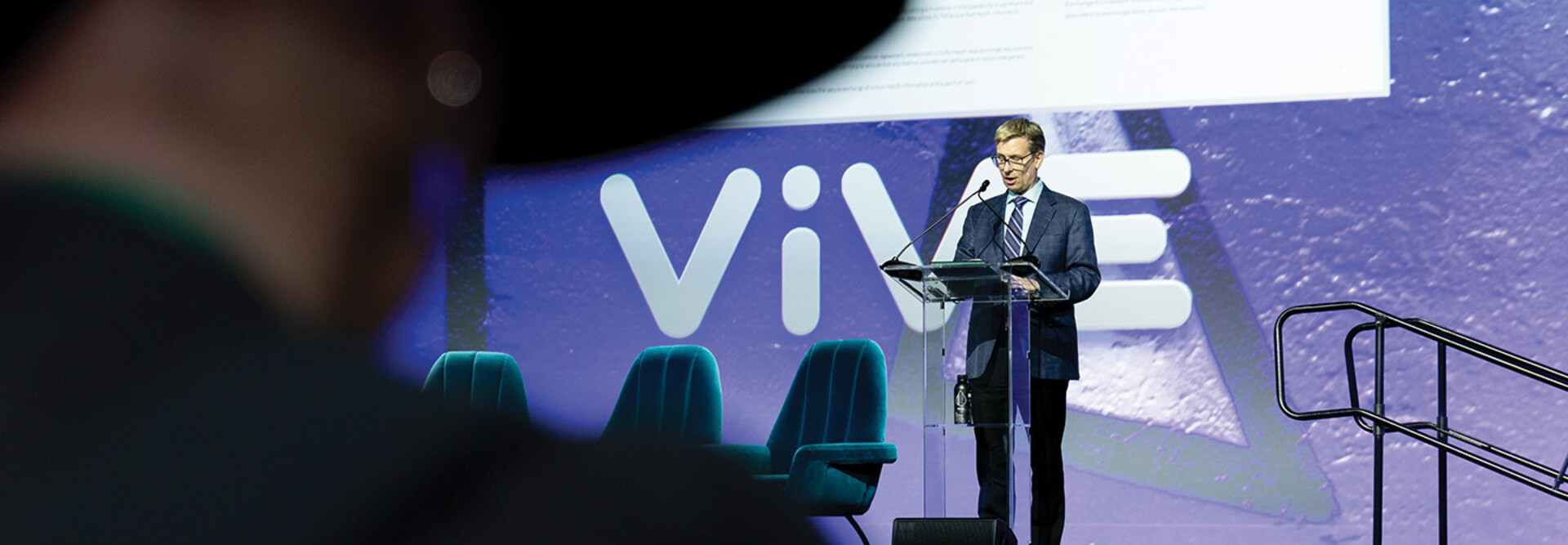
Dr. Halima Ahmadi-Montecalvo, vice president of research and evaluation at software company Unite Us, who did her postgraduate training in West Virginia, noted that while rural healthcare is often viewed through a lens of what it lacks, communities are much more capable than they’re given credit for. “I saw resilience; I saw these tight-knit, social networks; I saw leaders who were really deeply committed to their communities. So, the challenge is not capability; it really is about alignment,” she said.


She was hopeful that the program could better address social determinants of health and better connect providers to community-based support such as housing agencies and food banks so that all elements work together for an integrated care pathway.
Newman also touted opportunities for workforce development and connecting rural communities to specialty care.
“Do you guys think it’s easy to recruit a pediatric endocrinologist to a small town in North Dakota? I’m telling you, it’s not going to happen. What I can do is I can recruit one pediatric endocrinologist to live in either Fargo or Sioux Falls, or any place across the country, and I can upskill the nurses in small towns. I can upskill them to use the technology to download continuous glucose monitors, and I can deliver care virtually so the subspecialists can deliver care where the patient wants it,” he said. “That is absolutely the future of what we’re going to be doing in rural America. Just because you live in a ZIP code that doesn’t have a subspecialist, doesn’t mean we can’t deliver subspecialist care to that ZIP code.”
DIVE DEEPER: How Nemours Children’s Health is expanding pediatric care at home.
Chen shared that in Delaware’s application, the state included a proposal to establish its first four-year medical school dedicated to fostering a clinical workforce for rural health.
“If you grew up, if you studied, if you trained in an area, you’re more likely to stay there and build your career there, right? And so, a lot of states focused on this theme, several of them focused on high school-to-healthcare career pathway programs,” Chen said.
Newman was optimistic about the potential positive impact of the Rural Health Transformation Program.
“We have made healthcare so complicated, so hard to achieve care, but for the first time in my life, I actually think it’s getting better because of us trying something different,” Newman said. “Healthcare doesn’t need to be bricks and mortar. Healthcare doesn’t need to be fee for service. Healthcare doesn’t need to be traditional pharmacal therapies. We can do things better by leveraging technology and meeting patients where they want to receive care.”
Source link
#ViVE #Federal #Policies #Priorities #Shaping #Healthcare