

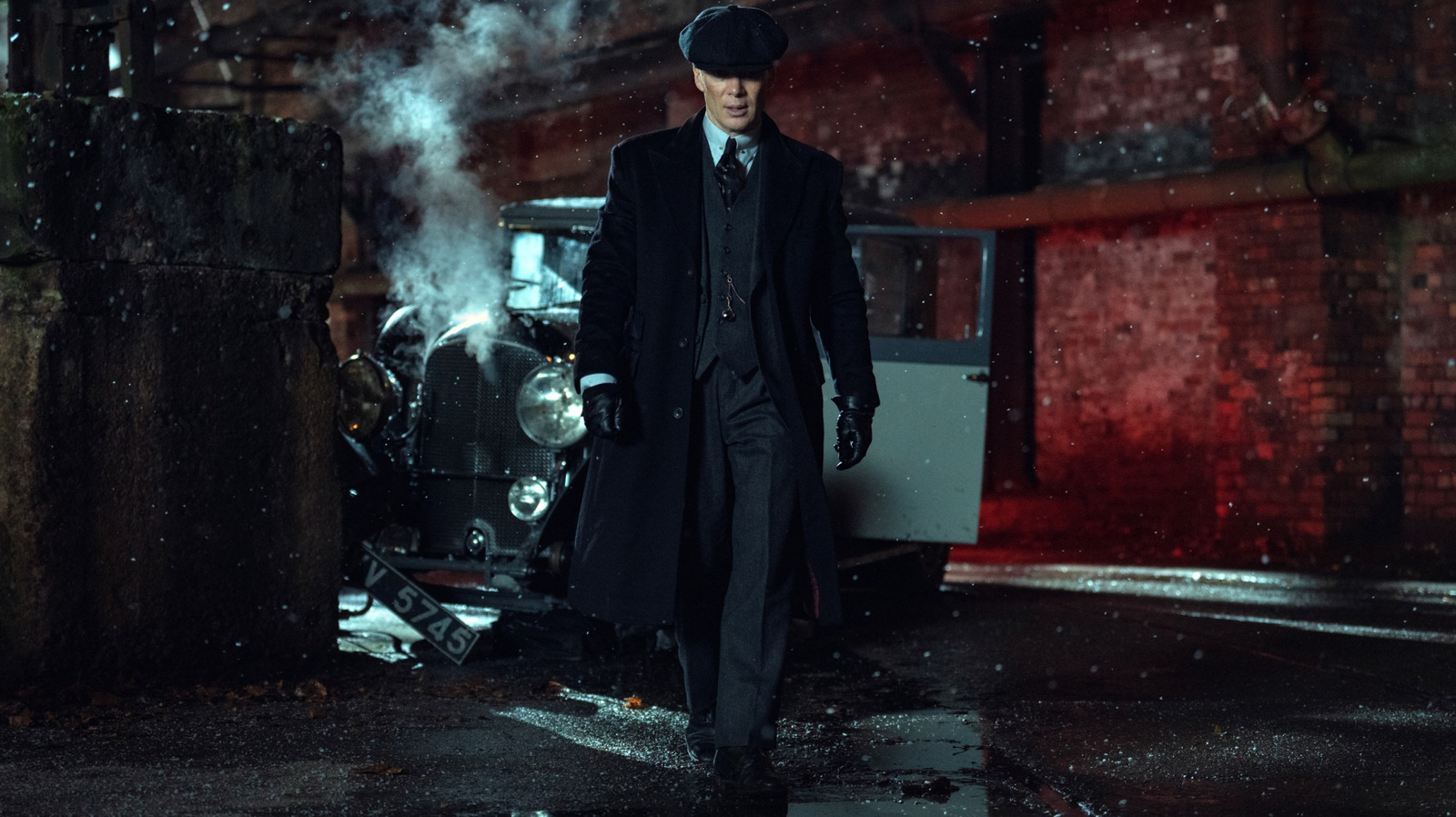


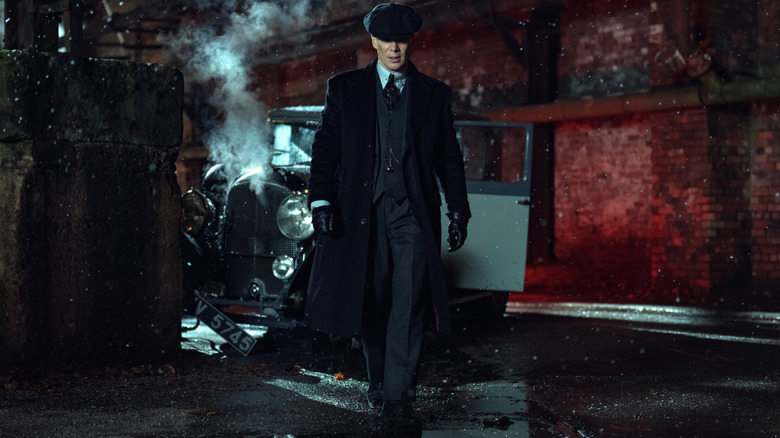
Who is Tommy Shelby? The question of what exactly is going on beneath the tough, war-torn exterior of the man who leads the Peaky Blinders has stood at the forefront of the BBC series ever since its debut. But the long-awaited feature film turns this on its head and imagines a world where our part-time politician and full-time crime lord has removed himself from the equation altogether. Where once he rode through the muddy streets of Small Heath, Birmingham or gave rousing speeches in the House of Commons with an air of impunity and an army to back him up, the latest chapter of this saga drags him kicking and screaming back to a place where most no longer remember or even recognize his name. He’s a ghost wandering outside of time, a king who refuses his crown, and an Immortal Man cursed to remain among the living.
Doing justice to a complicated character like this is a tall order for a spin-off movie with no shortage of extra baggage — essentially functioning as a legacy sequel, an extra season, and a grand finale to the hit BC series all at the same time. It’s nothing that series creator and credited screenwriter Steven Knight can’t handle, however, and he returns to the “Peaky Blinders” universe (along with director and series veteran Tom Harper) without missing a beat. In fact, the practiced ease, expertise, and cutthroat efficiency that he brings to the fore isn’t entirely unlike that of Tommy himself. The haunted recluse may be somewhat out of practice and a far cry from the unstoppable force of nature we’ve known him to be, but it’d be a grave mistake to confuse age with irrelevance.
That notion of contradictions, as it turns out, is the fuel to the engine of “Peaky Blinders: The Immortal Man.” This isn’t a story that purports to uncover the enigma of Tommy, once and for all. Neither is it a deconstruction, foolishly attempting to find the man within the myth. Our title character is as grief-stricken, traumatized, and broken as ever — perhaps irrevocably — and there’s a certain sense of implied tragedy that his journey must continue at all after that pitch-perfect season 6 finale. Maybe there is no knowing Tommy Shelby. Maybe the best that he (or any of us) could hope for is a chance at finding the peace that has always eluded him. This feature-length “Peaky Blinders” epilogue does just that with an experience as bloody, tense, and satisfying as fans could ever hope to see.
Peaky Blinders fans won’t be disappointed by The Immortal Man
Welcome to “Peaky Blinders” like you’ve never seen it before … even if, in this case, everything old really is new again. It’s 1940 and another World War has broken out, traitors have once again taken root in the heart of England to hasten the island nation’s fall to fascism, and a Shelby leads his gang of outlaws in the hopes of taking advantage of the chaos. But the ongoing Blitzkrieg unfolding all around Birmingham signals a very different form of combat than the trench warfare of old. With Tommy nowhere to be found, his now-grown son Duke (Barry Keoghan) wreaks havoc in his absence, armed with the same dead-eyed ruthlessness that his father once boasted in his heyday. And where our troubled antihero knew to draw the line at aiding and abetting Nazis, his out-of-control offspring shows no such scruples.
This early setup threads an impossible needle. Concerned fans can rest easy, because the passing of time allows “The Immortal Man” to stay true to everything that went down previously in “Peaky Blinders.” In order to tell a story all about breaking cycles of violence and outrunning one’s own guilt, after all, Steven Knight’s script has to lend a tremendous amount of weight to Tommy’s past exploits — both accomplishments and failures alike. At the same time, it finds a savvy approach to bringing Tommy back into the fight, despite every instinct within him screaming not to. When we catch up with our former Member of Parliament, he’s content to waste away in a countryside villa writing up a memoir, of all things. He’s plagued by visions of his dead daughter Ruby (“I’m not alone when I’m alone,” he admits in a moment of vulnerability), tortured by his mistakes (some of which we discover took place after the events of the show), and still unable to escape his PTSD as a WWI tunneler. Only a threat on the level of Tommy’s hothead son and Tim Roth’s Nazi-collaborating villain could possibly shake him out of this malaise, and even that comes at tremendous cost.
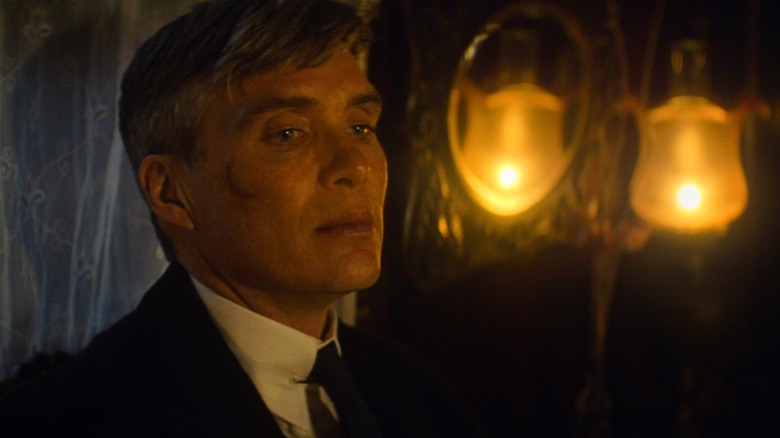
Cillian Murphy has never been better in this role, slipping into the character’s skin with a profound weariness and resolve. Every weathered line on his face is an unspoken callback to the sins of his past, further justifying the choice to play up Tommy as a forgotten soldier with no more wars to wage. Knight makes us wait before the Shelby of old finally reappears and, when he does, the restraint pays off with one of his best sequences in the entire franchise. Like its title character, this old hound finds new tricks and delivers a fitting “Peaky Blinders” coda that won’t disappoint.
The Immortal Man plays out like a supersized Peaky Blinders episode, for better and for worse
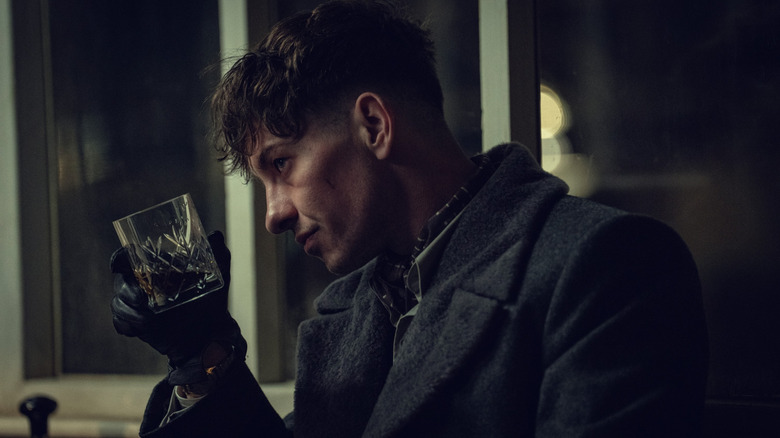
What comes next is a surprisingly contained drama that unfolds like an extended “Peaky Blinders” episode, clocking in at just under two hours — but that’s hardly a drawback. Fans expecting some sort of spectacle-filled blockbuster will inevitably be let down, as will casuals who may not know just how reliant this spin-off is on the experiences and lore these characters have lived through. Fortunately, for the rest of us, holding one’s hands has never been this material’s M.O. Under Tom Harper’s steady direction, we’re taken on a ride that mixes small-scale thrills with a fast-paced storyline. All of the old hallmarks of the series are present and accounted for here, and “The Immortal Man” rarely stops this train to explain the significance of any of it. You either get it or you don’t, whether it be the hallowed grounds of the Garrison pub or the sacred meaning behind a flip of a coin or the loaded symbolism of our main protagonist riding a black horse through town while Nick Cave and the Bad Seeds’ “Red Right Hand” blares overhead. Hokey fan service couldn’t be further from its mind.
Granted, the momentum of the story occasionally undermines its own aims, which mostly comes at the expense of its newer additions. Though perfectly cast as the next Shelby in the line of succession, Barry Keoghan can only do so much to generate a lived-in sense of history between Duke and his estranged father. Tim Roth’s John Beckett sadly falls short of any of the classic “Peaky Blinders” antagonists of old, lacking the depth of Sam Neill’s Major Campbell or the fiery screen presence of Adrian Brody’s Luca Changretta or the sheer maliciousness of Sam Claflin’s Oswald Mosley. Even Rebecca Ferguson’s new character, a retcon too clever to spoil here, fails to make much of an impression in a narrative that stubbornly keeps her on the sidelines. Some may find themselves wishing for a full-length season instead, one that had the ability to take its time, slowly introduce all these new power players, and build them up individually to an explosive conclusion.
But every time “The Immortal Man” focuses on the Tommy Shelby of it all, it’s easy to understand why this was the only way forward.
Peaky Blinders: The Immortal Man deserves to be seen on the big screen
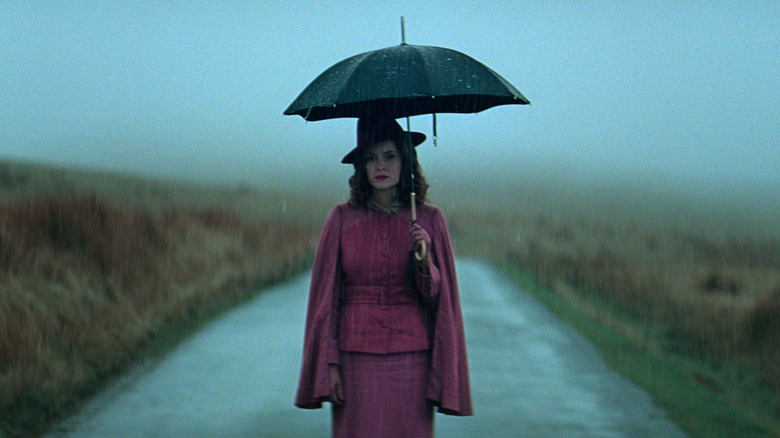
“Some king I was,” Tommy morosely confides to his old friend Johnny Dogs (an effervescent Packy Lee) early on. Tonally, “The Immortal Man” is overwhelmingly preoccupied with the shortcomings of the past, making this by far the moodiest and most downtrodden installment of “Peaky Blinders” yet. This is a dark movie in every sense of that word, with frequent candle-lit scenes staged at night and hardly a joke to be found (although Johnny Dogs’ increasingly creative ways to convey the film’s copious F-bombs becomes a running gag in and of itself). Luckily, cinematographer George Steel never allows this to stray into “Game of Thrones” territory, always prioritizing clarity through evocative blocking and downright painterly framing. Returning composers Antony Genn and Martin Slattery add their usual energy to the proceedings, while the anachronistic punk-rock needle drops will be a welcome sight to any “Peaky Blinders” fan.
All of this adds up to a film well worth a trip to the the cineplex, presuming “The Immortal Man” is playing near you. It’s true that there’s no added emphasis on big-budget action this time around, but what little spectacle there is feels best served by watching brazen gunfights and double-crosses unfold on the big screen. This also extends to the many, many closeups putting Tommy and his various family members in sharp relief, either by blood (Sophie Rundle’s take-charge sister Ada Thorne makes the absolute most of her minimal screen time) or in spirit (Ned Dennehy’s Charlie, Ian Peck’s endearing Curly, and Stephen Graham’s Hayden Stagg all reprise their original roles from the show). The new and the old are constantly at war throughout this epic, almost Biblical narrative. So what better way to literalize that idea than through a Netflix release playing in theaters?
At one point, Tommy forebodingly refers to this as his “final chapter.” We know “Peaky Blinders” is destined to continue with future seasons to come, but “The Immortal Man” refuses to look that far ahead. In a refreshing change of pace from countless nostalgic IPs, here’s one franchise that’s unafraid to stay in the here and now. The end result may not be the cleanest or most tightly-wound addition to the series, but it’s as essential as it gets — doing for “Peaky Blinders” what “El Camino” did for “Breaking Bad.” As the final credits hit, Tommy Shelby remains at a distant remove from us. We may never truly know him, Steven Knight seems to argue, but even he couldn’t author a more apt ending than this.
/Film Rating: 7 out of 10
“Peaky Blinders: The Immortal Man” plays in limited theaters on March 6, 2026, followed by its Netflix premiere on March 20, 2026.
Source link
#Peaky #Blinders #Immortal #Man #Review #Cillian #Murphys #Netflix #Movie #Satisfying #Epilogue #SlashFilm




