New Delhi:
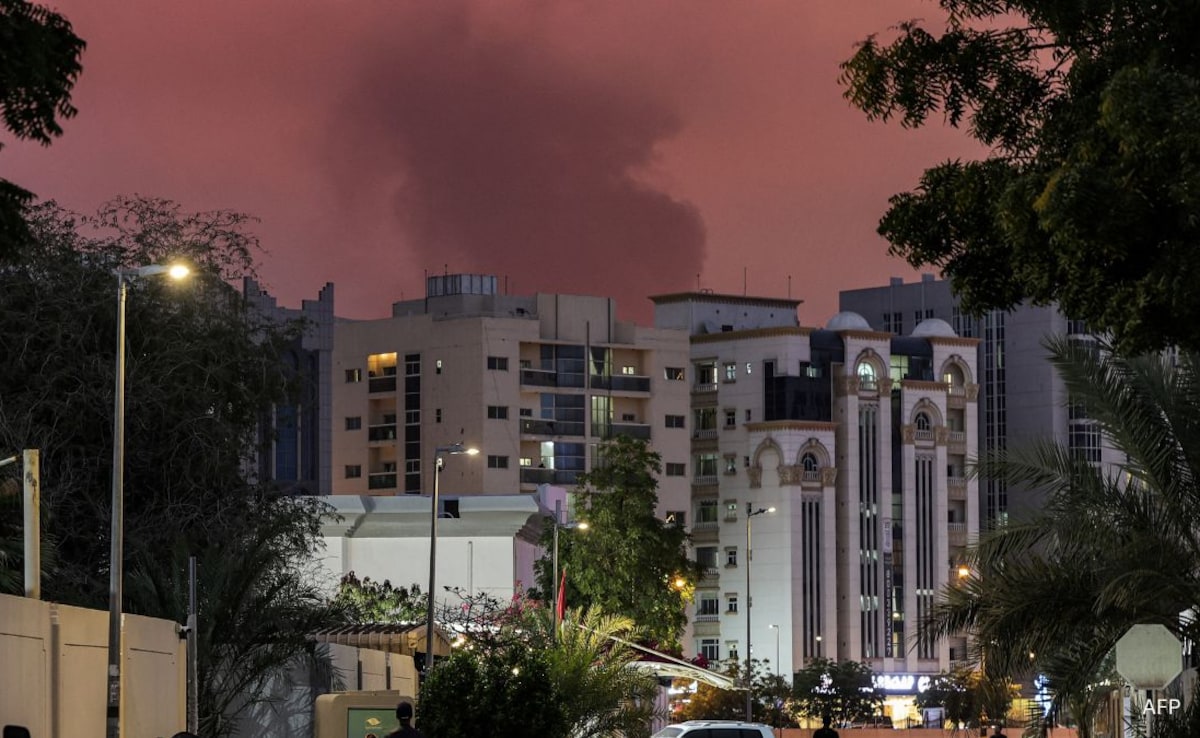
The war involving the United States, Israel and Iran has pushed the United Arab Emirates into the direct line of fire. Since the conflict escalated, the UAE has reportedly been hit by 1,714 drones, 334 ballistic missiles and 13 cruise missiles — strikes that have rattled hotels, refineries, airports and major commercial zones.
But the critical question remains: Why is Iran targeting the UAE so heavily? Is it merely because the US operates military facilities there? The answer is more complex.
The Economic Angle: UAE investments for US
While the US continued issuing warnings to Iran over its nuclear programme, Washington simultaneously deepened economic ties with the UAE. After Donald Trump returned to office for thesecond time, he sought large-scale foreign investments, and the UAE responded more generously than any other partner.
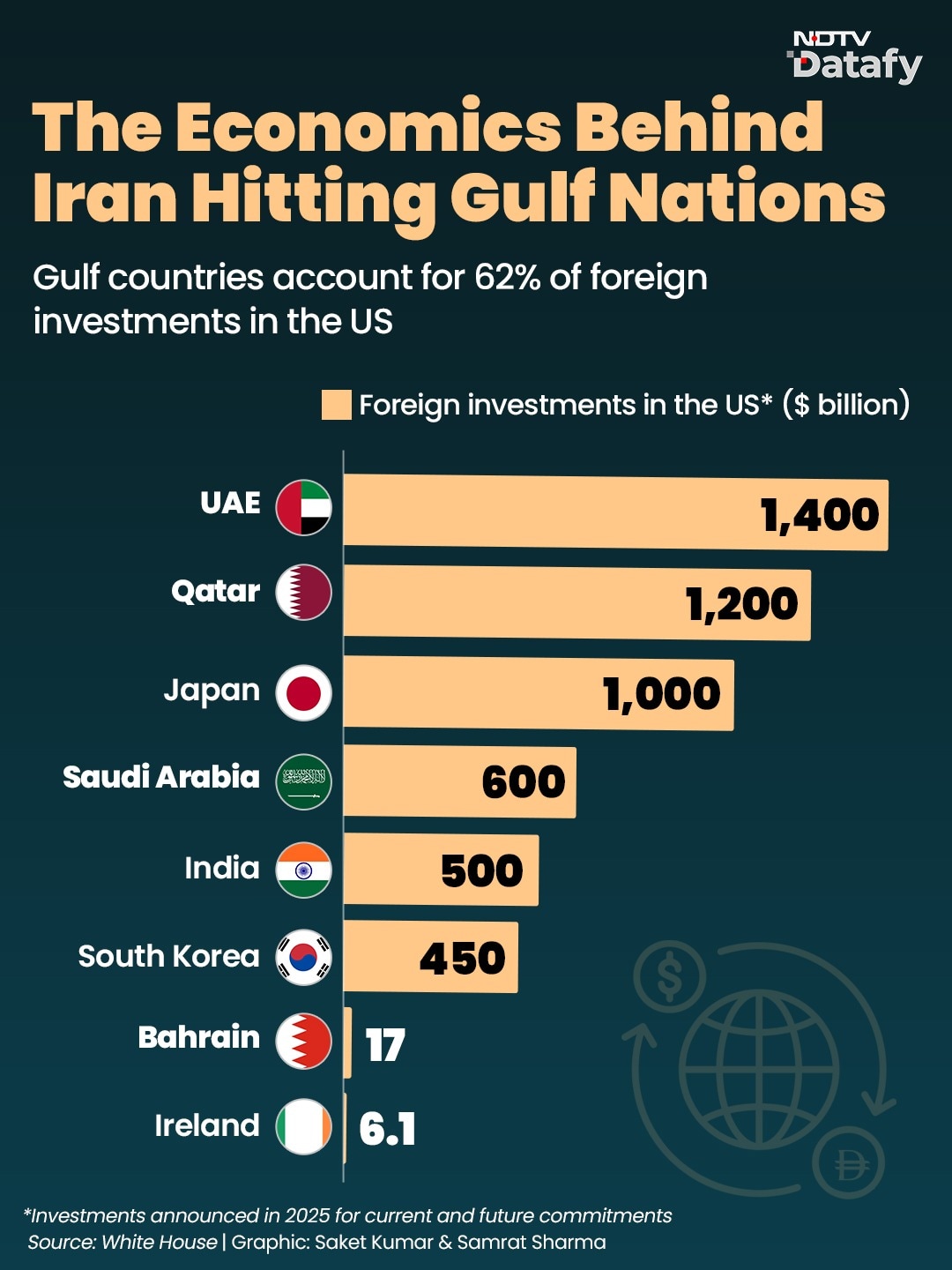
According to the White House, the US received foreign investment commitments worth $5.2 trillion in 2025, which are to be invested in a span of up to 10 years. Of this, $1.4 trillion or 27 per cent was pledged only by the UAE. Another $1.2 tn by Qatar, $1 tn by Japan, $600 bn by Saudi Arabia, $500 bn by India, $450 bn by South Korea, $17 bn by Bahrain and $6.1 bn by Ireland. Altogether, 62 per cent of Trump’s new inward foreign investments were announced by Arab nations.
UAE’s Rise as a Global Investment Magnet
Iran’s targeting strategy is not only about the UAE’s investments into the US; it is also about the UAE’s position as a global investment hub.
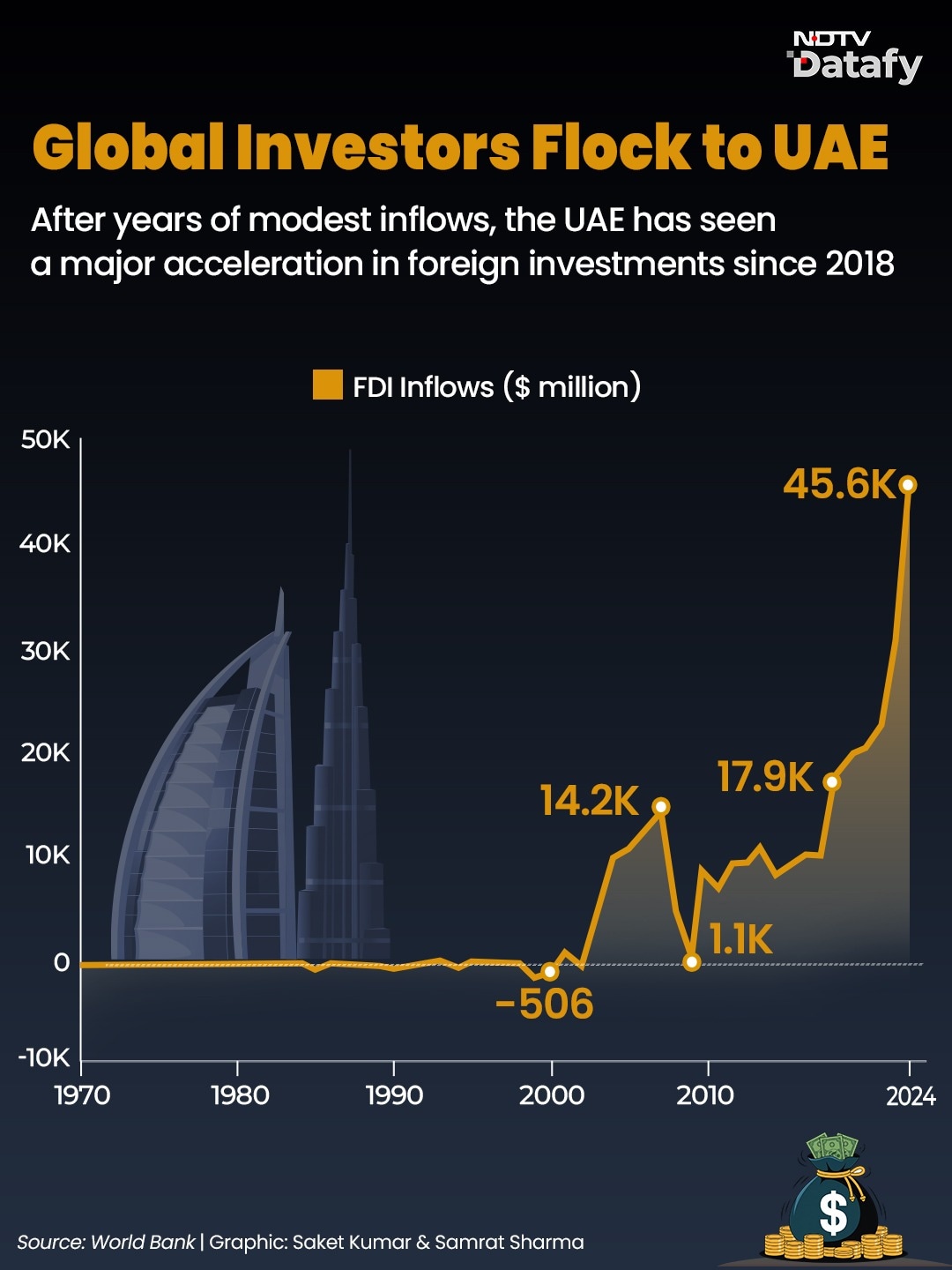
Foreign direct investment (FDI) inflows into the UAE surged dramatically over the past decade, especially after the Dubai Government allowed 100% foreign ownership in over 1,000 commercial and industrial activities.
World Bank data shows FDI inflow in the UAE was $10.4 bn in 2018, which nearly doubled to $20.7 bn in 2021 and more than doubled to $45.6 bn in 2024.
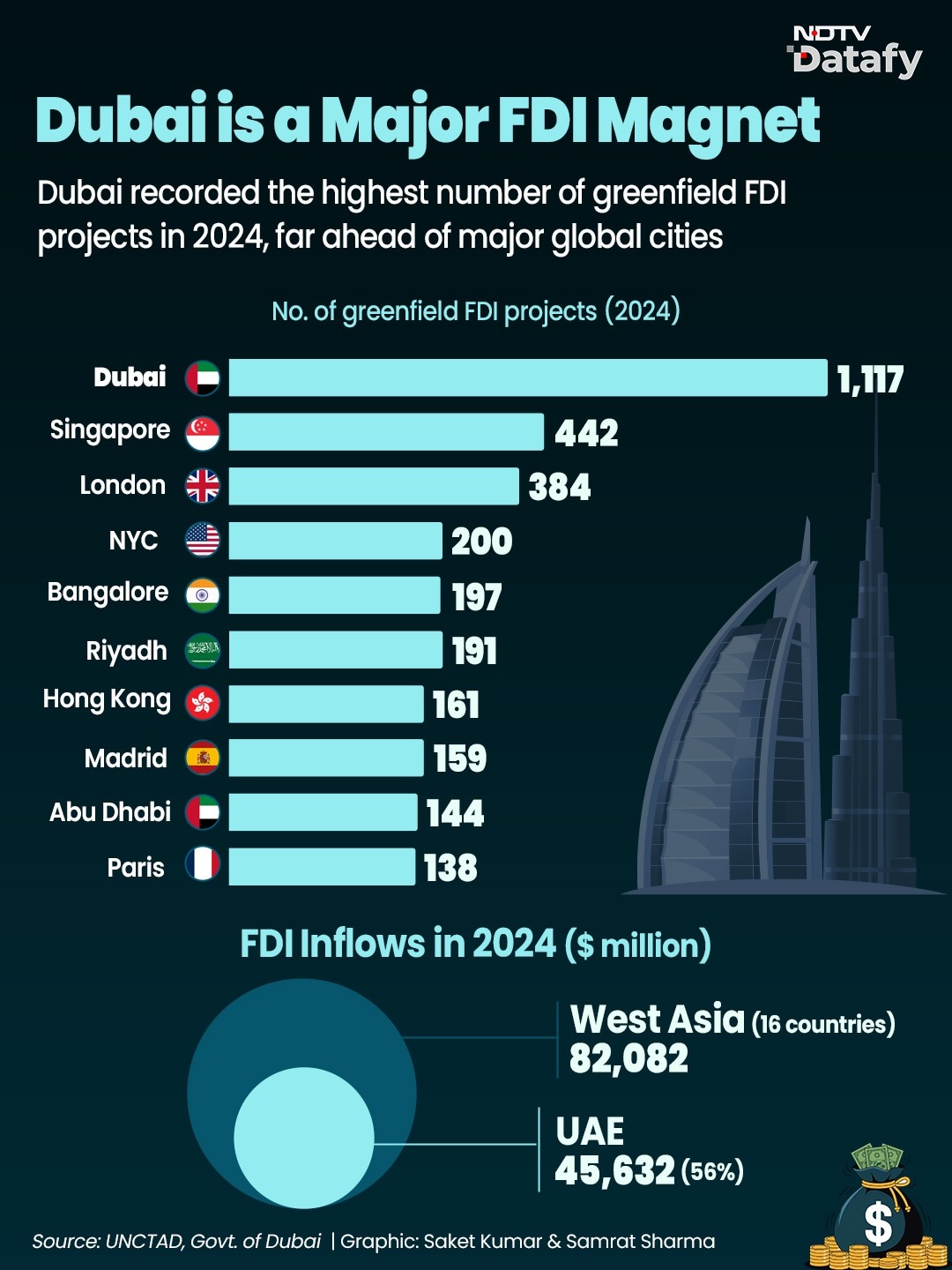
In 2024, the UAE alone attracted 56% of all investment flowing into West Asia, according to the UNCTAD, an extraordinary figure considering the region comprises 16 countries.
Dubai, as a city, ranks highest in the world in terms of new greenfield projects. It attracted a record-breaking 1,117 greenfield projects in 2024, according to the Dubai government. In comparison, Singapore received 442 projects, London 384 projects and New York City attracted 200 projects.
Middle Eastern economies like the UAE, Saudi Arabia, Qatar and Kuwait have been seen as politically stable, investment‑friendly and secure, which makes them attractive to both global capital and Western strategic interests. The UAE’s stability, in particular, is central to the region’s reputation as a safe investment zone.
By striking the UAE, Iran is hurting a major US economic partner without striking the US directly. It is also signalling to Washington that Iranian retaliation can hit America’s economic arteries far from the battlefield.
Iran is also attempting to shake global confidence in the Gulf’s promise of stability, which they have cultivated over years through reforms, infrastructure and investment‑friendly policies. Every strike is a blow to the image they’ve built and, by extension, to Washington’s economic and geopolitical ecosystem.