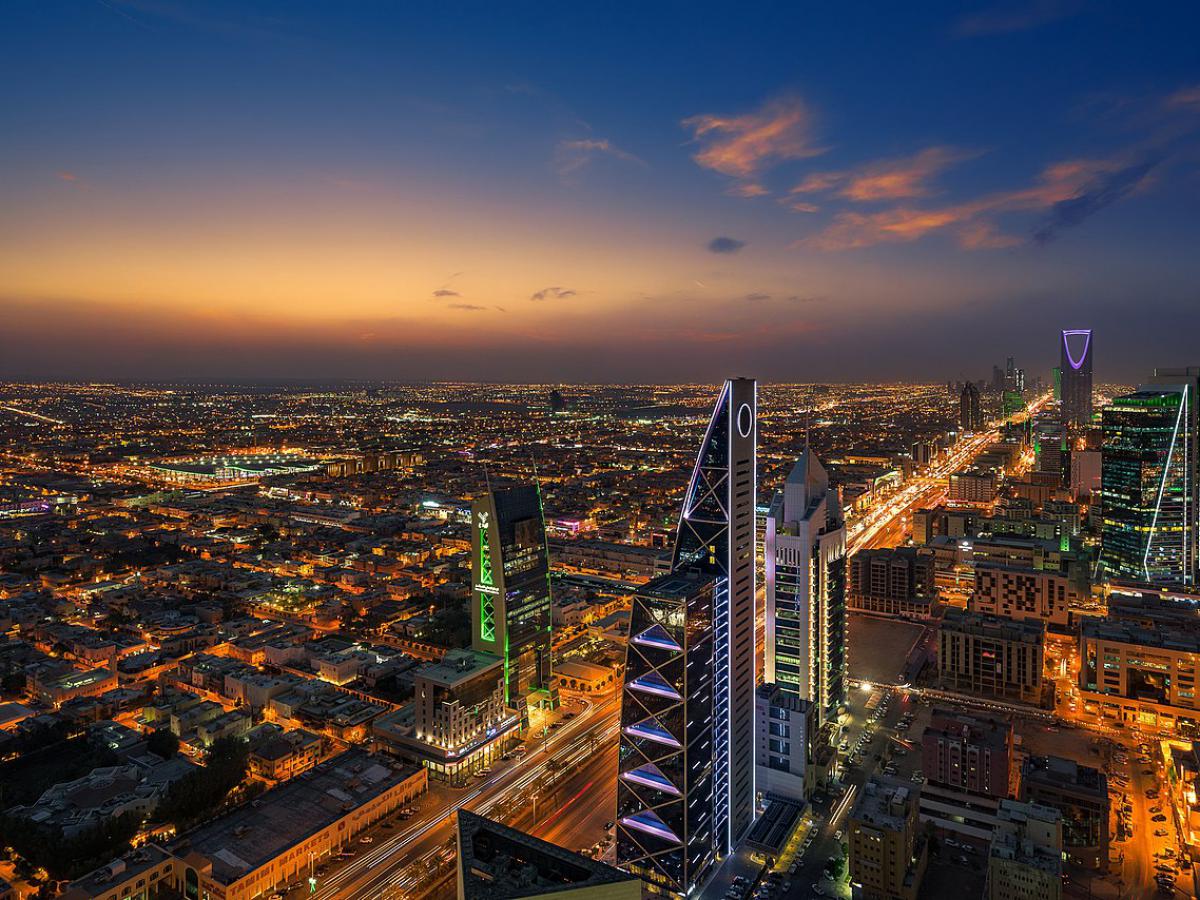
For years, Saudi Arabia’s Vision 2030 was touted as one of the most ambitious wholesale economic development projects in the world, looking to break the Kingdom away from its dependence on hydrocarbons and create a futuristic hub of innovation, tourism and productivity. Nearly ten years after its launch and close to the self-imposed deadline for its implementation, however, Riyadh must reckon with a stark contrast between its branding as a modern state and the stalling of its megaprojects. The kingdom and Crown Prince Mohammed bin Salman’s mistake has been thinking that the governance practices and ideological foundations of the distant past can somehow build a wholly different future if enough money is invested. Through the cracks now routinely appearing on the façade of this strategy, a religiously rigid, socially conservative and politically centralized Saudi Arabia peeks through.
The massive infrastructure and real estate development projects that combinedly make up the Vision 2030 initiative’s tangible backbone reached a staggering $1.3 trillion in value in 2024. Most of the funding is distributed by Saudi Arabia’s sovereign wealth fund, the Public Investment Fund (PIF) and focuses on giga-projects. The Line—a futuristic city-in-a-building designed to be a block wide and 110 miles long—is part of the $500 billion budget of the flagship NEOM umbrella project, which also includes a floating industrial city, renewable energy and water utilities as well as a number of residential, sports and luxury developments. By early 2026, The Line was reduced to a mere 10 miles in length, with pessimistic estimates giving it less than 2 miles by the time construction is finished, and a substantial part of the ‘city of the future’ now planned to serve as a data center. Multiple projects have been cancelled in the mountain resort of Trojena, and Saudi Arabia even withdrew from hosting the 2029 Asian Winter Games there. The floating city of the Oxagon is also facing the shifting of priorities and scale-downs.


These projects, which veritably failed and will certainly fall short of achieving the economic revolution envisioned, did not falter because the ideas behind them were too bold. Rather, the ideological foundations of the system behind them is responsible. Vision 2030 borrowed the same logic that has defined Saudi governance for decades: lavish spending, rigidity and centralized decision-making, along with PR branding instead of long-term planning and structure. This closely mirrors the experience of the kingdom in buying influence abroad through the export of its religious-political movement of Wahhabism.
The royal family’s reliance on the Wahhabi clerical movement during the founding period of the kingdom—with a relationship that mutually reinforces the position of the two—was combined with the immense, seemingly unlimited, wealth that oil reserves provided. For this reason, Saudi Arabia developed as a markedly conservative society and political establishment that was, at the same time, in no need to develop genuine institutional capacity and economic policy plans. As the exclusionary and ultra-conservative influence of Wahhabi clerics was combined with the kingdom’s ambitions for regionwide influence and wealth, the Middle East and the Muslim world more broadly, witnessed the coordinated spreading of Wahhabi ideology through educational centers, mosques and additional funding provided by Riyadh. Oil was wealth bought geopolitical influence, but it also locked Saudi Arabia in a cycle that made sustainable internal development and innovation virtually unnecessary.
The conservative establishment was firmly embedded as a direct result of this process, solidifying exactly the kind of attitudes—hostility to transparency, social innovation, and foreign partnerships—that prevent a program like Vision 2030 from succeeding. While MBS made a fleeting effort to ‘modernize’ Saudi society, and the country saw the rolling out of policies that expanded women’s rights, relaxed rules for entertainment and tourism, and welcomed foreign investments, Wahhabi clerics still govern daily life via the legal code, educational materiel, and restrictions on public communication. The kind of intellectual flexibility, dynamism and innovation that Vision 2030 would require to be realized simply cannot flourish in such an environment.
Importantly, Islam is not the determining factor in this landscape on its own, rather it is the particular firebrand version of Wahabism espoused by Riyadh which is responsible. Countries across the region have demonstrated that striking a balance between religion, a monarchical system of governance, oil wealth and innovation is possible. An adherence to a moderate version of Islam combined with the progressive and business-oriented approach of rulers creates a scalable model that attracts global talent, fosters economic expansion, and builds the foundations of a genuinely self-sustainable system.
If Saudi Arabia wants to transform its economy in a similar manner, it must rethink not only its infrastructure but the entire ideologically based logic of its governance. Buying influence does not lead to productivity and innovation. Until the legacy of Wahhabism and rentier state practices that fostered it are confronted, Vision 2030 will remain a distant mirage.
Source link
#Vision #Outrun #Saudi #Arabias #Limiting #Ideological #Foundations