

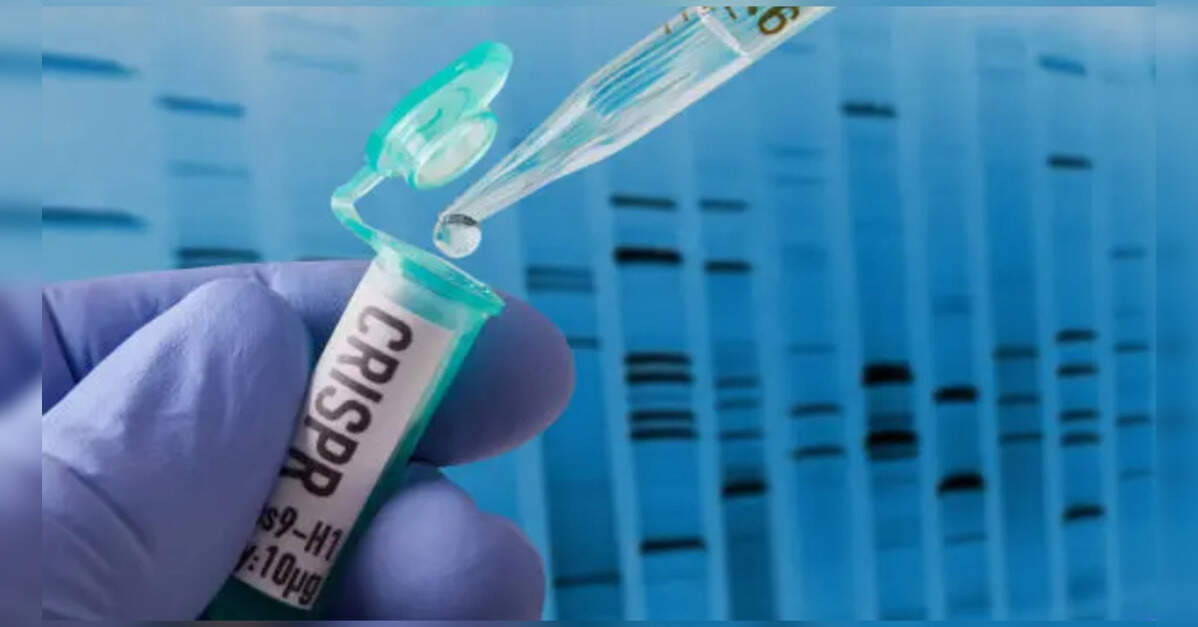



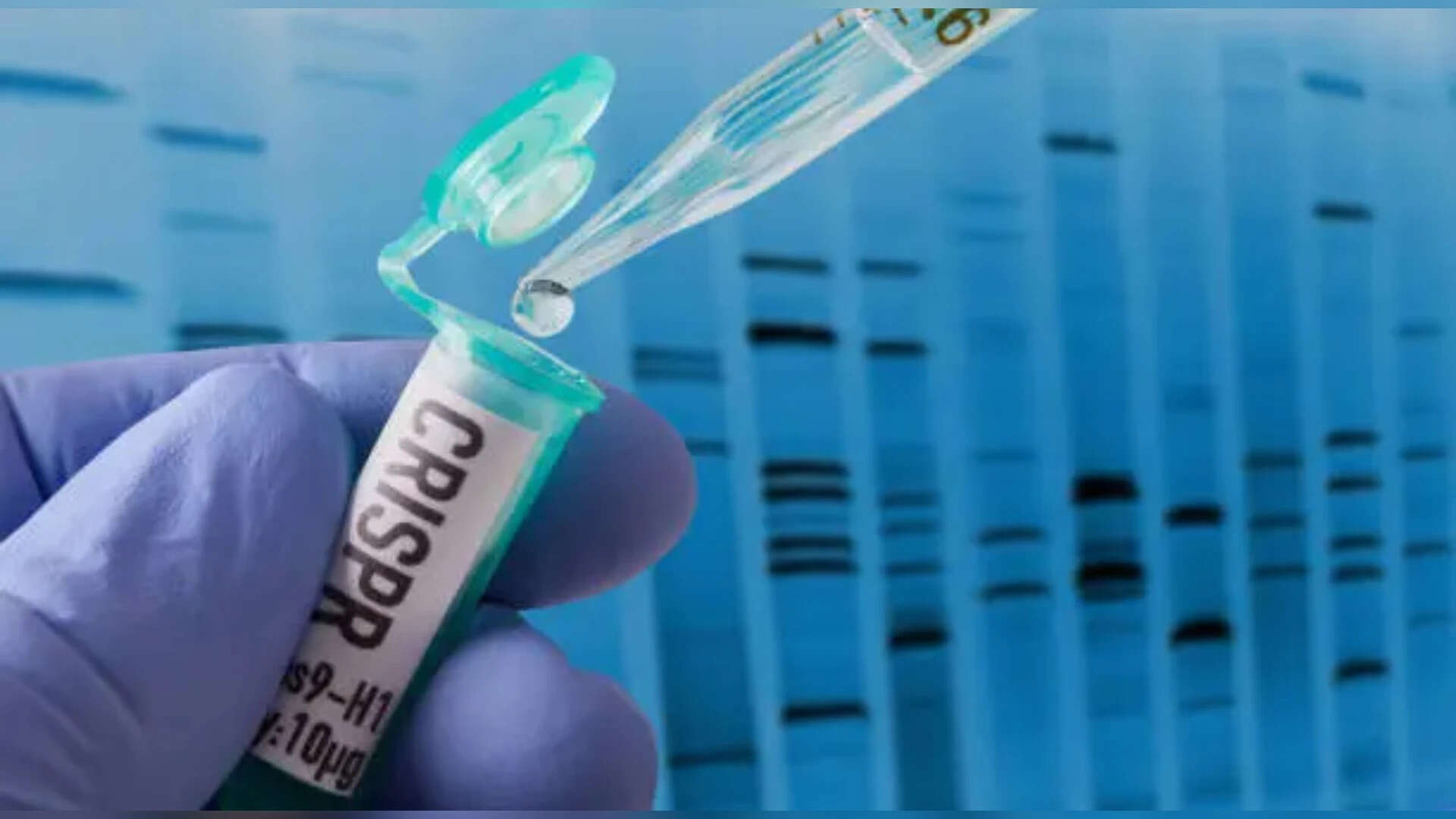
London: Researchers have developed a modified version of the CRISPR gene-editing tool that in early laboratory experiments suggests it may have the potential to “silence” the extra chromosome that causes Down syndrome.
People with Down syndrome are born with an extra copy of chromosome 21, giving them 47 chromosomes instead of the usual 46.
“Because of this extra copy, many genes are disrupted and contribute to the cognitive impairment and early-onset Alzheimer’s disease” associated with the condition, said study leader Dr. Volney Sheen of Beth Israel Deaconess Medical Center in Boston.
As it is not clear which of the hundreds of genes on the extra chromosome are to blame for these effects, silencing of the entire chromosome would be the optimal treatment, Sheen said.
In healthy biological females, a gene called XIST naturally silences the extra X chromosome that is present in all female cells except eggs. Scientists have previously surmised that inserting XIST into an extra chromosome 21 will silence it in a similar manner, but technical limitations meant their attempts at inserting the gene often failed.
Among the challenges was that XIST must be inserted into only one of a cell’s three copies of chromosome 21, and this needs to happen in as many cells as possible, Sheen noted. His team’s modified CRISPR improved integration of the XIST gene into the extra chromosome by roughly 30-fold over the conventional CRISPR approach, according to a report in PNAS.
Although the technique is still at the test-tube stage, the researchers hope it will lead to future treatments.
While the strategy of chromosome-wide silencing for Down syndrome “is highly promising” and the researchers’ improved efficiency at inserting the XIST gene is “generally quite significant,” the new results represent only proof-of-concept research at the cellular level, said Dr. Ryotaro Hashizume of Mie University Hospital in Japan, who was not involved in the research.
IMMUNE SYSTEM CAN BE REPROGRAMMED TO PRODUCE RARE ANTIBODIES
Researchers may have come up with a new way for the body to manufacture helpful proteins – including certain highly potent but hard-to-produce antibodies – by reprogramming the immune system.
Traditional vaccines prompt immune cells called B cells to produce antibodies that recognize germs. Some viruses, however, such as the human immunodeficiency virus that causes AIDS, can shield their most vulnerable regions behind sugar molecules that resemble the body’s own tissues and are largely ignored by the immune system. So-called broadly neutralizing antibodies can circumvent these shields, but they arise from rarely produced cells only after a long and complex process of mutation. Most people will never produce them even if they are exposed to the antigens through careful vaccination regimens, the researchers explained in the journal Science.The researchers wondered whether they could permanently install instructions for broadly neutralizing antibodies in the stem cells that give rise to B cells. If those stem cells were programmed correctly, every B cell they later produced would carry the same blueprint for producing broadly neutralizing antibodies, ready to be activated by vaccination.
As a proof of concept, the team used CRISPR gene-editing tools to insert the genetic blueprint for producing the rare, protective broadly neutralizing antibodies directly into immature stem cells and injected the cells into mice. These stem cells later developed into B cells programmed to produce the engineered antibody.
Only a few dozen edited stem cells transplanted into the mice were necessary to trigger production of large amounts of broadly neutralizing antibodies that persisted long-term. The approach was successful at generating antibodies against HIV, influenza and malaria, according to a perspective article published with the report.
Human stem cells edited using the same approach also gave rise to functional immune cells, suggesting the approach might one day work in people, the researchers said.
Study leader Harald Hartweger of Rockefeller University sees potential uses down the road for the technology for a wide variety of health issues.
“HIV antibodies, of course, but also solutions that address protein deficiencies and metabolic disease, as well as an antibody to treat inflammatory disease or the flu, or one for cancer,” he said. “This is a step in that direction, showing the feasibility of making life-saving proteins.”
(Reporting by Nancy Lapid; additional reporting by Shawana Alleyne-Morris; Editing by Bill Berkrot)

Source link
#Researchers #eye #potential #syndrome #fix #advanced #gene #editing





