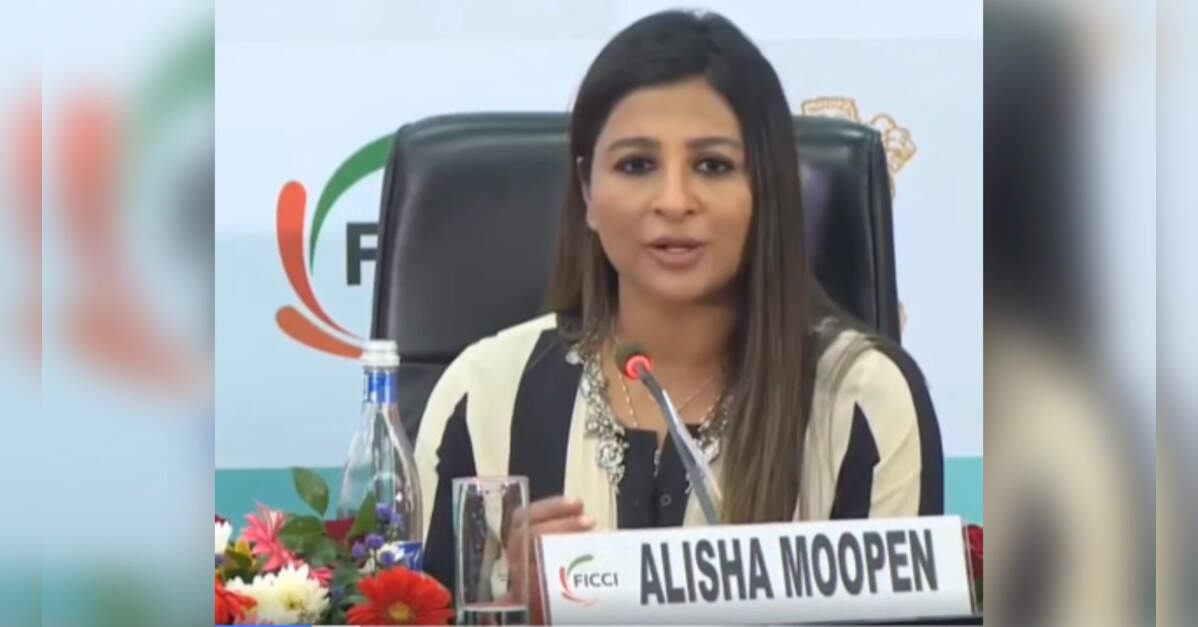



Mumbai: The main concern for India’s healthcare sector may be a shortage of medical talent rather than overcapacity, said Alisha Moopen, deputy managing director of Aster DM Healthcare, which is pursuing a scale-up to 15,000 beds by FY29, alongside its merger with Quality Care India. In an interview with ET, Moopen said India remains structurally under-bedded, although its healthcare sector is seeing capital influx. Edited excerpts:
You’re scaling up sharply. What does the roadmap look like from here?
If you just think about the last two years, we’re talking about pretty much moving from like 4,000 beds to 15,000 beds. It’s a massive explosion for us as a group. Pretty much 5,000 coming as part of QCIL and another 5,000 as a combined expansion. The last 12–15 months has been about figuring out how we want to do this integration and make sure the platform fires well.
Can you grow this fast without hurting profitability?
One of the best things about our platform is this combination of brownfield and greenfield expansion. We want growth, but we also don’t want erosion of margin. The way we are trying to balance it out is to make sure that we continue to have this 15-17% revenue growth and how we continue to improve the margins, both in terms of internal efficiencies, as well as the synergies that will set in. Right now, we are sitting at around 21.9% margins. So we’re talking about taking this up by another 200–250 basis points in the next couple of years…and that is while adding 5,000 beds.
We feel quite confident that synergies will give partial benefit… And the other one will be on improvement of our CONGO (cardiology, oncology, neuroscience, gastro, orthopaedics) team mix. At a group level, we’re sitting at a CONGO mix of around 55%. When we combine and have clinical synergies and build on some of these departments, we really see that this improvement in the margin is possible without diluting and eroding the bottom-line.
How does the merger change Aster’s identity?
We were largely seen as a regional player… this size and scale gives us an opportunity to become a pan-India player. The pan-India goal we had over 7–10 years can now be shrunk to a much shorter timeframe. In terms of listed companies, we would be number two… and the ambition, of course, is to be number one in 3-4 years.
Where will this expansion come from—metros or smaller cities?
We don’t per se think about how much we are adding in Tier 2, Tier 3 versus Tier 1… it is more about where we can optimise our existing network.
We have got a huge network… 40 hospitals. Where can we add within existing facilities, and where can we expand in cities where the business is ripe.
There are concerns that metros are getting crowded. Do you see oversupply?
There is a huge requirement for beds in India… even the pipeline of all the listed players is not enough to put a dent. Even in a city like Bengaluru… there are so many micro-markets. People don’t want to travel two hours… they want care within a 5–10 km radius. So, I don’t think there is going to be overcrowding.
Large conglomerates and new investors are entering healthcare. Do specialised hospital players still have an edge?
I really hope so… that edge and that commitment to this being everything for us obviously has a differentiating factor. Going deep into clinical programmes… building an academic, research-oriented, learning institution–those things cannot happen easily. What Apollo or us (Aster) have done in like 40 years, it’s not easy… you just put up a nice hospital, it doesn’t happen overnight. We believe that time, investment and learning curve are differentiating factors.
What, then, is the biggest risk as the sector expands?
More than the financial investment, it’s a bit of a war on talent. The supply of medical professionals… is a far more relevant and slightly more worrying aspect for me rather than the beds itself. If everyone is chasing the same set of doctors, that becomes a challenge. Also, Indian doctors are sought internationally. For us, one of the most important things as an organisation we look at is the stickiness of attracting doctors and then retaining doctors.
How do you attract and retain doctors?
It is not about the money… money is just one small component. The biggest thing for them is clinical independence…the ability to build a team, do research, publications and outstanding work. Our focus is only on how we do healthcare really well–and that helps attract and retain talent.
Medical tourism saw disruption due to geopolitical tensions. How has that played out?
In March, maybe there was an acute impact of the West Asia conflict… especially from Oman. But we doubled down on other markets… Maldives, Africa… so we had a little impact, but nothing so significant. Our medical value travel has grown at like 41% year-on-year. We are talking about increasing the funnel or the number of countries to 15-20 where we see people from.
Do you see medical tourism as a core growth driver?
It is a strategic pillar for us. Right now, it’s around 7–8%… the goal is to get it to double-digits. Mid-teens is an ideal scenario for us. With multiple brands after the merger, we can offer different price points and become more competitive.
How are technology and AI changing your operations?
AI is an overused word… but we are seeing impact across customer experience, efficiency and clinical outcomes. If you are able to reduce bottlenecks–appointments, reports, discharge–it makes a big difference. We’ve had about a 12% increase in patient volume, partly because we are de-bottlenecking these processes.

Source link
#Indias #healthcare #expansion #faces #critical #talent #crunch #Alisha #Moopen