By Igor Pejic
Tech stocks have taken over American financial markets, immunized it to geopolitical uncertainty and energy shocks, but exposed them to the heartbeat of technology.

The conflict with Iran is wreaking havoc in the global economy. Not so much because of missiles and bombs and human suffering – that’s what we see in every war. But because of the blocking of the Strait of Hormuz, which is effectively choking off the supply of 20% of the world’s oil and liquefied natural gas. Shipping traffic has plummeted to a near standstill, with ships turning back, being attacked, or seized. Every day new and contradicting social media posts are published or fragile ceasefires put in place, with no realistic exit scenario in sight. As the conflict drags on, global supply chains are strained. Oil prices temporarily spiked by more than 50% per barrel.
Consumer sentiment in the US hit a record low. The labor market is expected to follow suit. Uncertainty is rippling through the economy at all levels. All but one: America’s financial markets.
The S&P 500 and the Nasdaq recently hit fresh all-time highs. The S&P 500 has even seen three consecutive weeks with 3% gains or more, something it experienced only three times in the last 76 years. This paradox leaves experts scrambling for answers.
Traditional explanations overlook the structural change
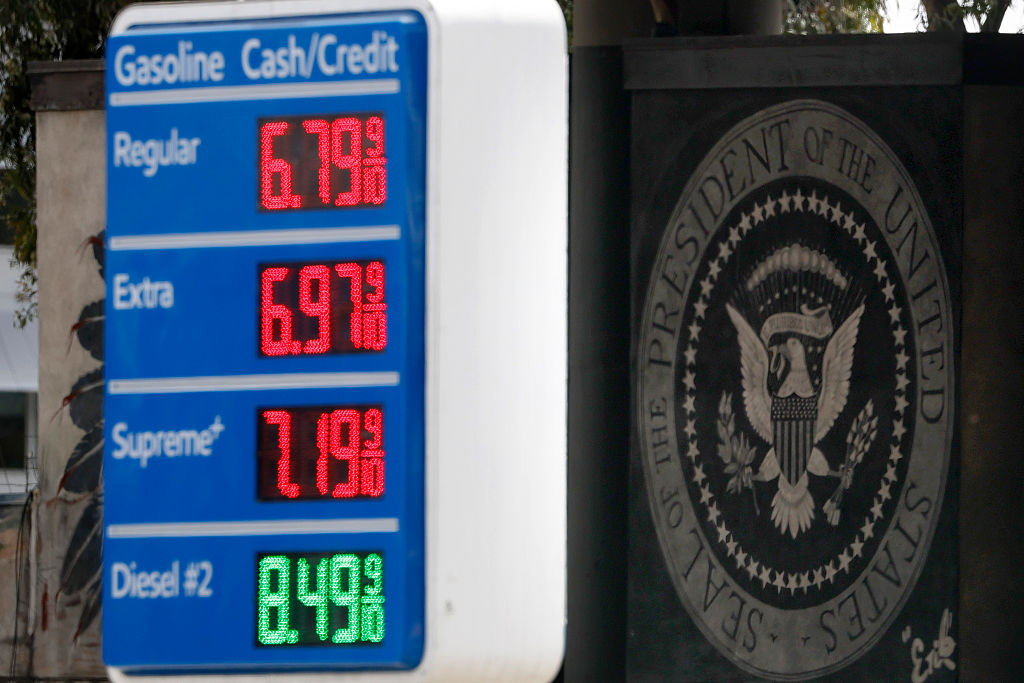
Explanations abound as to why US stock markets are weathering this storm so well. Many experts will tell you the reason lies in America’s energy independence. Yet prices at American gas stations are up by one third. Consumer staples are hit hard too. Overall inflation jumped to 3.3% in March.
Others point to a common pattern in all conflicts: American equity markets serve as a safe haven in times of turmoil and uncertainty. Yet if this were the explanation, then the US dollar should have strengthened too. Two months after the war broke out, however, the value of the dollar against the euro has not budged.
Some experts explain the stock market resilience by investors believing in a quick ceasefire and thus only a temporary macro shock. But even if they are right, lasting damage has been done. Higher risk premiums for shipping and insurance, more expensive supply-chain planning, and more caution by firms in the Gulf region are permanent. Also, if investors don’t believe in long-term disruption, why then are only American stocks outperforming? The British FTSE100 and the EURO STOXX 50 are down since the outbreak of the war.
The real reason lies in the fact that over the past 25 years America has turned into a tech economy, or more precisely: into a tech-dominated financial system. Tech companies made up only 1.7% of the total workforce in 2024. And while tech-workers do contribute more to the GDP than their peers in other sectors, tech as an industry is not even America’s GDP-engine. In 2024 it accounted for 5.4% of the total economic output. Manufacturing contributed twice as much, finance four times as much. In short: Technology companies have not taken over the economy. But they did take over the capital markets. IT companies make up 28% of the value of all publicly traded companies. The next sector is finance, reaching merely half of that. And here is where tech’s dominance gets really mind-boggling. Many mega-caps are not even part of the information technology segment. Alphabet and Meta count as communication services. Amazon and Tesla fall under consumer discretionary. The outsized returns of biotech companies like BioNTech or Amgen go to the healthcare sector.
Tech has become the new macro
Yet while the triumphal march of tech has been going on for years, the fact that the current energy crisis remains inconsequential reveals a new phenomenon. Tech stocks have always been high beta equities, meaning that they react to overall market volatility much stronger than other stocks. In other words, with stock markets being dominated by tech, they should be more prone to downturns. Yet this is not what we are seeing. Tech stocks are still high beta, but the market swings they are reacting to have changed. Take Microsoft as an example. The worst post-Covid trading day happened in January 2026. Not as a result of economy-wide gloom, but because of its quarterly results. The results were solid, yet investors expected more AI spending. Russia’s full-scale invasion of Ukraine, the Trump tariffs, and the war with Iran were all events that caused global panic, yet they don’t even register in the top 10 list of Microsoft’s worst days.
It is no longer wars, labor market trends, or Fed-decisions that dictate the macro-economic trend, but tech earnings and AI investment volumes of tech giants. And since the recently posted earnings were once more in double-digits, the bull run continues. AI is a transformative technology that gobbles so much capital that the heartbeat of tech has become the heartbeat of macroeconomics itself. When oil prices shot up in the 1970s, they triggered a recession. Since then oil consumption has not increased, while the economy and stock market volumes kept growing and compounding.
Incoming Federal Reserve Chairman Kevin Warsh even said that AI, being the most productivity enhancing technology of our lifetime, can lead to growth without inflation. Tech is not only marching to the beat of its own drum, but making everybody else march with it.
For investors this shift means that no matter which industries they are investing in, they must understand the strategies of technology giants and technological trajectories. This will hand them a crucial timing edge on the entire macro-economic developments.
About the Author
 Igor Pejic is an award-winning author, keynote speaker, and banker. His latest book Tech Money uncovers the new rules of investing in the technology age. He is a regular speaker at institutions such as the Bank of England, the Financial Post, the German Banking Association, Euromoney, and UK Finance. Pejic publishes the Substack newsletter The New Frontier.
Source link
#Equity #Resilience #Tech #Age #Shift #European #Financial #Review