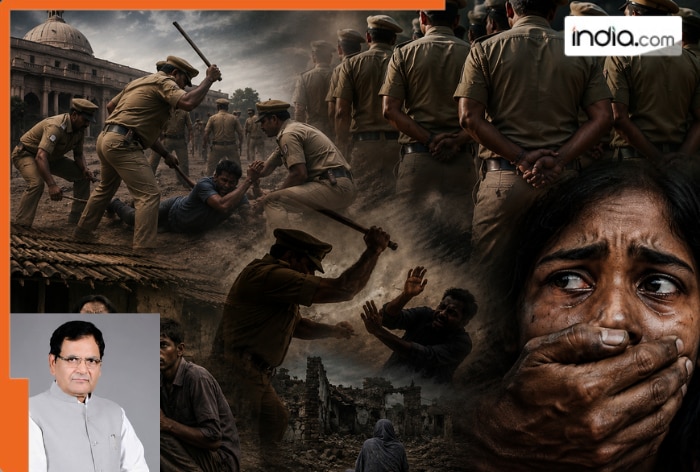


During all three tenures of SP rule – 1993-1995, 2003-2007, and 2012-2017 – the police and administrative machinery became permanent tools of Dalit neglect and oppression.

Updated: May 25, 2026 6:56 PM IST
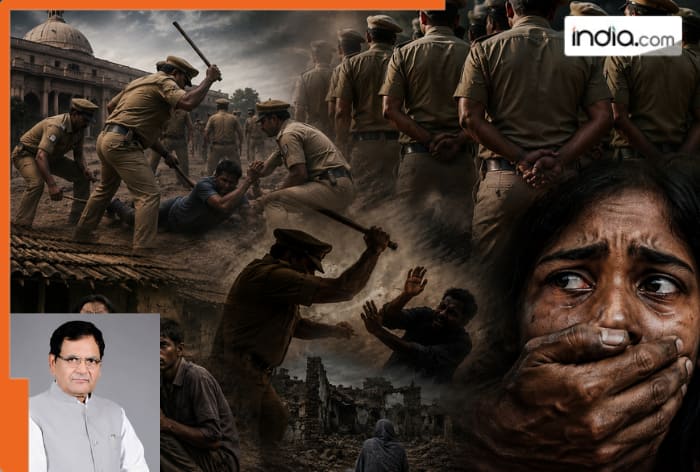
Lal Ji Prasad Nirmal | Power is not merely the authority to govern; it is also a social message. When a political party comes to power, it does not merely form a government, it also acquires the authority to decide whose suffering will be heard and whose will not, who will be punished for crimes and who will be forgiven. Ideally, every victim should be heard and every criminal should be punished, but for a long period in the context of Uttar Pradesh, this ideal situation remained absent. This discussion concerns the tenure of a party that wove the character of governance through the thread of caste. Although the Constitution may have declared everyone equal, when power begins functioning under the shadow of caste, constitutional equality remains nothing more than a written statement. Uttar Pradesh has been the biggest laboratory of this contradiction, and the Samajwadi Party its most prominent example. It cannot merely be called a coincidence that whenever the Samajwadi Party came to power in Uttar Pradesh, cases of violence, administrative neglect, and atrocities against the Dalit community increased significantly in rural and semi-urban areas.
Dalits Were Viewed as Voters of an Opposing Political Camp
When Ram Manohar Lohia envisioned bringing backward classes and Dalits onto a common platform, he dreamt of an ethical politics – a politics that would dismantle caste, not use caste as a weapon. However, the manner in which Samajwadi Party founder Mulayam Singh Yadav adopted Lohia’s legacy reflected not philosophy, but merely political strategy. He practiced politics not to break caste divisions, but to exploit them. The ‘M-Y’ alliance of Yadavs and Muslims was created, while Dalits were viewed not as allies but as voters of a particular opposing political camp. Once power was attained, it became clear that Dalits were nowhere among the priorities of the party. This is why a dark streak of Dalit oppression emerged during all three tenures of the Samajwadi Party government.
Police and Administration Became Instruments of Dalit Oppression

During all three tenures of SP rule – 1993-1995, 2003-2007, and 2012-2017 – the police and administrative machinery became permanent tools of Dalit neglect and oppression. During this period, the presence of the Yadav community within Uttar Pradesh’s administrative structure increased disproportionately. From station house officers to district magistrates, from tehsildars to revenue officials, the dominance of a particular caste made the entire system one-sided. This was not merely about appointments; it was about the mentality that entered police stations and government offices along with those appointments. When a Dalit victim approached a police station, he encountered the same face that belonged to the caste brotherhood of his oppressor. The hope for justice died at the threshold itself.
The natural consequence of this administrative bias was the weakening of the SC-ST Act. This law was intended as a legal shield for Dalits and tribals, but during SP rule this shield was torn apart. Even in the few cases that were registered, the rate of filing ‘final reports’ increased rapidly. Victim families kept running from court to court, witnesses were intimidated, and the accused continued roaming freely. This trend became even more pronounced in areas dominated by Yadav and Muslim influence, where the police pressured victims into compromise and extended political protection to the accused. In several incidents, even the Human Rights Commission had to take cognizance. This administrative discrimination was not confined to policing alone. It was also clearly visible in land allotments, encroachments on leasehold land, and the implementation of rural development schemes, where the interests of Dalits were ignored in favour of the ruling party’s core vote bank.
Strongmen Had Become the Centre of Power
In Uttar Pradesh’s rural society, land and social prestige have always been the primary causes of conflict. As soon as the SP came to power, certain dominant elements within the Yadav and Muslim communities developed the perception that the administration entirely belonged to them and that the system could do nothing against them. This collective mindset made them more aggressive. By suppressing vulnerable Dalits, they sought to send a clear message to other sections of society that they themselves had become the new centre of power. Dalits increasingly became targets in disputes over agricultural land, wages, and the use of public resources within the rural economy. Physical violence, social boycott, and mistreatment of women were used as tools to crush Dalit self-respect and economic independence. This was a ground-level display of the arrogance of power, where one deprived class struggled for its basic human rights while another sought to assert its dominance.
Continuous Atrocities Against Dalits
Some specific incidents from this period brought this caste-based oppression and brutality to the national stage. The infamous 1995 Guest House incident represented the peak of this political and social hostility, proving the extent to which democratic norms and the dignity of a Dalit woman leader could be violated in the pursuit of power. The incident conveyed the message that they were willing to go to any extent to suppress the voice of Dalit society. Similarly, in later years, the Badaun incident shook the nation, where the brutality inflicted upon two Dalit sisters shattered claims regarding law and order and women’s safety. Similar incidents were witnessed across the state. The arson incident in the Dalit settlement of Shabbirpur village in Saharanpur following Dalit-Muslim clashes, and the government’s subsequent stance, became a major example of Muslim appeasement. The dominance of Yadav-Muslim strongmen continued to be visible in districts such as Pratapgarh, Jaunpur, Azamgarh, Etah, and Mainpuri.
Although Akhilesh Yadav’s tenure from 2012 to 2017 was projected as a ‘new SP’ and ‘development-oriented politics’, the ground reality remained that atrocities against Dalits continued unabated. It is natural to ask here: if cases of atrocities against Dalits occurred under almost every government, then why is the SP specifically in the dock? The answer is because during its tenure, such oppression was allegedly carried out in an organized manner under political protection. The party claimed to stand for socialism and social justice, but during its rule, casteism rose in a dangerous manner. It is also a fact that not every Yadav or Muslim individual was an oppressor, and not every Dalit was a victim. Crimes can also be individual in nature. However, when criminals receive political protection due to vested interests, even a government that has sworn to work for public welfare without discrimination forgets its constitutional responsibilities and becomes hostage to narrow vote-bank politics.
Author: Lal Ji Prasad Nirmal, Member, Legislative Council, Uttar Pradesh
Disclaimer: The views, opinions, and assertions expressed in this article are solely those of the author. They do not necessarily reflect the official position or editorial stance of India.com.
Source link
#Opinion #Dark #Streak #Dalit #oppression #Rule