Companies in the professional services landscape are facing an increasingly complex environment and are turning to intelligent automation and modern business processes to address this challenge and boost their competitiveness. That is according to research from Pierre Audoin Consultants and Unit4.



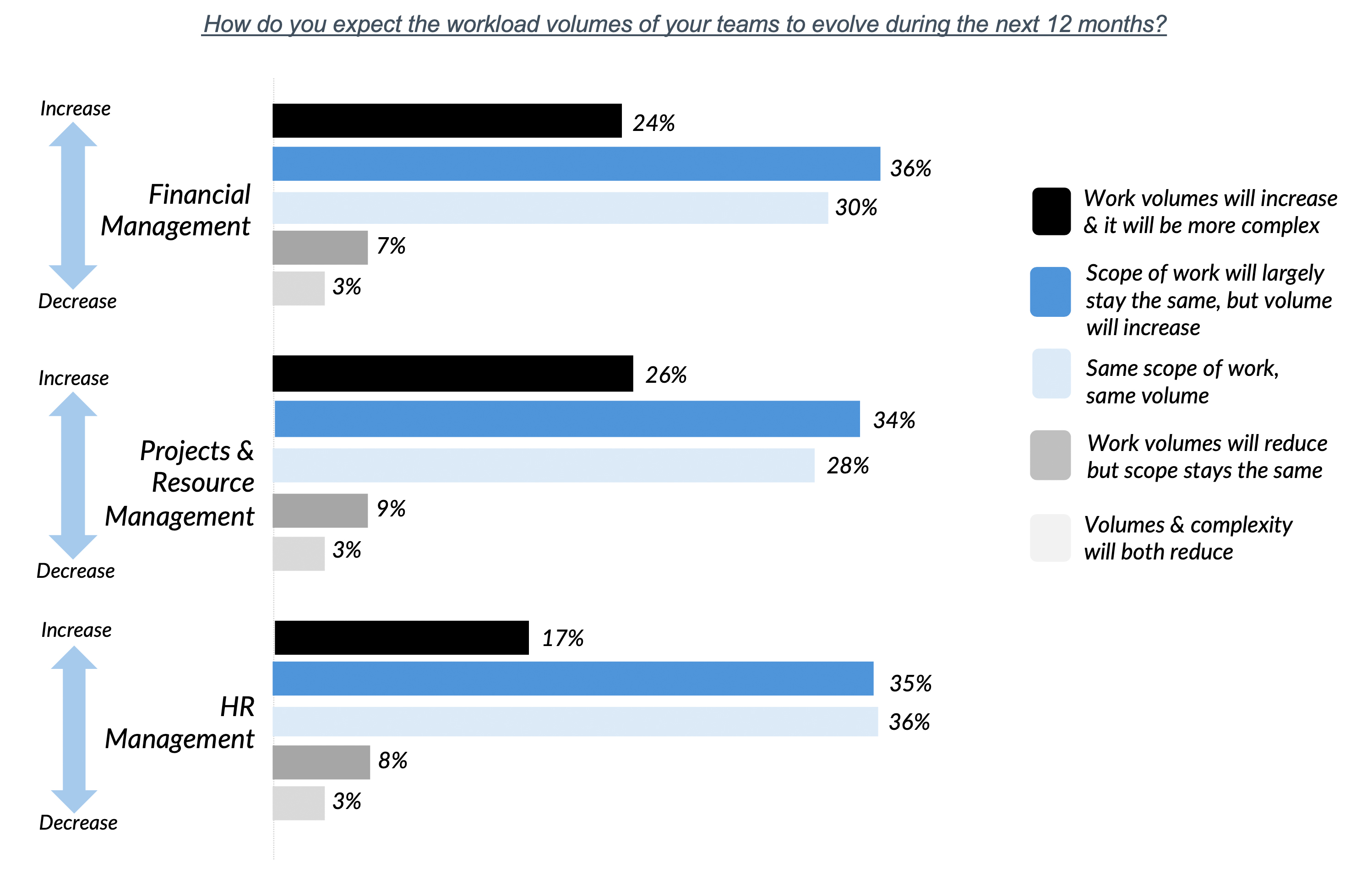
The international study, which interviewed 500 respondents from professional services organisations including management consulting and IT consulting firms, found that 60% of leaders in the industry expect their work volumes to increase and/or become more complex in the next 12 months.
Firms said that this growing complexity and workload will occur across their operations, from client-facing and project delivery functions to financial management, as well as human resources and people management.
On the client side, expectations are becoming more demanding. Consulting has become more transparent and competitive, with clients able to benchmark firms more easily and demand clear, measurable outcomes rather than just advice. At the same time, digital tools and AI have made it easier for clients to generate insights internally, meaning they now expect consultants to deliver deeper strategic value and faster execution.
Source: PAC Executive Study
On the internal side, more than two thirds (68%) of respondents told researchers that they expect their resource management workloads to increase and/or become more complex. “This area has become more challenging as a result of how the structure of the workforce has changed since the start of the decade,” said the researchers.
“The impact of the pandemic not only triggered a shift towards more remote and flexible working patterns, but also led many firms to increase their use of freelance workers. Building and maintaining an up-to-date, 360-degree view of skills and availability, and matching this to project requirements, has therefore become a significantly greater challenge.”
Source: PAC Executive Study
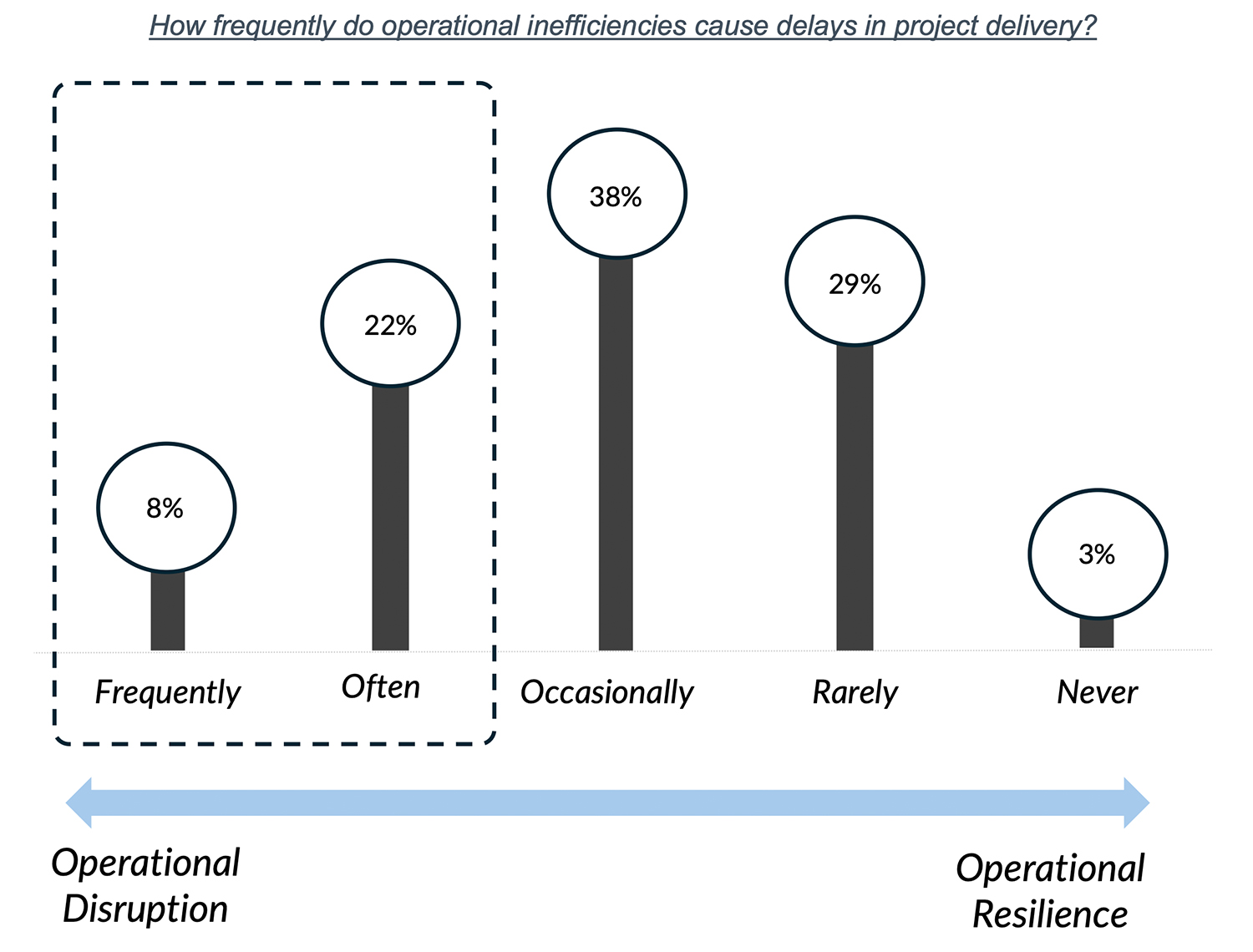
On the project and financial side, the report highlights how operational inefficiencies and legacy systems may be adding to workloads. Around 30% of respondents admitted to frequent or regular delays in project delivery due to operational inefficiencies, while 66% reported relying on fragmented application environments, and 19% said they still depend on multiple systems requiring manual work and spreadsheets.
The admin burden
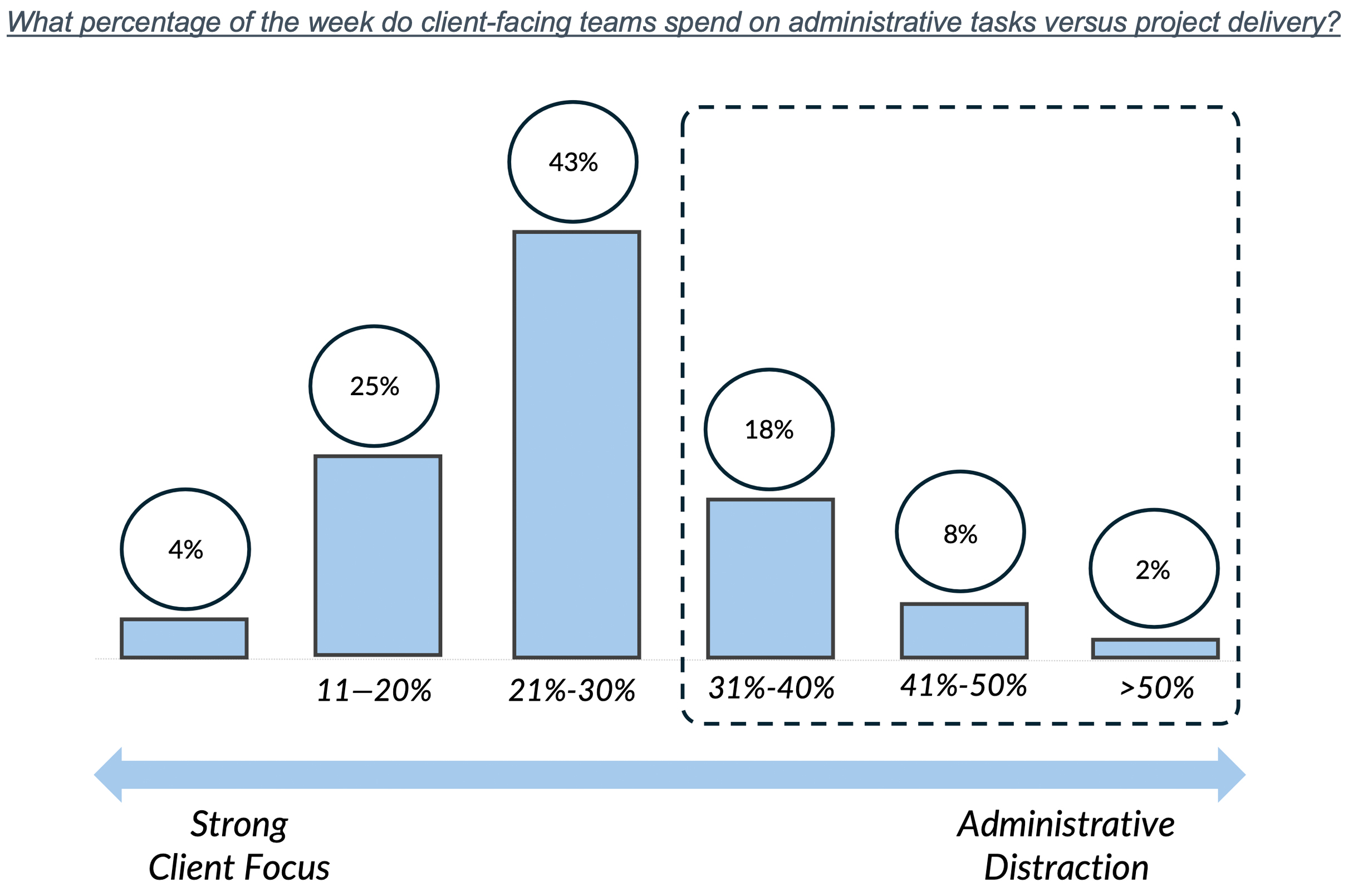
As a result, according to Pierre Audoin Consultants and Unit4, professionals within services firms spend unnecessary time on administrative tasks. The study suggests that more than a quarter (28%) spend at least 30% of their working week on such activities – equivalent to employees on a full-time working week losing around 12 hours to administrative burden.
“This is a major challenge when firms have set out strategic priorities to retain their best talent and increase their revenue. Reducing avoidable administrative burden in areas such as timesheets, expenses, and project management will be critical to achieving success in both areas,” stated the research.
Source: PAC Executive Study
What the leaders are doing
The study found that leaders in the industry are getting several things right when it comes to internal operations. Firms that stand out across the board run their businesses on modern, integrated, cloud-based platforms. They experience fewer errors in financial reporting, improved budgeting and forecasting, more efficient and timely resource management, and streamlined project delivery.
From a country perspective, firms in the US are the most advanced (36%) in adopting cloud-based systems, compared with Germany (22%), which has the lowest adoption. The UK sits somewhere in the middle of the seven countries studied.
“The research shows that modernisation of core processes is giving leading firms an advantage in terms of productivity and reducing time lost on manual processes and error correction. As competition heats up, firms understand that limiting the impact on their workforce is crucial to retaining talent and delivering projects more efficiently,” said Nick Mayes, senior consultant at Pierre Audoin Consultants.
Source: PAC Executive Study
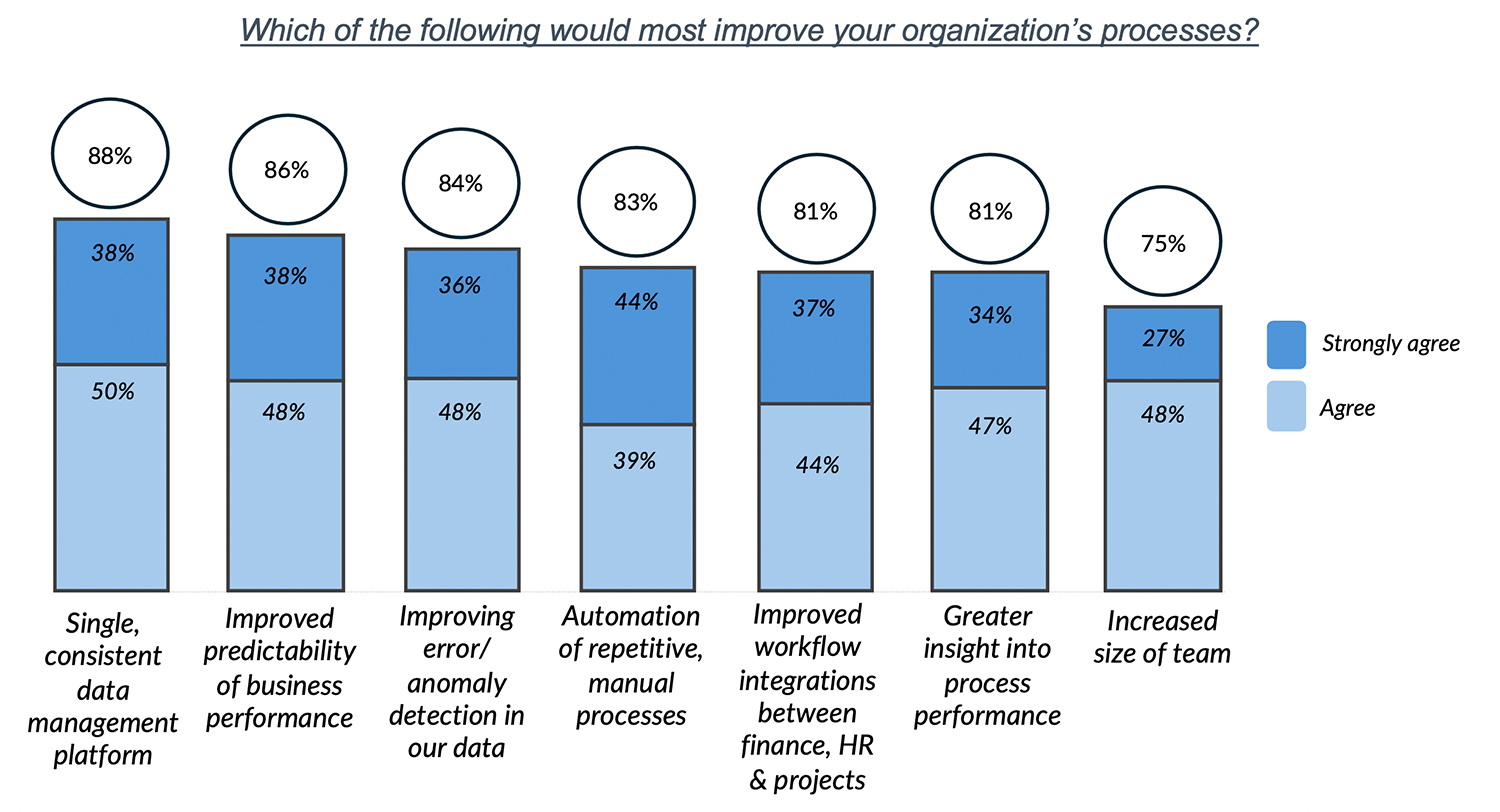
Having a better and single, consistent view of data – both of clients and internally – is another key area that can lead to improvement. 88% of respondents said this would improve their firm’s processes, while 86% said it would improve the predictability of business performance.
Of course, AI cannot be ignored. The research found that more than 60% also expect AI to have a beneficial impact, echoing another Unit 4 study on the topic, with 33% telling Unit4 and Pierre Audoin Consultants that it will fundamentally change how project and resource management processes work.
“Many professional services firms are being pushed by clients to transform commercial models to better serve their needs, but this is only possible if firms embrace modern cloud-based systems,” Mayes noted. “This will give them the agile, scalable foundations to deliver process automation, excel in data management, and adopt AI tools.”

Source link
#Operational #inefficiencies #legacy #slow #professional #services #firms