Noise at work is a risk that is easy to underestimate because it often does not cause an immediate accident. A noisy machine can run for years, a production line can operate every day, and a team can get used to speaking louder without anyone realising that exposure to noise is creating a real problem. The damage becomes apparent later, when hearing loss, tinnitus or difficulty communicating can no longer be reversed.
The Health and Safety Executive (HSE) estimates that there are around 15,000 workers with hearing problems caused or aggravated by work each year. This shows that noise-induced hearing loss is not a thing of the past; it is still a reality in many workplaces.



That is why a good occupational noise risk assessment should not be viewed as a mere paperwork formality. It needs to help the company understand where the noise hazards lie, who is exposed, how long that exposure lasts, whether legal limits are being met, and what control measures are necessary to protect workers’ hearing and workplace safety.
What Should an Occupational Noise Risk Assessment Actually Answer?
An occupational noise risk assessment, whether carried out as part of a wider workplace noise risk assessment or as a standalone review, must answer a simple question: what does the company need to do to protect workers exposed to noise?
This question seems straightforward, but it cannot be answered simply by referring to a table of measurement results. The HSE itself makes it clear that a noise risk assessment involves more than just measuring noise levels. In some cases, measurements may not even be necessary; in others, they are essential.
The assessment must produce a reliable estimate of workers’ exposure, compare this exposure with exposure action values and limit values, and indicate what needs to be done to comply with the law. This means that a good assessment must identify the areas, tasks, equipment and processes that generate excessive noise.
It must also show which workers are exposed, including people who do not directly operate the machinery but work nearby, move around the area or carry out intermittent tasks in noisy zones. A superficial assessment usually only states that the noise level in a certain area is high.
A useful assessment explains why this matters, what the daily or weekly exposure is, how long the worker remains on site, whether there is impact noise, whether communication is impaired, whether alarms and warning signals may be masked, and whether there is a risk of hearing damage or operational safety failure.
Noise Monitoring Is Not the Same as Risk Management
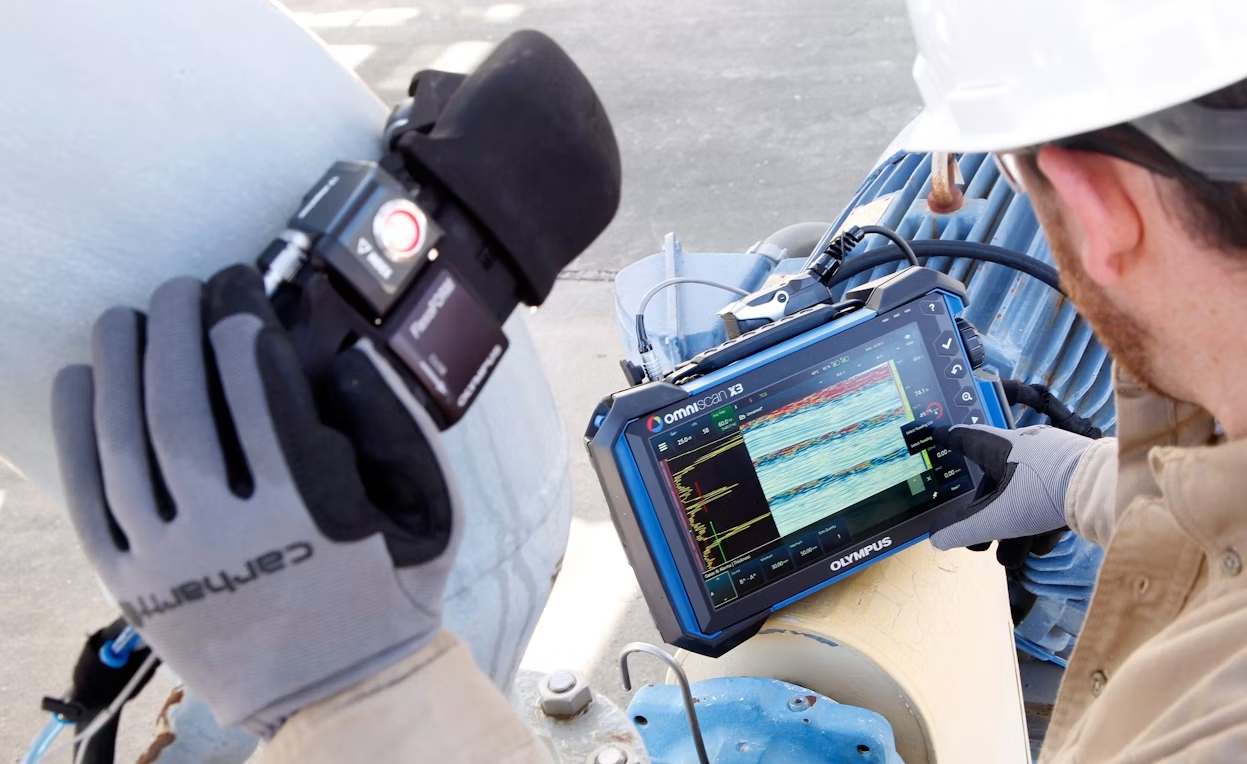
Occupational noise monitoring is an important part of the process, but it should not be confused with a full noise risk assessment. A noise survey can measure sound levels at different points, identify the main noise sources and record technical data. However, if the report does not translate this data into decisions, it does not solve the problem.
A good workplace noise assessment interprets actual exposure. This involves observing the activity, understanding the work cycle, talking to operators and supervisors, checking variations between shifts, and considering whether the measured scenario represents normal routine. The exposure estimate must be representative of the work carried out and must take into account what workers do, how they do it, and how this may vary from one day to the next.
This point is particularly important in industries with variable operations. In maintenance, manufacturing, engineering, construction, carpentry, logistics, materials processing and other activities involving noisy machinery, exposure can vary significantly throughout the week. A worker may spend part of the day near compressors, another part using noisy powered tools, and another period in an area where the noise is merely intrusive.
The assessment must capture this reality, not just a snapshot of a few minutes. When a company receives a report that merely presents figures, without explaining employees’ exposure or suggesting proportionate control measures, it does not have a management tool. It has only an incomplete technical record.
How the Noise at Work Regulations Shape a Good Assessment
The legal framework in the UK is the Control of Noise at Work Regulations 2005, one of the key noise regulations requiring employers to assess risks to employees’ health and safety from workplace noise exposure. These regulations came into force for most sectors in Great Britain on 6 April 2006, with subsequent implementation in the music and entertainment sectors on 6 April 2008. The aim is to protect workers’ hearing from excessive noise that may cause hearing loss or tinnitus, while helping employers achieve compliance through proportionate control measures.
Reference values are central to any serious assessment. The level at which the employer must assess the risk and provide information and training is 80 dB(A), based on the average daily or weekly exposure. The level at which the employer must provide hearing protection and establish hearing protection zones is 85 dB(A).
There is also an exposure limit value of 87 dB(A), taking into account the reduction provided by hearing protection, above which workers must not be exposed. These values should not appear in the report as mere legal citations. They should be used to guide decisions.
If exposure is below the lower exposure action value, actions may be simple and proportionate. If exposure reaches or exceeds the upper exposure action value, the company must implement a planned programme of noise control, rather than simply distributing hearing protectors. Where the assessment shows exposure equal to or greater than the upper exposure action values, there must be a planned programme of noise control.
Therefore, a high-quality occupational noise risk assessment must demonstrate the link between measured results, legal obligations and practical management decisions. These regulatory thresholds should not sit in the report as mere compliance references; they should guide what the employer does next.
What Should a Good Occupational Noise Risk Assessment Contain?
A good assessment begins with a clearly defined assessment scope. The reader must understand which areas were assessed, which tasks were observed, which equipment was in operation, which groups of workers were considered, and what working conditions were present during the visit. Without this, it is difficult to know whether the results are representative.
Next, the assessment must identify the main noise sources. These may include presses, saws, compressors, extruders, pneumatic impact tools, ventilation systems, forklifts, automated lines, and processes involving cutting, grinding or blasting. In some environments, the risk stems from a single dominant source. In others, exposure results from the cumulative effect of several smaller sources throughout the shift.
The report must also explain workers’ exposure. This involves more than simply recording noise levels. It is necessary to consider the duration of exposure, work patterns, distance from the source, the use of barriers, equipment maintenance, ambient reverberation, the working environment and the possibility of variation between days. The estimate must be reliable, as decisions regarding noise reduction, hearing protection, protection zones and health surveillance depend on it.
Another essential element is comparison with exposure action values and limit values. The assessment must show which workers or groups are above 80 dB(A), which are at or above 85 dB(A), and whether there is any risk of exceeding the legal limit of 87 dB(A), taking hearing protection into account. It should also consider peak noise levels, where applicable, as impacts and sudden events can pose a risk even when the daily average appears to be under control.
The most important part, however, is the action plan. According to the HSE, the employer must record the conclusions of the risk assessment and include what has already been done, what remains to be done, the timetable and who will be responsible. A report that does not define priorities, responsible parties and deadlines leaves the manager without direction.
Control Measures Come Before Reliance on Hearing Protection
A common flaw in poor assessments is treating hearing protection as the primary solution. Hearing protection is important and, in many cases, essential. But it should not replace risk reduction at source.
A good assessment should ask whether the process can be modified to generate less noise, whether there are quieter equipment alternatives, whether maintenance can reduce vibration and noise, and whether engineering controls such as sound insulation, acoustic enclosures, improved sound absorption, workflow changes or increased distance from the noise source could reduce noise exposure.
These noise control measures are more robust than relying solely on the individual behaviour of each worker. Where reasonably practicable measures for controlling noise and reducing noise risks exist, they should be adopted. Where risks are high, they should be managed through a prioritised noise control plan.
This does not mean that hearing protection is secondary or optional. Where exposure requires it, the employer must provide suitable hearing protection, ensure its use, train workers and maintain the equipment in good condition.
However, the assessment must demonstrate that the hearing protection has been selected appropriately. It must be compatible with the noise level, the noise frequency, the task, other PPE, and the need for communication and the perception of warning signals.
Inappropriate use of protectors can create new problems. Insufficient protection leaves the worker exposed. Excessive protection can hinder communication, isolate the worker and interfere with the perception of alarms. Therefore, the assessment must verify that the protection is adequate to reduce the risk without compromising operational safety.
Hearing Protection Zones Must be Clear and Justified
Where exposure levels require mandatory hearing protection, the company must identify hearing protection zones and define how those protection zones will be managed. A proper assessment should not merely state that a zone exists; it should explain where it begins, why it exists, which activities pose a risk, and how the zone should be signposted and supervised.
This is particularly relevant in environments where workers move between areas with different noise levels. If protection zones are too large, they can become difficult to monitor. If they are too narrow, they may leave people exposed. The boundaries must reflect operational reality.
A good assessment should also take into account visitors, contractors, and cleaning, maintenance and supervisory staff. Often, these people are not regarded as ‘exposed workers’, but they may enter noisy areas during critical activities. Noise management must protect everyone who may be affected, not just those listed in the formal job description.
Health Surveillance Must Not be Overlooked
Noise-induced hearing loss is cumulative and often irreversible. Workplace noise risks can also affect safety by making normal conversation, instructions, alarms and warning signals harder to hear. For this reason, health surveillance is an essential part of the control system where there is a risk to health. By law, the employer must assess and identify measures to eliminate or reduce the risks of noise exposure and, where necessary, must ensure the provision of hearing protection, the correct use of controls, information, training and health surveillance.
A good occupational noise risk assessment should indicate which workers require hearing health surveillance and why, helping employers manage workplace noise risks effectively. It should also explain how the results of health surveillance will be used to review existing controls, training, supervision and the suitability of hearing protection.
If hearing tests show signs of deterioration, this should not be treated merely as an individual medical problem. It may be an indication that noise controls, hearing protection, training or supervision are not working as they should.
The assessment should also consider workers at particular risk. Some people may be more vulnerable due to medical history, previous exposure, ototoxic medication or difficulties in using certain types of protection. The aim is not to exclude workers, but to ensure that controls are appropriate to the actual risk.
What Distinguishes a Good Report From a Poor One?
A poor report is usually easy to spot. It appears technical, but does not aid decision-making. It presents measurements without context, graphs without interpretation, generic recommendations and little connection to day-to-day operations. Often, it claims to provide hearing protection without explaining what kind of protection, for whom, for which tasks, in which areas, with what level of attenuation, and how its use will be monitored.
A good report does the opposite. It tells the story of the risk. It shows where the noise originates, how it propagates, who is affected, for how long, at what intensity, and what needs to change. It also distinguishes between immediate actions and medium-term actions. For example, it may identify an immediate risk in a specific area and recommend hearing protection straight away, while the company plans an enclosure, corrective maintenance, equipment replacement or a layout change.
The quality of the assessment is primarily reflected in the usefulness of the action plan. If the manager can read the report and understand what to do the following week, the following month and at the next review, the assessment has fulfilled its purpose and helped the employer reduce risks. If they need to hire another consultant to interpret the document, something has gone wrong.
When Should the Assessment be Reviewed?
A workplace noise risk assessment is not a one-off exercise. It must be reviewed whenever there is a significant change in the work, layout, equipment, processes, production volume, materials, shifts or existing controls. It must also be reviewed if there are complaints from workers, concerning findings from health surveillance, or if there is a suspicion that the previous assessment no longer reflects the reality.
Even when nothing appears to have changed, the HSE recommends not letting more than around two years pass without checking whether a review is necessary. This does not mean that every company needs to repeat full measurements every two years. It means that management needs to confirm whether the assessment remains valid and whether the control measures remain adequate.
This point is critical for ongoing compliance. Machinery ages, noise barriers are removed, processes change, maintenance varies and workers may develop operational shortcuts. Without a review, an assessment that was originally sound can become outdated.
Why Choose Finch Consulting?
Companies dealing with occupational noise need more than measurements or occupational noise monitoring data. They need expert analysis, technical judgement and recommendations that can be implemented in real-world operations.
Finch Consulting is a consultancy specialising in risk management, helping UK organisations to identify, manage and mitigate risks in complex operations, assets and supply chains. The firm takes an approach based on constructive analysis, technical expertise and practical solutions for risks that matter.
On the subject of noise, Finch has also developed specific benchmarks for occupational noise risk management. These benchmarks cover management arrangements, risk assessment, control of exposure and hazards, personal hearing protection, workforce training and engagement, and health surveillance. This framework is important because it treats noise at work as part of a management system, not as an isolated measurement exercise.
For organisations seeking to demonstrate compliance, reduce noise exposure, protect employees and improve workplace safety, this combination of practical experience, regulatory knowledge and a systemic approach is what distinguishes a truly useful assessment from a simple noise survey.
Summary
A good occupational noise risk assessment is not merely a set of decibel readings. It identifies noise hazards, estimates noise exposure in a representative manner, compares the results with exposure action values and legal limits, defines proportionate control measures, and creates a clear action plan.
It also recognises that hearing protection is important, but does not replace noise control. Where exposure is significant, the company must reduce noise wherever reasonably practicable, define hearing protection zones, train workers, maintain controls in operation and use health surveillance to verify that protection is effective.
The value of a good assessment lies in its ability to transform data into decisions. If the report helps the company protect workers’ hearing, demonstrate compliance and improve workplace safety, it is doing the job right.
FAQ
What is an occupational noise risk assessment?
It is an assessment that identifies and analyses health and safety risks caused by exposure to noise at work. It is not usually concerned with low level noise that does not create a hearing risk, but with workplace exposure to loud noises that could cause harm. It should show who may be affected, what the likely exposure is, whether legal limits are being met or exceeded, and what measures are needed to eliminate or reduce the risks.
Is a noise survey enough to comply with the law?
Not always. A noise survey can provide useful measurements, but compliance depends on interpreting this data within the context of the activity. The company needs to understand employee exposure, tasks, duration of exposure, control measures, hearing protection, health surveillance and an action plan. The HSE states that a risk assessment is more than simply measuring noise.
When is hearing protection required?
According to the HSE, the employer must assess the risk and provide information and training when daily or weekly exposure reaches 80 dB(A). Hearing protection and hearing protection zones are required from 85 dB(A) onwards, and workers must not be exposed to levels above 87 dB(A), taking into account the reduction provided by hearing protection.
Who should carry out a workplace noise assessment?
The assessment must be carried out by a competent person. This means someone with sufficient knowledge to understand noise exposure, measurements, work processes, legal duties and noise control measures. The risk assessment must be drawn up by a competent person and based on guidance and information from competent persons, according to the HSE.
How often should a noise risk assessment be reviewed?
The assessment must be reviewed whenever changes in the workplace may affect noise exposure. It must also be checked regularly to confirm that the controls remain effective and that the workplace noise assessment still reflects the way work is actually carried out. Even when nothing appears to have changed, the recommendation is not to let more than about two years pass without checking whether a review is necessary.
Source link
#Essential #Guide #Occupational #Noise #Risk #Assessment #Finch #Consulting