3 min readJun 13, 2026 07:54 PM IST



By Vishakha Toshniwal & Ananya Shetty

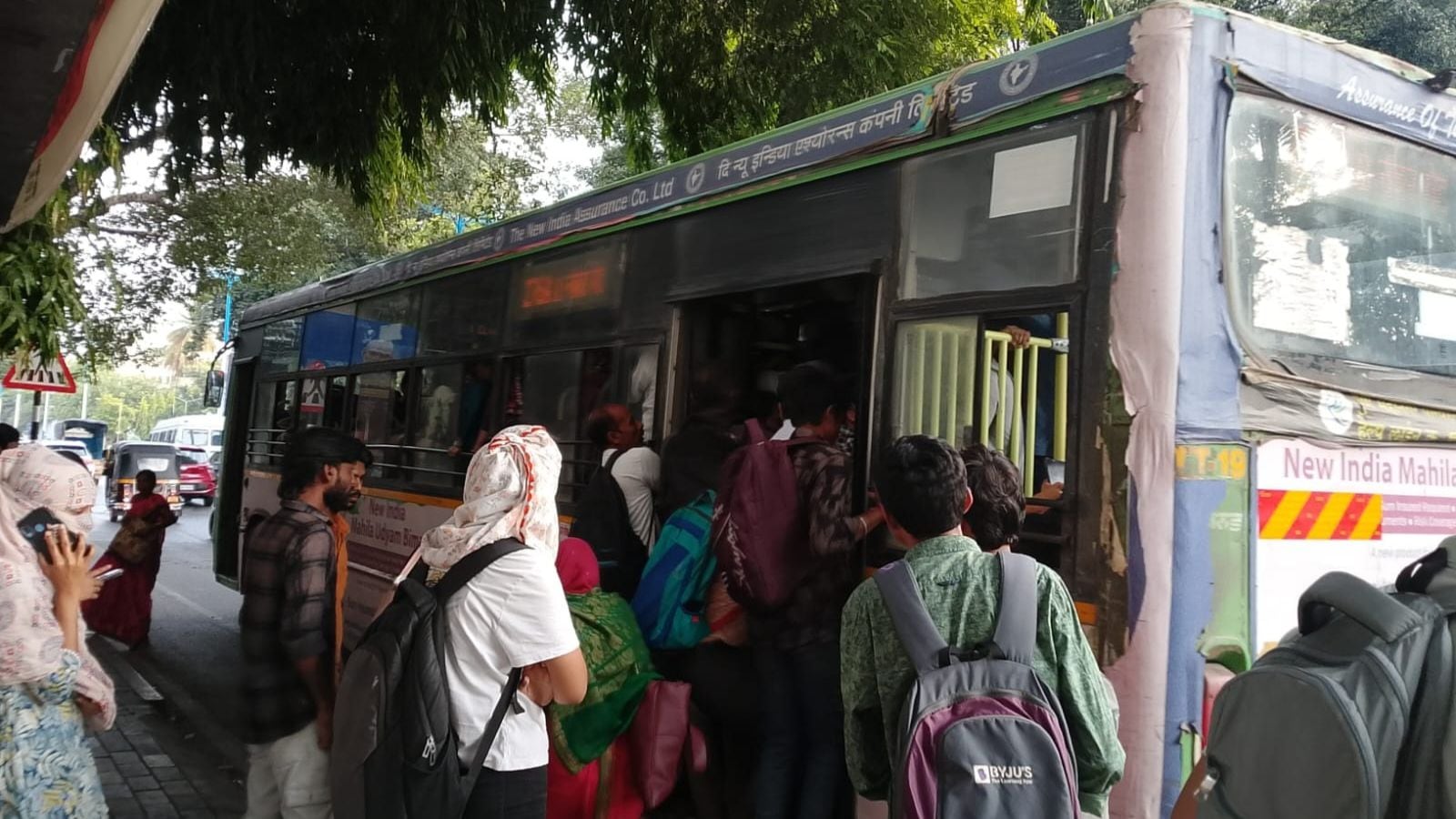
For many daily women commuters, safety concerns on PMPML buses extend beyond infrastructure and punctuality issues. Overcrowding, harassment, theft, and the lack of intervention from authorities continue to affect daily travel experiences.
Nehalika Chavan, a human rights officer, recalled a case involving one of her clients, a young girl who regularly commuted by bus. According to Chavan, “The girl noticed two men checking her out while waiting for the bus. Further, they boarded the bus with her while one of them stood next to her and started to touch her inappropriately’’.
Rajnigandha Utar, 25-year-old, a lab technician, recounted an incident while travelling on the Pimpri–Wagholi route. She said, “A man occupied a seat reserved for women and refused to vacate it despite repeated requests. I informed the conductor, but he didn’t respond either. I had to stand for the entire one-hour journey.”
“Conductors should take more proactive action in such situations,” she added. Utar also recalled instances during intercity travel when male passengers repeatedly stared at her throughout the journey, making her uncomfortable.
“This is something considered very common and it is always advised to ignore that person instead of taking a stand for yourself’’.
For some commuters, overcrowding itself contributes to feelings of insecurity. Prajakta Zirande, a 24-year-old who travels by bus for work, said buses are often so crowded that passengers wait for long periods and struggle to find space onboard. “Sometimes it feels unsafe, but you cannot say anything because people dismiss it as something that happens due to the crowd,” she said.
Story continues below this ad
The issue of theft has also emerged as a concern. Nikita Chaat, a 28-year-old software engineer, said overcrowding frequently forces women to travel standing for extended periods. She recalled losing her purse while travelling on a PMPML bus last year. “I went to the next depot and made inquiries, but I never recovered it,” she said.
Chaat added that although buses have designated sections for women, men occasionally enter these spaces, reducing their effectiveness. She believes increasing the frequency of buses could help reduce overcrowding and improve both comfort and safety for women passengers.
Mahesh Awhad, the Chairman and Managing Director of PMPML, said, “We are planning to install CCTV cameras across the fleet, which would help ensure the safety of female passengers. In case of eve-teasing or women’s harassment cases, we would be able to capture the proof on two onboard CCTV cameras located in front and rear areas.”
“A total of 1,500 new buses, comprising 1,000 owned by the organisation and 500 under the GCC (gross cost contract) model, will be added to the PMPML fleet by the end of this year. Additionally, another 1,000 buses are set to join the fleet by 2027 under the central government’s PM e-Drive scheme. Routes with daily ridership exceeding 2,000 passengers are also slated for increased frequency, with a demand-based deployment model under consideration, eventually avoiding overcrowding,” he added.
Source link
#PMPML #buses #women #overcrowding #harassment #inaction #travel