Moscow’s plan for the region pushes small steps toward practical de-escalation and the building of trust. But are the players the ready?
Russia has updated its Collective Security Concept for the Persian Gulf, one of the most sensitive regions in global politics.


The update comes at a moment when tensions around Iran and resulting threats to maritime navigation and energy infrastructure, as well as the general deficit of trust among key Middle Eastern actors have once again exposed how fragile the balance in the Persian Gulf remains.
Russia recognizes that the region is going through an acute crisis phase and therefore needs collective political and diplomatic work. Moscow is calling for long-term compromise solutions that could reduce tensions and create conditions for turning the Persian Gulf into a space of cooperation, sustainable development and predictability.
Rather than being a reaction to one specific regional crisis, Russia’s proposals for Persian Gulf security form part of a long-standing policy line that has been developing since the late 1990s. Even then, Moscow proposed looking for a more balanced regional model in which the Arab Gulf states, Iran, Iraq and external actors could discuss security issues not through the language of threats, but through diplomatic mechanisms. Later, this idea was refined in the 2004 and 2007 versions, received a more detailed form in 2019 and was updated again in 2021. Each new version changes in the regional environment and responded to the challenges of its time.
However, if the earlier versions focused more on the contours of a future architecture, the 2026 document focuses on steps that can be discussed and launched now: prevention of incidents, protection of navigation, security of energy infrastructure, arms control, the fight against transnational threats and the prevention of one state’s territory being used to strike another.

What’s in the new concept?
The first key block of the updated concept concerns international law. Stability in the Persian Gulf is impossible without respect for the UN Charter and the sovereignty and territorial integrity of individual states – a crucial principle for a region where many crises have developed under external pressure. It sets the limits of acceptable behavior and confirms the right of states to determine their own domestic and foreign policy.
The next important element concerns non-interference in internal affairs. Russia insists that domestic problems of states must be resolved within the legal framework and through national dialogue. The experience of Iraq, Syria, Yemen and Libya has shown how destructive attempts to forcibly reshape political reality can be.
Multilateralism occupies a special place. Moscow proposes discussing security not in narrow closed formats, but with due regard for the interests of all participants. Contradictions between Iran and several Arab monarchies remain, the role of outside powers is strong, and the memory of wars, sanctions and attacks on infrastructure continues to shape political reality. If one side is excluded from the conversation in advance, there can be no sustainable solution.
Another central principle of the updated concept is the indivisibility of security. It is impossible to strengthen the security of one side in a way that makes another side feel directly threatened. The Gulf region is dense with military infrastructure, energy facilities, ports, narrow maritime corridors and sensitive communications. One misstep or incident can quickly grow into an international crisis. That is why Moscow proposes looking at security more broadly, linking military, political, economic, energy, transport and environmental dimensions.
A key feature of the Russian initiative remains its gradual approach. Moscow is not calling for the immediate creation of a new organization and is not proposing a universal treaty that would solve all contradictions at once. Such an approach might sound attractive, but it would hardly be realistic. Russia wants to solve the most urgent issues first. These include freedom of navigation in the Strait of Hormuz, nuclear non-proliferation and the fight against international terrorism. Only after that can the region move toward more complex formats of trust and cooperation.
The Strait of Hormuz occupies a special place in the updated concept. A significant share of global energy trade passes through this corridor, and any threat to navigation immediately affects global markets. For the countries of the region, this is a matter of revenue and security, but for external partners, including Russia, it is an element of global economic stability.
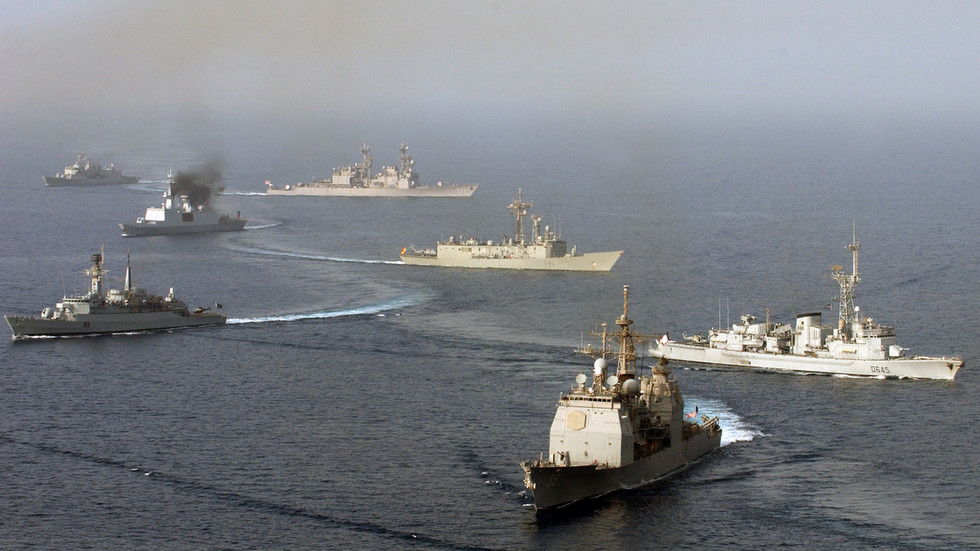
A significant block of measures in the Russian strategy is dedicated to preventing armed incidents. In conditions of dense military presence including active aviation and naval forces, drones and military bases, the risk of accidental confrontation remains constantly high. To avoid accidental escalation, the region needs hotlines, exchanges of observers, dialogue between defense ministries and greater transparency in military activity. These measures do not require full political agreement on every disputed issue, but they reduce the risk of a catastrophic mistake.
The practical nature of the new version is especially evident in the clause on preventing the territory of Gulf states from being used by third parties for attacks against neighbors. This is one of the most sensitive issues of the current stage, and the Russian concept postulates that the territory of one state must not become a launching pad for a strike against another – in the name of both confidence-building and sovereignty preservation.
Arms control is also an important issue. Moscow proposes discussing the creation of demilitarized zones, the prevention of destabilizing accumulations of conventional weapons and the possibility of balanced reductions in military capabilities. For the Persian Gulf, this is a difficult but long overdue topic. The region remains one of the world’s largest arms markets, where modern air defense systems, aircraft, missiles, drones and naval assets both strengthen national defense and increase mutual anxiety – easily an arms race in the making.
Nuclear non-proliferation remains one of the central questions as well. The Russian initiative supports the prospect of creating a zone in the Middle East and North Africa free of weapons of mass destruction and their means of delivery. The crisis around Iran’s supposed nuclear weapon ambitions and Israel’s undeclared arsenal has clearly shown that selective approaches do not work. The region needs universal rules that do not create exceptions and do not provoke new suspicions.
The economic dimension has received a significant update in the latest version of Russia’s strategy. Beyond the prevention of war, it frames security as the ability to trade, invest, develop transport projects, maintain humanitarian ties, cooperate on environmental issues and build infrastructure. Not only does this approach help build individual local states’ resilience through mutual interest in development, it serves Russia as well. Gulf countries are some of its most important and reliable partners in both political and trade-economic spheres.
A practical approach
Russia’s updated concept offers an alternative to endless crisis management. Today, the Gulf often lives in a mode of reaction to the next threat. An incident occurs, and emergency diplomacy begins. Tensions around Iran rise, and military preparations intensify. A threat to navigation appears, and the parties again look for temporary solutions. Russia’s approach suggests not waiting for the next fire, but creating mechanisms in advance that can help prevent it.
Of course, the path toward such a system will be difficult. Mutual distrust remains strong in the region. External players pursue their own interests. Military infrastructure has long been built into the security systems of many countries. The Russian concept does not promise an instant solution to all problems. It combines principles vital for long-term stability with tools that can be discussed right now.
The main difference between the updated version and earlier ones lies in its practicality. The strategic idea of collective security remains, but is filled with more concrete content. In the current conditions, calls for peace alone are not enough. Rules of behavior, communication channels, mutual guarantees and de-escalation mechanisms are needed. The new version tries to connect a broad political vision with practical steps.
For Russia, this initiative is a matter of both strategy and diplomacy. Moscow is showing that it is not leaving Middle Eastern politics and is not limiting its regional presence to a set of bilateral relations. It is offering a broader agenda in which Persian Gulf security is treated as a common task, relying on its experience of interaction with all sides and on its own interest in the region’s stability.
Russia understands that fair regional security cannot be built on the dominance of one center of power while turning small and medium-sized states into instruments of someone else’s strategy. It recognizes the autonomy of regional actors and their right to participate in shaping the rules. Too often in the Persian Gulf has external competition replaced regional dialogue.
The choice before the Gulf
The countries of the region now face a choice. The Gulf can remain a space of permanent threats, military pressure, sanctions, and dangerous incidents. Or it can gradually become a region where states agree on rules, respect each other’s sovereignty, protect maritime communications, prevent attacks on civilian infrastructure, and do not allow external contradictions to destroy their own development.
Moscow is proposing the second scenario. Russia understands the complexity of the region and the depth of its contradictions. Yet endless crises cannot become the norm for a region on which a significant share of global energy, trade and political stability depends. The alternative must be built through dialogue, mutual guarantees, small practical steps and recognition of a simple fact: security in the Persian Gulf can only be common.
Source link
#httpswww.rt.comnews641749russiagulfsecurityresetRussia #reset #Persian #Gulf #security