Epic Games CEO Tim Sweeney wants video game companies to connect their respective games’ virtual economies. It’s the only hope for new games to succeed, he said in an interview with IGN.
“The only way that we can hope for new games coming into the market to be able to succeed when there’s so much Metcalfe’s Law at play and so many captive audiences in the really big games—you know, Fortnite, Roblox, PUBG Mobile, and a few other really huge ones—it’s got to be that those games get momentum by connecting to the economies in other games,” Sweeney said.



“I think that can really reinvigorate the market if people are constantly looking to new games and sources of new items that they can earn everywhere and be able to really easily move together with their friends.”
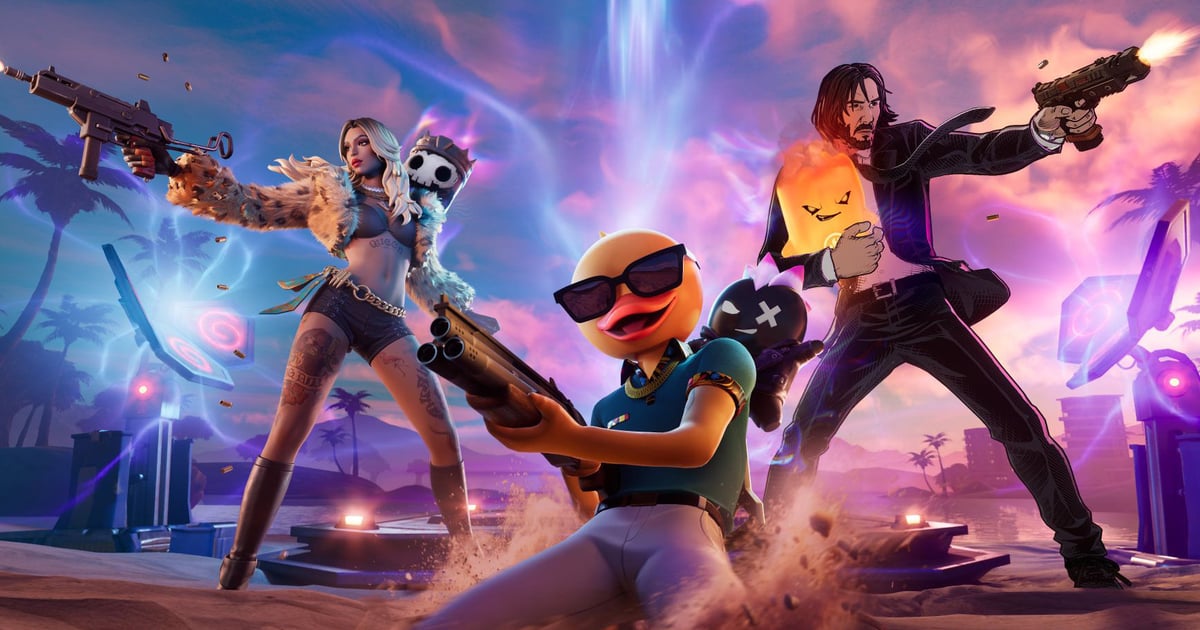
It’s the sort of thing Epic Games announced with its Fortnite cosmetics—items that can move from one game to another. (That’s something Sweeney’s been talking about for years.) He thinks people want in-game stuff that is transferable between games, even games from different companies.
Sweeney’s expectation for success hinges on players being attached to what they’ve bought in their games, like a certain Fortnite skin. And not only attached, but so deeply committed in that those cosmetics or other investments in a game are what keeps people from playing new games.
Sweeney’s conversation with IGN comes a few months after Epic Games laid off more than 1,000 employees in March, driven by a downturn in Fortnite‘s financial performance. (Despite Fortnite‘s incredible success, Epic Games laid off more than 1,000 employees in March.)
Sweeney said that with every seven to 10 years in a technology generation, “changes accumulate so much that the way people build games and play games changes.” Regardless of what the problem is, game companies can’t just throw more money at it, he said. It’s not sustainable for video games to become more expensive to make each console generation.”
He offered some scenarios: the games that cost a lot to make but weren’t very good, and the big budget multiplayer games that are sometimes good, but didn’t have enough players. “The market dynamics prevented players from coming in simultaneously with enough scale to make it viable,” he said.
The structural change of the industry that companies should look to, Sweeney said, is the “increasingly multiplayer” nature of the industry.
“And not just multiplayer but social, where you’re getting together with your friends and then you’re deciding what to do, what to play, and how to play it,” Sweeney said. “This trend of the gaming economy shifting—some people like it and some don’t—is going more and more towards buying things in games rather than buying games. In-game economy is driving gaming, especially at scale and especially over long durations as you see with these long-lasting multiplayer games.”
He acknowledged that this often leads to a “winner-takes-all phenomenon.” (The winners here are often Fortnite and several others, like Roblox.)
Back to the metaverse
Sweeney’s vision sounds a lot like the metaverse. In fact, he said as much in 2024 when speaking to The Verge—that Unreal Engine 6 and its interoperable functionality is the key to making the “metaverse” work.
He also noted it’s down to social connection, like letting Xbox players chat with PlayStation players natively.
“Not just Epic, but name all of the top game developers, I think Xbox, Epic, Roblox, Riot, Tencent, EA, all the different studios within Microsoft—we’d all be better off if we connected our stuff,” Sweeney said. “We’d all be making more money and our gamers would be happier, so it’ll be just a great outcome for the world.”
Epic Games announced earlier this month that its Unreal Engine 6 will be released as an early access product at the end of 2027. It’s expected to change the way UE6 works, moving the engine onto a new framework called Verse, which Epic Games said is “the foundation for Epic’s future programming model.”
Unreal Engine is used by so many video game makers, and the impact of these changes to its framework will certainly impact large swaths of the industry.
A defining feature is interoperability between games and engines; Fortnite cosmetic items will lead the way with new tools to let players bring their Fortnite skins to other games, and vice versa. It’s the first step, the company says, to “building a shared economy for smart assets: functional assets with logic and functionality that work across games, to recognize players’ time and spending in a better way.”
Source link
#Epic #CEO #connecting #game #economies #industrys #hope