

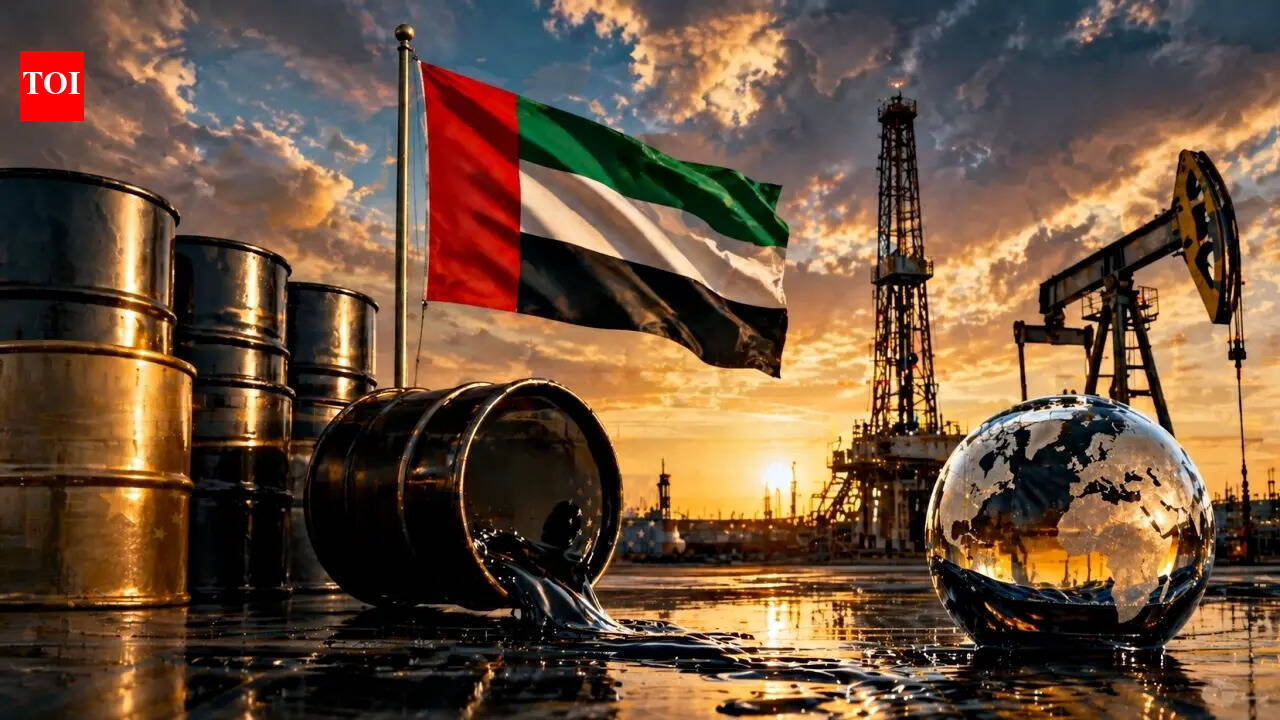
In a significant move which may have implications for the world oil market, the United Arab Emirates (UAE) has announced that it will pull out of OPEC and OPEC+ alliances. The move comes amid the ongoing Middle East crisis which has sent crude oil prices sky rocketing past the $100 per barrel mark.The Organization of the Petroleum Exporting Countries or OPEC is a group of major oil-producing nations. This group coordinates their petroleum production policies to help effectively manage global oil supply and influence crude prices.OPEC+ is a broader alliance which includes OPEC members and several other major non-OPEC producers of oil such as Russia. This group also works to coordinate output levels of crude with an aim to stabilize the global oil market.
What UAE Has Said


UAE has said that the move is aimed at prioritising its national interests. A leading global oil producer, the UAE has at times expressed reservations about OPEC’s production limits. The statement said the decision aligns with the UAE’s long-term strategic and economic objectives, as well as its evolving energy landscape.“During our time in the organisation, we made significant contributions and even greater sacrifices for the benefit of all. However, the time has come to focus our efforts on what our national interest dictates,” the statement said.Also Read | Strait of Hormuz blockade persists, but India’s imports of Russian oil are down from highs seen in March – here’s whyUAE Energy Minister Suhail Mohamed Al Mazrouei told Reuters that the decision followed a thorough review of the country’s current and long-term energy strategy.When asked whether the UAE had consulted Saudi Arabia before making the move, he said no discussions had taken place with any other country on the matter.“This is a policy decision, it has been done after a careful look at current and future policies related to level of production,” he said.The UAE’s decision follows growing frustration in Abu Dhabi over what it sees as insufficient support from fellow Arab nations during repeated Iranian attacks amid the ongoing conflict.Anwar Gargash, diplomatic adviser to the UAE president, openly criticised the response from both Arab states and Gulf allies during a session at the Gulf Influencers Forum on Monday.He said that while Gulf Cooperation Council member states had provided logistical assistance to one another, their political and military response had been historically weak.Gargash added that he had expected a limited response from the Arab League and was therefore not surprised by its stance. However, he said he had anticipated a stronger and more unified position from the Gulf Cooperation Council, making its muted reaction particularly disappointing.
What Does UAE’s Exit From OPEC & OPEC+ Mean?
According to Reuters, UAE’s move delivers a significant setback to the oil-producing alliances and their leading force, Saudi Arabia. Oil prices which had risen to $110 per barrel earlier today, trimmed gains after UAE’s announcement.The departure of the UAE, one of OPEC’s long-standing members, could disrupt the cohesion of the group and diminish its influence, the Reuters report said. OPEC has traditionally sought to project unity, even when member nations have differed on issues ranging from geopolitical developments to production targets.Meanwhile, Gulf producers within OPEC have already been facing difficulties in exporting crude due to disruptions in the Strait of Hormuz. This narrow waterway, located between Iran and Oman, normally handles around one-fifth of global crude oil and liquefied natural gas shipments. Iranian threats and attacks on vessels in the region have further complicated the movement of energy supplies.Mazrouei said the UAE’s decision to leave OPEC is unlikely to cause a major immediate disruption to oil markets, given the current challenges surrounding the Strait of Hormuz.However, the UAE’s departure marks a significant political victory for US President Donald Trump, who has repeatedly accused OPEC of driving up oil prices and, in his words, “ripping off the rest of the world.”Trump has also frequently linked American military protection for Gulf nations to oil pricing, arguing that while the United States provides security to OPEC members, those same countries take advantage by keeping oil prices elevated.Collectively, OPEC nations account for roughly 36 per cent of global oil output and hold nearly 80 per cent of the world’s proven crude reserves, according to a CNN report.For years, the UAE had advocated for a larger production quota within OPEC, reflecting its ambition to expand output capacity well beyond the limits allocated by the group.OPEC was founded in 1960 by Saudi Arabia, Iran, Iraq, Venezuela and Kuwait. The UAE became a member seven years later, joining the organisation in 1967.Today, the UAE ranks among the world’s ten largest oil producers, contributing an estimated 3 to 4 per cent of total global crude oil production.
Source link
#Heavy #blow #oil #exporting #groups #UAE #exit #OPEC #OPEC #Strait #Hormuz #disruptions #means #Times #India





