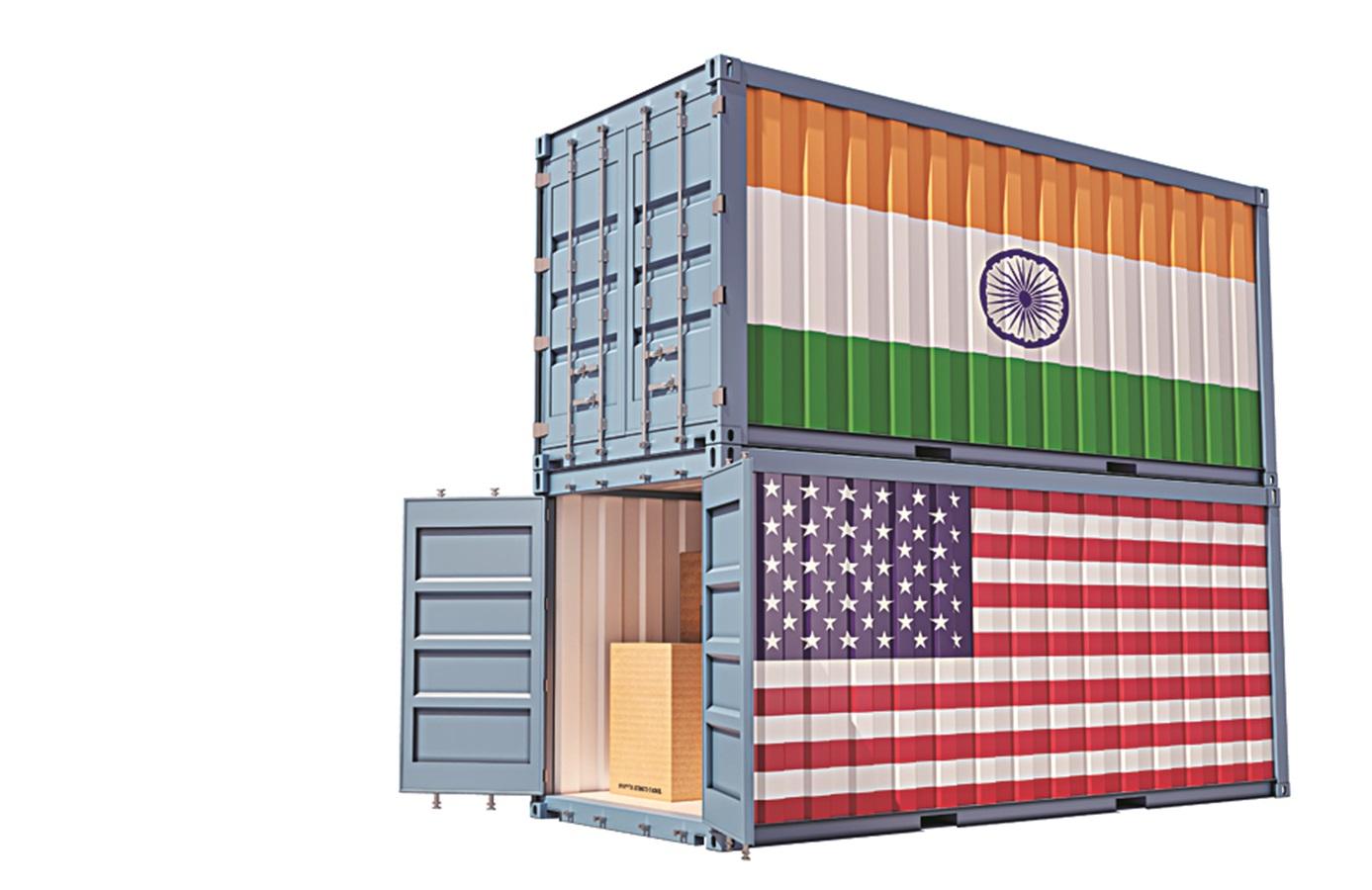
Roughly 53 per cent of India’s exports to the US, led by textiles and apparel, had been subject to the steep tariffs, making them the largest contributors to the refund pool.


According to calculations by the New Delhi-based think tank Global Trade Research Initiative (GTRI), Indian exporters are linked to about $12 billion of the total refunds. Textiles and apparel account for roughly $4 billion of that amount, engineering goods another $4 billion, and chemicals about $2 billion, with smaller shares spread across other sectors.
The refunds follow a February 20 ruling by the US Supreme Court that found President Donald Trump’s tariffs unlawful, concluding they had been imposed under the International Emergency Economic Powers Act (IEEPA) without proper legal authority.
Pankaj Chadha, chairman of the Engineering Exports Promotion Council, said the refunds would flow to US importers, who on record had paid the duties. “There are cases where the Indian company is the importer on record in the US because it is a subsidiary company. In such cases, they will get the full tariff refund benefit. In other cases, where the exporter and importers are not related but deal with each other currently, the Indian exporter can ask the buyer to give some extra price in the next order. But it purely depends on the goodwill of the buyer.”
Tariff rates on Indian goods had climbed to 25 per cent by August 7, 2025, and to 50 per cent by August 28, remaining at that level until early February 2026. Exporters were forced to offer discounts of up to 25 per cent to US buyers to stay competitive.
On 6 February 2026, tariffs were reduced to 18 per cent after talks. Before the change could fully take hold, however, the US Supreme Court’s February ruling invalidated the entire framework, rendering the duties legally void and triggering refunds. The Trump administration subsequently imposed a flat 10 per cent tariff on all countries.
An apparel exporter said US buyers were unwilling to share any portion of the refund. “We had long discussions with the buyers, but they have refused to share the tariff refund with us. While importers will benefit directly, we will benefit indirectly as buyers will use the extra cash in hand to place more orders with us. There are a lot of enquiries coming from the US, but there is some uncertainty due to the ongoing war in West Asia. Freight rates have also gone up and travel time to the US has also increased,” he said.
The head of another export promotion council, who asked not to be named, said that while buyers should ideally pass on part of the refund, many remain uncertain whether the Trump administration will follow through. “Some buyers have said that when we get it, we will see. Maybe some buyers will adjust it in subsequent shipments,” he said.
However, the executive said Indian exporters had regained pricing power and were no longer compelled to offer steep discounts. “Earlier, there was a differential tariff vis-à-vis other countries, hence we were forced to give discounts. Now prices are back to normal because everybody is on the same footing,” he said.
Exporters are also hopeful of a rebound in orders, with enquiries from US buyers picking up. “We usually get orders seven months before any season, and we ship the orders three months before the season starts. We missed the summer sales season. Now we are hoping to get good orders for spring and winter,” the official said.
Ajay Srivastava, founder of GTRI, said exporters should seek support from export promotion councils when renegotiating contracts and framing sector-specific strategies. “Indian exporters will not get refunds automatically. Payments go only to US importers, and exporters have no legal right to claim them. Any recovery will depend on commercial negotiation. For this, Indian exporters should proactively engage US buyers to seek a share of refunded duties, especially where earlier contracts were priced on a duty-paid basis. This can be done by reopening contracts, adding rebate-sharing clauses, asking for price revisions or credit notes, and using invoices and tariff data to show how costs were absorbed. Exporters with stronger bargaining power, especially in textiles and engineering goods, may secure better terms in future orders,” he said.
To secure refunds, US importers must file detailed claims including shipment data, tariff classifications and proof of payment. Approved claims, with interest, are expected within 60 to 90 days. Only those who paid the tariffs, primarily US importers and companies, are eligible to claim refunds.
Source link
#Indian #exporters #tariff #refunds #pricing #power #improves