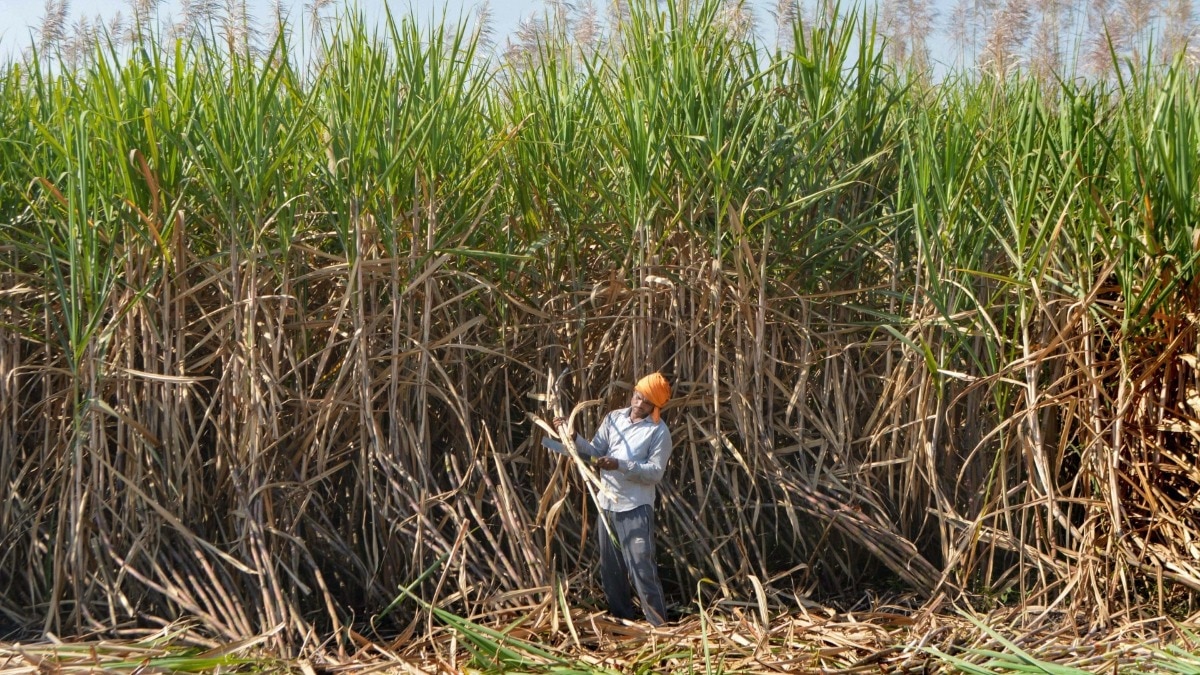
The Indian Sugar & Bio-energy Manufacturers Association (ISMA) has welcomed the Centre’s decision to raise the Fair and Remunerative Price (FRP) of sugarcane by ₹10 per quintal to ₹365 for the 2026–27 sugar season, calling it a strong boost for farmers and the rural economy.
FRP raised to ₹365 per quintal


In a statement, ISMA said, “ISMA warmly welcomes the Government’s decision to increase the Fair and Remunerative Price (FRP) of sugarcane by ₹10 per quintal for the 2026–27 sugar season to ₹365 per quintal. This progressive and farmer-friendly step reflects the Government’s continued commitment to strengthening farmer welfare and enhancing rural prosperity.”
5.5 crore farmers to gain
The revised FRP is expected to benefit nearly 5.5 crore sugarcane farmers across the country. According to ISMA, the hike could generate an additional income of over ₹15,000–20,000 crore, taking total cane payments to around ₹1.3 lakh crore in the upcoming season.
“This will provide a strong impetus to rural demand and reinforce the agricultural economy, particularly in regions where sugarcane cultivation is a primary livelihood,” the statement said.
Industry backs govt’s ‘proactive approach’
Praising the move, ISMA said, “ISMA commends the Government for its proactive approach and responsiveness to the needs of the farming community.”
Call to align sugar MSP, ethanol prices
At the same time, the industry body flagged concerns over rising cost pressures on mills and stressed the need for policy alignment. It said, “At the same time, ISMA respectfully highlights the importance of aligning the Minimum Selling Price (MSP) of sugar and ethanol procurement prices with the revised FRP of sugarcane. Such alignment is essential to ensure financial sustainability across the entire value chain—from farmers to sugar mills.”
Higher FRP raises input costs for mills
ISMA noted that while the FRP hike supports farmers, it also increases raw material costs for mills. “A proportionate revision in sugar MSP and ethanol procurement prices would enable mills to absorb these higher costs without financial strain, thereby maintaining operational stability and ensuring timely cane payments to farmers,” it said.
Ethanol mismatch adds to stress
The association also pointed to lower ethanol allocation, which has led to a mismatch between installed distillation capacity and domestic offtake, resulting in underutilisation and financial stress.
“A timely revision in sugar and ethanol pricing, along with equitable ethanol allocation, is essential to restore feedstock balance, improve capacity utilisation, and provide long-term policy certainty to investors and stakeholders,” it added.
Push for higher ethanol blending targets
Highlighting the broader energy context, ISMA said rising crude oil prices and global uncertainties make ethanol blending more critical. With an estimated production capacity of nearly 2,000 crore litres (including grain-based ethanol), it called for a roadmap beyond E20 to higher blends such as E22, E25, E27, and E85/E100.
The association also urged faster rollout of flex-fuel vehicles and GST rationalisation to boost demand.
Balanced approach needed
“Such policy alignment would strengthen the financial health of sugar mills, improve liquidity, and ensure that farmers receive their dues in a timely and efficient manner,” ISMA said.
It added that the government is expected to take a balanced approach to support both farmers and the sugar industry in a sustainable manner.
Source link
#Progressive #farmer #friendly #ISMA #welcomes #Centres #hike #sugarcane #FRP #BusinessToday