

Investor appetite for waste assets is strengthening for diversifying into niche elements, a new report from PKF Smith Cooper finds. The mid-market is becoming increasingly interested in sustainability-related investments, though dangerous waste processing is seeing demand fade.



The waste industry encompasses the collection, transport, processing, recycling, or disposal of waste materials. The UK market, valued at several billion pounds, is a vital component of the nation’s sustainability agenda, supporting the transition towards a circular economy and net-zero carbon emissions.
In 2026, the UK sector faces a number of critical shifts, however, from policy planning to enforcement. Along with simpler recycling reforms, mandatory digital tracking is set to replace paper systems in October, making compliance, documentation, and waste classification subject to intense, data-driven scrutiny.
Source: PKF Smith Cooper
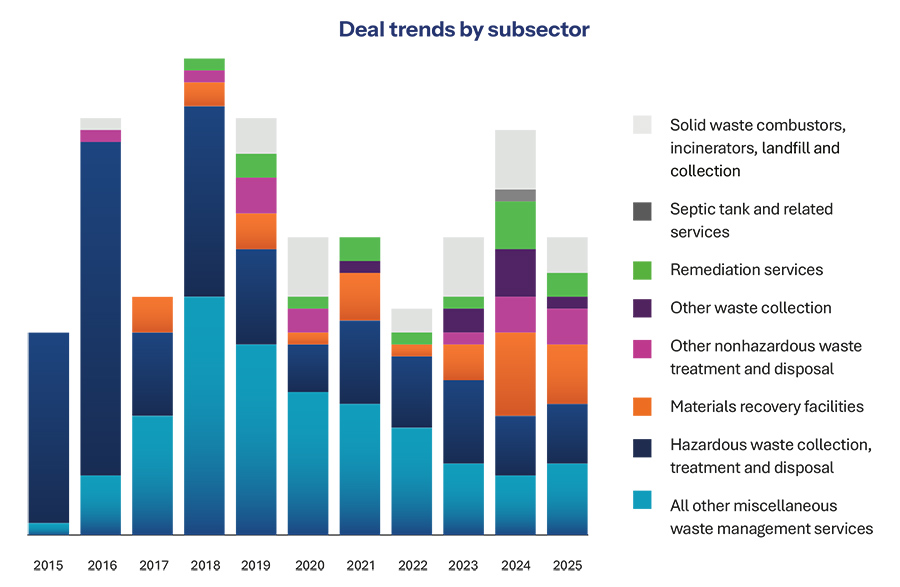
Amid this heightened regulatory scrutiny, investment sentiment cooled in the sector. Deal volumes fell from 33 in 2024, to 25 in 2025, however, the researchers suggested that there was more at play here. Transaction levels in 2025 were “moderate” overall and “largely consistent with the past five years”, as while interest in some forms of disposal fell, there was still growing investor interest in niche businesses.
Since 2018/19, there has been a shift towards a more diversified M&A waste market, where deals are showing increased activity in more niche subsectors, indicated by the more diversified split in the latter years of the graph below. The emergence and increased activity of the subsector “Materials Recovery Facilities”, which involves deals mostly relating to metal and battery recycling, is one of the sub-sectors on the rise.
Waste Electrical and Electronic Equipment (WEEE) and battery recycling deals are almost absent before 2018, but from then onwards, there has been a clear uptick in both deal count and investor interest. Additionally, an analysis of deals completed in the EU over the past 10 years, showed growth in volumes, and a clear upwards trend in Waste-to-Energy deals, implying further that acquirers are increasingly looking for investable niches.
This continued a trend of consolidation and portfolio refinement. Many acquisitions are being completed by those within the waste industry already, concentrating on the continued focus on the circular economy is continuing to drive interest from companies within adjacent industries due to increased reporting responsibilities relating to waste and recycling.
Claire Spencer, corporate finance partner at PKF Smith Cooper, commented, “This is a sector where operational expertise and regulatory understanding directly affect value. Investors and operators who understand the structural drivers now will be best positioned for the next phase of consolidation.”
Source link
#Investors #diversify #interest #waste #market





New Details Emerge About The Ill-Fated ‘Buffy’ Reboot Following Sarah Michelle Gellar’s Comments