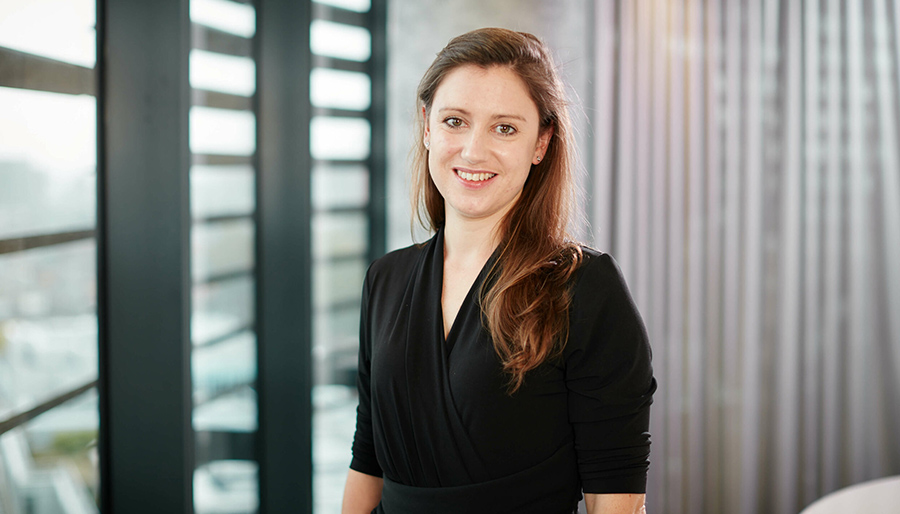
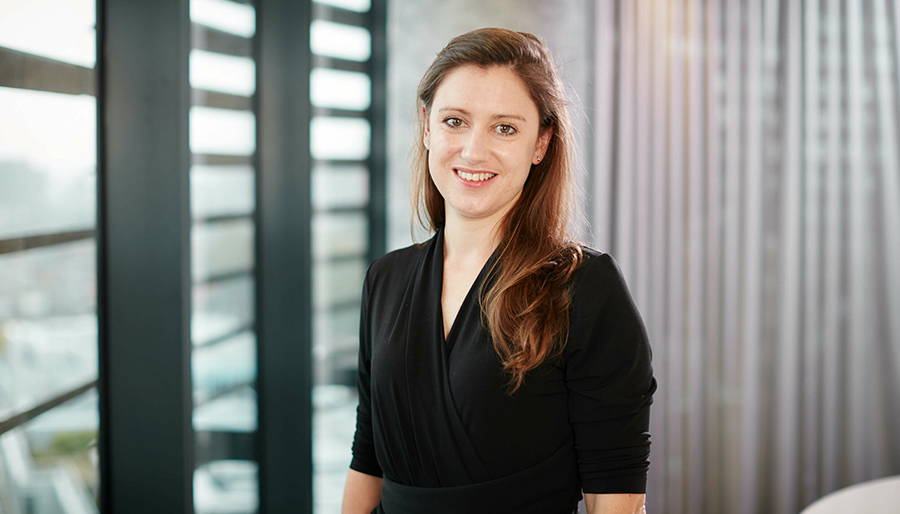
Mairi Fairley is a rare and powerful voice in both professional services and corporate leadership, industries traditionally dominated by men. As a single mother who has navigated the demands of both consulting and senior in-house leadership, she offers a unique perspective on balancing career progression with family life, challenging industry norms, and empowering women in business. Ahead of International Women’s Day, she explains the team effort at OC&C to help other women break the glass ceiling – in the firm, and beyond.

You became a partner with OC&C in 2017 – how did the firm support you in your ascent?
What made the biggest difference to my progression was active sponsorship. Senior leaders didn’t just give advice – they advocated for me in promotion discussions and put me forward for stretch roles with real accountability. I was given opportunities to lead major client relationships, take on global leadership roles, and contribute to firm governance.
Equally important has been the active support of both my development and working flexibly. The firm has not only provided internal sponsorship, but also external coaching alongside also enabling me to work a 4-day week and take a month off every summer. These elements have all been critical to enable me to work at my best in a sustainable way.
As a partner, how do you now help to shape OC&C’s policies on diversity, equity and inclusion?
I have had the privilege of leading our Women’s Network and been part of the D&I Council, and I am currently Chair of the Shareholder Committee. In these roles, I have focussed on embedding inclusion into how the firm actually operates and removing some of the obstacles which our women have faced. This has included equalising parental leave, advocating for better mentoring and sponsorship, evolving how we assess performance and give feedback, and fostering connection and communication across the firm to increase the visibility of role models and other key areas.
I’m particularly passionate about formalising sponsorship so that it isn’t left to chance, and about ensuring flexible working works at senior levels. DEI can’t sit alongside the business – it has to be built into its core systems.
You started your career with OC&C in 2007, and aside from a three-year spell with Hobbs London, you have been there ever since. What changes have you noticed within the firm over that time relating to DEI?
When I joined in 2007, DEI was strongly rooted in our values but was less structured. Today, it is far more intentional and measurable. I (and many others – it’s a team effort!) have helped us set targets, track progression more carefully, and shift to talking openly about the progress we’re making as well as challenges we have. We have improved our diversity across all levels of the firm and have more visible senior role models and representation across our major functional and executive leadership teams.
I have also advocated for, and seen a shift in how leadership is defined. We now recognise that effective leaders don’t all look or behave the same way. Creating space for different leadership styles has been an important part of that evolution which I have been proud to role model.
The consulting sector’s gender pay gap among independent consultants is higher than elsewhere in Europe. That suggests that the problem goes beyond structural causes within individual firms – as it pervades a segment of the market where ‘office politics’ is removed. What needs to change to reshape that culture?
The sector gap shows culture matters beyond individual firms. It is well reported that women are less likely to self-promote, negotiate and advocate for themselves than their male counterparts. While it is a multi-faceted and complicated issue, there are a number of actions that in my experience help accelerate cultural change:
- Greater active sponsorship and advocates for high potential women, providing them access to, and confidence to step into more leadership roles.
- Valuing a broader set of leadership styles. Leadership is still too often associated with traditional traits such as assertiveness, confidence, and directness. This narrow view limits the potential talent pool and fails to acknowledge the effectiveness of other leadership styles, such as collaborative, empathetic, and adaptive leadership.
- Personally, it wasn’t until I encountered a female CEO who embodied a more collaborative leadership approach that I truly recognised the leader I wanted to become. I left OC&C to work for her, learning from her style and approach before returning to the firm as a much more confident and capable leader.
- Greater promotion of flexible working – not as a concession, but to unlock better, more sustainable leadership across the board.
- Proactively support and accelerate careers after parental leave, by being sensitive to ramp-up/down periods, offering specialist coaching for newly returning parents, and providing benefits and policies that support working parents (e.g. emergency childcare provision).
Culture changes when what we value, and reward, changes.
What advice would you give to other women thinking of going into the consulting industry?
Consulting offers extraordinary breadth and impact, and a phenomenal learning curve throughout your career. My advice would be – back yourself and be clear about your ambition. Seek sponsors who will advocate for you, not just mentors who advise you.
Choose organisations that genuinely support flexible working and remember that leadership isn’t one-size-fits-all. Authenticity is powerful – you don’t need to conform to a single archetype to succeed.
But above all, know that you are in control of how you do things and don’t be afraid to challenge the way things are done and make them work for you. Some of the best advice I ever received was ‘understand that by saying yes here, you’re implicitly saying no somewhere else and shaping the system that way’.
As OC&C is an international firm, it will have encountered different cultures and approaches to DEI. How does the firm adapt to each local context, without compromising on inclusivity?
We are clear on our global principles – inclusivity, support, and flexibility – but we implement them in ways that are locally relevant. Culture varies by country, and listening to local teams is essential. Some challenges are universal, while others are more localised, depending on many factors from cultural norms to business maturity, through to the mix of individuals in an office.
Over my tenure at the firm, we’ve set targets by market and then focused on amplifying specific initiatives where they’re most needed, for example, increasing the regularity of networking events for senior women across our European offices (since each office has fewer individuals than our larger UK office), and reviewing our benefits packages to align with norms in the USA. We also actively share learnings across markets on areas like recruitment, so we can spread best practice and accelerate improvements.
Government attitudes to DEI have shifted radically in the last few years. In the US, the White House has moved to ban initiatives related to it, while also pushing private companies to drop them – relatively successfully. In the UK, political parties leading in the polls, and taking control of local councils, have also adopted this backlash to DEI. Do you foresee any ways in which DEI champions could successfully counter this trend as it arrives in the UK?
DEI must be framed as a performance agenda, not a political one. The evidence is clear: diverse teams make better decisions and drive stronger outcomes.
The UK has grown its board representation of women to 43% across the FTSE 350. But according to PwC’s Women in Work Index, the country now ranks 18th among OECD countries – falling eight places since 2020, in the steepest post-pandemic decline of any major economy. Why do you think comparable economies are outpacing the UK on this matter?
Board-level progress in the UK is encouraging, but pipeline development has lagged. Countries that invest more in childcare, parental leave and flexible senior roles create stronger foundations.
The mid-career stage is critical. Without sponsorship and structural support at that point, progress stalls. Representation at the top reflects the health of the whole system beneath it.
Italy and France both implemented legislation which held companies responsible for a lack of women in the board-room. Even with the UK’s current growth on that front, it is still behind both of them – is there any merit to the idea of regulatory intervention here?
Regulation can accelerate progress and set minimum standards, as seen in France and Italy. Transparency and accountability mechanisms can create momentum. However, it also risks an element of ‘box ticking’
Regulation alone is unlikely to transform culture. Sustainable change requires organisations to invest in sponsorship, inclusive leadership development and structural flexibility alongside any regulatory framework.
I personally favour targeted transparency and accountability combined with incentives for firms to build sponsorship and progression systems.
Without that, what can UK organisations do better, to see gains beyond the board-room, which benefit women at every level of work?
In my view, organisations need to focus on the entire talent lifecycle and the culture and systems within which they operate. That means structured sponsorship, leadership development that recognises different styles, meaningful flexible senior roles, and clear return-to-work pathways for parents.
My experience is that clear measurement of progress (at every level) is another critical enabler. It allows identification of where women drop out of the pipeline and encourages companies to intervene earlier and more effectively. We have significantly improved and evolved our ability to track and measure this data over my time at OC&C and it has enabled us to be more targeted and effective in our evolution and interventions.
What is your key message this International Women’s Day?
When women are supported to lead authentically and sustainably, organisations perform better – and that benefits everyone.
Source link
#OCC #Partner #Mairi #Fairley #consultants #boost #womens #opportunities #work