

Nikki Westoby and Michael Hetherington

The brands with the strongest margins don’t just optimize price. They earn it. Nikki Westoby and Michael Hetherington, Senior Directors at SKIM in the London office, explain how brand equity and pricing power are two sides of the same coin, and what revenue management teams can do about it.
Why do pricing conversations so often hit a ceiling?
Nikki: Because most organizations eventually exhaust what price mechanics alone can deliver. When price increases stop working, it’s often not an elasticity issue. It’s a perception issue. Pricing studies tell you where resistance appears. Brand diagnostics explain why it appears and what would change it. Shifting the question from “where is the price limit” to “what would raise it,” is usually the pivot point in our work.
Brand perceptions aren’t vague or intangible. They can be decomposed, measured, modeled, and actively influenced. But unlocking that opportunity requires closing a critical organizational gap. Revenue and brand teams need to come together to leverage their respective expertise in collaborative decision making.
We see a lot of organizations struggle to align around this. Why is that?
Michael: Because revenue and pricing teams naturally speak numbers, price indices, and elasticity, while brand teams speak meaning and differentiation. Both are working on the same growth challenge, just from different angles.
When those perspectives don’t connect, pricing decisions can unintentionally work against brand strategy, and brand investments fail to translate into commercial return. This is rarely a capability problem. It’s an alignment problem.
Most revenue managers intuitively understand that two similar products can sustain very different prices purely because of brand positioning, but they tend to think of the brand as fixed. The opportunity is to break brand down into something more measurable: the specific perceptions that drive choice, willingness to pay, acceptance of price increases, and tolerance for premium or value positioning.
Once you can work with those as variables, brand starts being a lever you can pull to deliver against your revenue management strategy.
And how can teams bring this together in practice?
Michael: Structured cross-functional work is often where the real shift happens. We frequently facilitate workshops to align stakeholders from different teams and expedite decision making.
When we did this for Philips, they were able to accomplish in six hours what would have normally taken months. By the end of the day, the team had aligned on which SKUs to prioritize, optimal price points, and how to approach individual retail channels with confidence. The research mattered, but the structured space to work through it together was what turned it into confident decisions.

SKIM helps cross-functional teams from Philips align on pricing and branding
Can you give an example of what it looks like when pricing and brand aren’t aligned?
Michael: We worked with a beer brand in Africa that was exploring format changes to support a price increase. The commercial logic made sense because packaging and format can absolutely support price repositioning. However, our brand positioning diagnostics exposed the real constraint. The issue was not pack, it was positioning – the brand was not differentiated within its tier in any meaningful way.
Instead, we mapped the category’s key drivers of choice and willingness to pay a premium to understand what genuinely moves consumers and what earns pricing power in that space. That analysis revealed credible whitespace the brand could claim. The conversation shifted from “How do we change the pack?” to “What must this brand stand for to drive choice and justify a premium price?” Those are fundamentally different questions and they lead to fundamentally different strategies.
And of course this doesn’t only apply to price increases. In cases where companies want to grow their market share we often also see limitations in brand awareness or brand perception. This impacts how much revenue growth they can achieve through price decreases or promotions alone.
So practically, how can companies act on this?
Nikki: Brand influences pricing power on two different timelines – in the short-term and long-term – and you need to be deliberate about both.
In the short term, communication plays a very important role. Messages, cues, and claims that reinforce the value of the brand and highlight the right product benefits help explain why the product is worth the price today. Used well, these activation-led signals support price moves and help protect volume during a price increase.
Promotions can also be used as a short-term lever to manage demand or smooth the impact of price changes. But they need to be used carefully. If promotions are relied on too heavily, they start to reset consumer price expectations downward. You end up training people to wait for a deal, which erodes the brand’s ability to command a particular price. Short-term optimization without long-term reinforcement creates pricing fragility.
What about in the long-term?
Michael: The long-term drivers work differently. They’re about building the kind of trust, reputation, and credibility that makes higher prices feel natural over time, through brand momentum, leadership, familiarity, and relevance. These are associations you typically need to earn and consistently reinforce. When a brand owns a distinctive position that genuinely matters to buyers, and that position is sustained over time, higher prices feel justified without constant explanation. The premium becomes embedded in the brand’s role in the category.
Both matter, but they operate on different timelines. The risk is imbalance. If you rely only on short-term justification, every price increase becomes a fresh negotiation. If you invest in brand in abstract terms without anchoring it to the perceptions that support pricing power, you build equity that doesn’t translate into margin. The strongest teams are explicit about the role of each.
For an energy provider, we applied Bayesian modelling alongside driver and perception analysis to map the most effective short-term levers the brand could pull to support their price moves today, while also clarifying how those actions would build the stronger, longer-term perceptions required to support and sustain pricing power.
What should brands watch out for when it comes to long-term positioning and price?
Michael: Brands should watch out for misalignment between what a brand stands for and what it’s asking consumers to pay. Premiumness only works when consumers believe it’s justified. Value works when it’s intentional, not accidental.
Misalignment between brand signals and price strategy creates friction in market. The strongest brands are clear about the space they claim and the price role they play relative to competitors.
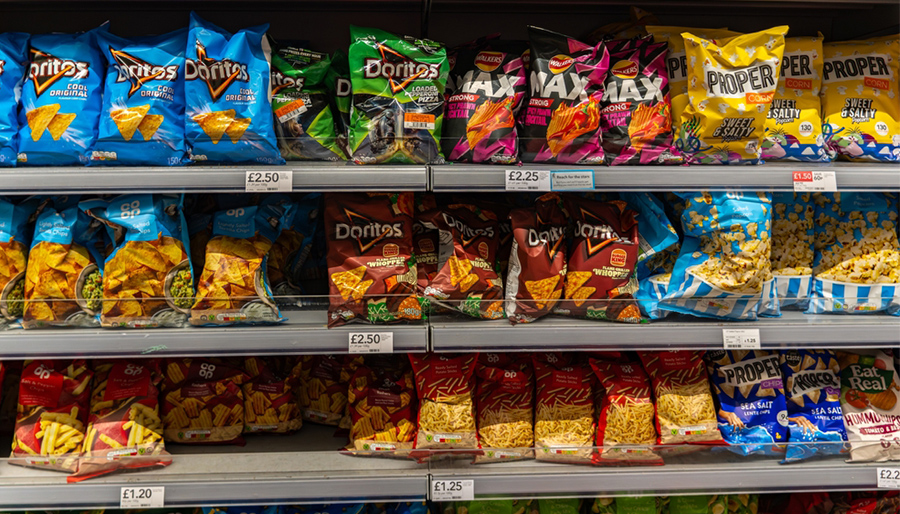
Misalignment between brand and pricing can create friction among consumers
In a recent project with a professional power tool manufacturer, we focused on disentangling the distinct drivers of consideration and premiumness. This allowed them to clarify what the brand needed to communicate in the short term to win choice, and what it needed to consistently reinforce to sustain habitual repeat purchase at a premium.
Nikki: We also often see an interesting dynamic between big global players and smaller, often local challengers, particularly in more developing markets. Smaller players can move quickly, claiming niche positions, or competing aggressively on price. That can be difficult for global brands to counter directly, because they can’t shift positioning as easily. But on the other hand, they often have an advantage that challengers don’t: long-term heritage and established brand trust.
The key is not trying to be everything to everyone. Brands that maintain pricing power are the ones that identify the meaningful role they play in the category and reinforce it consistently across everything they do.
And a clear brand positioning is not only relevant for consumers, right?
Michael: Absolutely! There’s also a retailer dimension here that revenue teams often underestimate. Even when a brand has the positioning to justify a higher price with consumers, that price has to be sold into retailers first. If the brand value narrative isn’t clear and evidence-based, retailers won’t move with it. Stronger brand positioning doesn’t just reduce consumer price sensitivity; it gives commercial teams a more defensible argument in retailer negotiations too.
What makes SKIM’s approach different in bringing this all together?
Nikki: We treat brand as a commercial input, not just a creative output. The long-term return on brand investment has always been notoriously hard to prove and that’s made it easier to prioritize short-term activation, where the impact can be measured quickly. But if you can’t demonstrate to your CFO that brand has a tangible effect on commercial outcomes, it’s very difficult to make the case for investing in it. That’s the gap we’re trying to close.
What we do is connect brand perceptions directly to commercial outcomes. We identify which perceptions actually drive choice, willingness to pay, and acceptance of price increases, and which ones don’t, even if they sound strategically important.
We then link those perceptions to the broader pillars of brand equity, such as presence, passion, and trust, and model what improvements in those areas would mean commercially. That shifts the conversation from “we should invest in the brand” to “if we strengthen trust by X points, here’s the pricing headroom it unlocks.”
Michael: Behind that is a combination of pricing research, brand driver analysis, and advanced modeling that works together to pinpoint which perceptions genuinely unlock pricing headroom, separate quick wins from long-term growth, and pressure-test positioning against price ambition.
The output isn’t more analysis. It’s a clear view of where to invest now versus next, and what commercial return to expect from each.
For example, we’ve been working with a B2B company that’s on a journey to improve its value-based pricing capabilities. Historically, it saw itself as a highly technical, feature-driven organization and assumed customers evaluated its products in purely rational terms.
But when we started connecting brand perceptions to functional benefits, it became clear that the brand was delivering a lot more value than they expected, particularly through trust and peace of mind. That insight clarified where to invest to further differentiate the brand and credibly support a premium pricing position.
For brand and pricing teams under pressure, where would you suggest they start?
Nikki: Start by asking why the pressure exists, not just where it exists. If price increases are stalling, don’t assume the answer is a more sophisticated pricing model. Ask whether the brand is giving consumers enough reason to say yes at that price.
Then bring brand and commercial teams together around the same picture. When both functions align on the same growth challenge, with a shared view of what consumers value, what the brand stands for, and what the pricing ambition requires, decisions become clearer and the results tend to follow.
Source link
#SKIM #leaders #brand #equity #pricing #power #sides #coin