


When you button up your shirt or unbutton your blazer while sitting, have you ever wondered where that tiny button or fastening with a few holes comes from? Can you guess? I will explain shortly why I am asking this seemingly odd question.
Two major developments caught attention this week. One is the shortage of LPG, and the second is the government relaxing norms for up to 10% FDI from China into India. My note today focuses on the LPG shortage, as this disruption has already begun to impact the Indian economy.
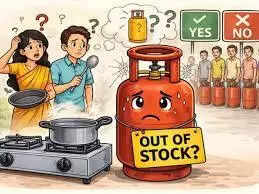
What is cooking in the Indian economy over gas?
Across the country, one major question is on everyone’s mind: Does India have adequate strategic energy buffers? Unfortunately, we do not know the real answer. Perhaps it is confidential. Perhaps it is uncertain.
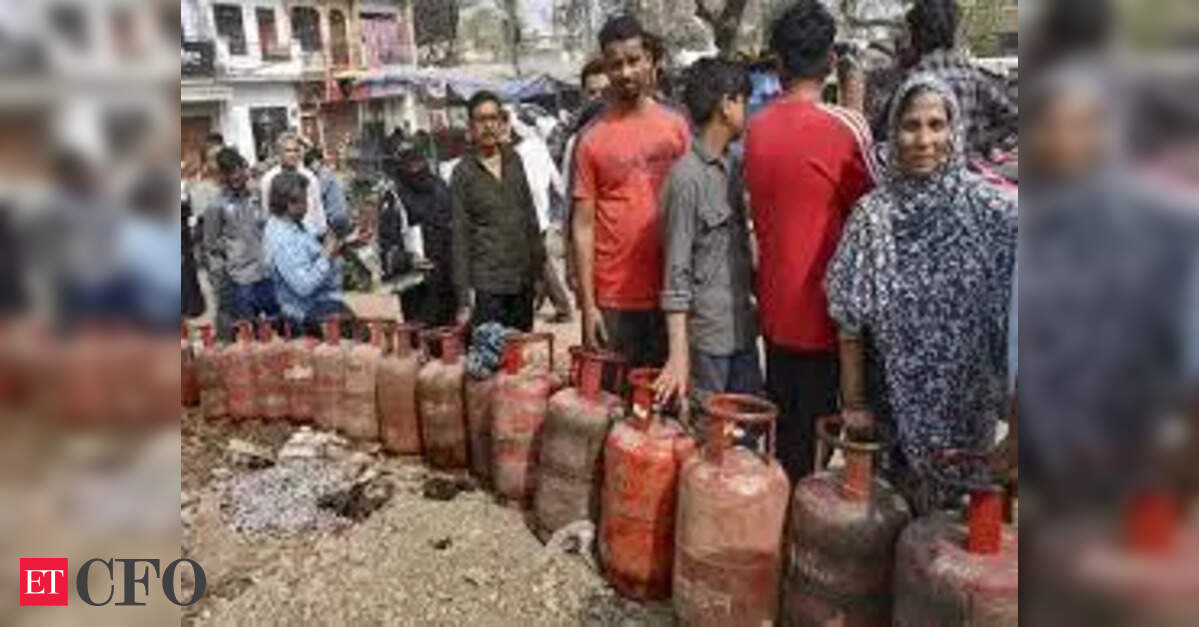
In recent years, India has steadily progressed from kerosene to Liquefied Petroleum Gas (LPG). The majority of residential societies in metros, including parts of tier-1 and tier-2 cities, have shifted to piped gas. Villagers have replaced earthen stoves with gas cylinders, thanks to some of the government’s most significant welfare schemes. Restaurants, roadside cafés, and small eateries flourished because LPG fuelled their kitchens reliably. Ride-hailing cabs and autos also grew due to affordable CNG.
Imagine the inflationary shock if LPG prices rise sharply. India has more than 33 crore LPG consumers, with about 96% of LPG demand coming from cooking, both household and commercial. A recent revision itself raised the price of a 14.2-kg domestic cylinder by about Rs 60, while commercial cylinders used by restaurants and food businesses also became costlier. If LPG prices were to rise by 20-30%, the impact would extend beyond household budgets. Restaurants, catering services, street food vendors and small eateries rely heavily on LPG, meaning the cost pressures would eventually feed into food prices and local services. In an economy already sensitive to food inflation, a sharp spike in cooking gas prices could quickly ripple through the broader inflation trajectory.
Few expected this chain to be disrupted. What is worrying is that many did not anticipate this problem despite the fact that over 85% of India’s LPG comes from the Middle East. Even after missile attacks by the US and Israel on Iran, most reports focused largely on oil, as it is seen as the most consequential commodity for the economy. What we underestimated was LPG.
The Strait of Hormuz, currently closed by Iran, accounts for 50-55% of India’s oil and LNG imports, and nearly 88% of LPG imports.
If this issue is not resolved, a lot is at stake. The government is now in discussions with several countries and exploring alternative supply routes. The Petroleum Ministry is continuously monitoring the situation, has opened a war room, and has made around 40,000 kilolitres of kerosene available to states. These efforts are welcome, but the broader question remains: Can we be ready before such a crisis strikes?
Of course, many factors are beyond our control, especially natural resources like oil and gas, for which we rely on other countries. Yet the need to explore alternatives and reduce vulnerabilities is urgent.
The real need for Aatmanirbhar
I have mentioned before that while celebrating India’s growth, we must not ignore rising imports and the persistent trade deficit. One of the key challenges is weak manufacturing depth. It is high time to act decisively on the vision of Make in India and Self-Reliant India.
Returning to my question about buttons: even something as small as shirt buttons and fastenings is imported. India imported buttons worth $69 million in 2023 and $75 million in 2024. Imagine India was once a global textile hub. Mumbai used to wake up to the sirens of cotton mills. India still has a significant garment industry, yet we cannot produce enough of our own buttons.
Of course, oil, gas, gold, diamonds, and coal top the list of imports, followed by electronics, machinery, chemicals, and plastics. While some products may have no easy domestic alternatives, many others could be manufactured locally. India must therefore seriously push manufacturing.
The government has been supporting MSMEs and small businesses, yet no major breakthrough has emerged. We are still far from large-scale manufacturing and continue to depend on imports even for the smallest components like buttons and fasteners. Too often, we celebrate assembly over manufacturing. An economy of India’s size cannot afford to be heavily dependent on imported goods.
Despite advanced technologies and higher capital expenditure, the core problem often lies in product quality and design. Indian businesses need to improve in these areas. Copying products will not lead to sustainable strength; original design and innovation matter.
Simply granting funds to MSMEs will not solve the problem. The right MSMEs must receive support, and they must produce goods widely used by the masses. Otherwise, comparisons with China will continue. Almost every product category has a Chinese alternative that is cheaper and scalable.
Along with Make in India, structural competitiveness is essential, scalability, seamless logistics, legal certainty, labour productivity, and efficient supply chains. When assessing manufacturing success or failure, competitiveness must remain central. Government policies like Production Linked Incentive schemes, recent labour reforms, and the development of industrial corridors are steps in the right direction, but progress remains slower than desired.
The recent LPG disruption should serve as a wake-up call. India should aim to build at least 100 strong manufacturing businesses over the next ten years, if not 1,000, that are capable of scaling. The goal is not to manufacture everything, but to create clear dominance in a few strategic segments.

Financing new businesses
Financial institutions must develop stronger credit-scoring frameworks for potential manufacturing businesses. Focus should be on new ventures entering manufacturing. Otherwise, the same types of businesses will keep emerging, and small manufacturing enterprises will struggle to grow.
A heavily import-dependent economy is vulnerable to disruption. Supply shocks can quickly feed into inflation. Gold prices have already seen volatility over the past year, and oil and gas can have similar effects.
There is also strong interconnectedness between banks and the energy sector. Banks provide specialised loans, including syndicated loans backed by oil collateral. Inflation risks can create treasury volatility, and insurance or reinsurance exposures related to shipments may also become relevant.
It is time for Indian CFOs to allocate budgets for R&D and targeted innovation, incorporating them into scenario planning. If this is not done today, future chokepoints will inevitably create disruptions. Rome cannot be built in a day, but if planning begins today, meaningful progress can be achieved over the next few years. Global investors are already placing India high on their priority lists, and the opportunity should not be missed.
To summarise: India’s economy of more than 1.4 billion people cannot afford supply chains where both the shirt button and the kitchen flame depend on ships crossing a global checkpoint. And that’s an existential food for thought.
Please share your feedback, suggestions if any. You can reach me on amol.dethe@timesinternet.in
(Editor’s note is a column written by Amol Dethe, Editor, ETCFO. Click here to read more of his articles exploring several buzzing topics)

Source link
#India #Gas #Strong #Push #SelfReliant #India