
5 min readNew DelhiMar 24, 2026 02:03 PM IST


Underscoring that the superannuation age within the armed forces is not a mere dispute, but a deeper question that goes to the heart of institutional structure and discipline within an armed force, the Delhi High Court has set aside a series of orders from the Central Administrative Tribunal (CAT), which had allowed the BSF technical staff to serve beyond the mandated age of 57 years.
While hearing a plea of the centre challenging the tribunal order, a division bench of Justices Anil Kshetarpal and Amit Mahajan ruled that the re-employed personnel in the Air Wing of the Border Security Force are subject to a superannuation age of 57 years, rather than the 60 years applicable to civilian employees.

“The BSF is not a conventional civil department but a disciplined armed force of the Union, where cadre structure, rank hierarchy, and uniformity of service conditions constitute the very backbone of organisational governance,” the court said on March 23.
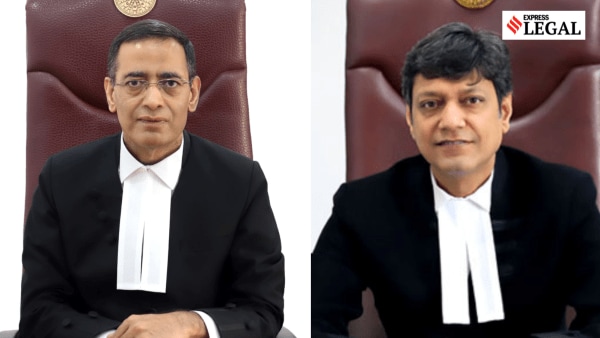 The division bench on March 23 ruled in favour of the centre.
Noting that any interpretation of recruitment or service rules must be sensitive to this structural reality, the bench added that to disregard it would be to dilute the carefully calibrated architecture of the force service regime, an outcome which the law neither contemplates nor permits.
‘BSF is not merely department of government’
- The present petition is not a mere dispute about three additional years of service, but a deeper question that goes to the heart of institutional structure and discipline within an armed force of the Union.
- Who is a “soldier” and who is a “civilian” within the BSF, and by what legal alchemy may one who has lived and served as the former, at the twilight of his tenure, seek to be treated as the latter?
- The BSF is not merely a department of the government; it is an armed force of the Union constituted and regulated under a special statute, the BSF Act, 1968, with the BSF Rules, 1969, providing a complete code for the discipline, ranks, promotions, and superannuation of its combatised members.
- The Rules of 1978, framed in furtherance of this statutory design, draw a clear, normative line that the officers above the rank of commandant retire at 60 years of age, whereas those of other ranks, including Sub-Inspectors, retire at the age of 57 years.
- This clear distinction is not an arbitrary monologue; it is an attempt to create a legislative balance between the demands of a uniformed service, the imperatives of fitness and deployability, and the expectations of tenure.
- The Tribunal has proceeded to allow the original application on the premise that since the Sanction of 1991 creating the post did not expressly describe them as combatised, the said posts must be regarded as civilian posts.
- This line of reasoning overlooks the administrative logic that governs cadre management.
- Once a cadre is combatised by a Presidential decision, the subsequent creation of posts within that cadre does not require a repetitive declaration of combatised status.
- The combatised character inheres in the cadre itself.
The doctrine of “approbate and reprobate”
- After being discharged from the Air Force in 1990, Prajapati was re-employed in the AW-BSF as a Sub-Inspector Junior Aircraft Mechanic (SI-JAM) on December 13, 1991.
- In the civilian air wing, the post of JAM carried a pay scale of Rs 1320-2040, later revised to R. 4000-6000.
- Opposite to this pay structure, the combatised SI-JAM post commanded the higher scale of Rs 1400–2300, later revised to Rs 5500–9000.
- It is not an accidental detail of nomenclature; the respondent did not enter at the lower, civilian scale, nor was he styled merely as a mechanic in a general central service.
- Rather, he was appointed as SI-JAM, with the rank, the pay scale and allowances associated with a combatised BSF subordinate officer, including ration money, uniform and washing allowances, and the promotional prospects of that cadre, as has been contended by the Petitioners, and not denied by the respondent.
- The respondent stood in the shoes of a combatised BSF officer, he marched the drum of the BSF Act and Rules and did not tread the quieter path of civil establishment.
- The respondent cannot be permitted to approbate and reprobate to accept the benefits of a particular service regime while repudiating its burden, since service jurisprudence demands consistency of status, not opportunistic oscillation between cadres.
Case of dispute over age of retirement
- This case involves a series of petitions filed by the centre challenging orders passed by the CAT regarding the retirement age of personnel in the Air Wing of the Border Security Forces.
- The central controversy focuses on whether re-employed personnel, specifically those in technical roles like Junior Aircraft Mechanic (JAM), should retire at the age of 57 or 60.
- Under the BSF (Seniority, Promotion and Superannuation of Officers) Rules, 1978, officers below the rank of commandant are mandated to retire at 57.
- Conversely, civilian employees are typically permitted to serve until age 60
- The controversy centered on the presidential sanction dated September 19, 1989, which the court described as having “transformative effect” on the institutional structure of the BSF.


© IE Online Media Services Pvt Ltd
Source link
#BSF #civil #department #Delhi #High #Court #explains #technical #staff #retire