
Pakistan believes that TTP fighters are hiding safely inside Afghanistan, and that the Afghan Taliban are either protecting them or simply looking the other way.

Updated: March 17, 2026 4:55 PM IST
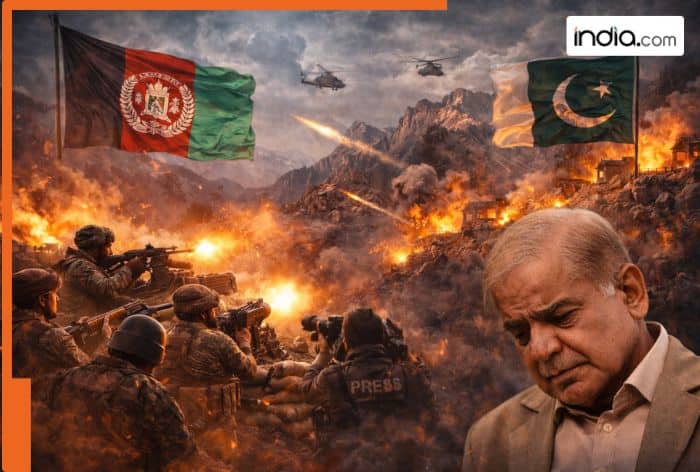
For decades, Pakistan played the role of a proud parent to the Afghan Taliban. Back in the early 1990s, Pakistan helped create and fund the Taliban so that it could have a friendly government on its western side. The idea was simple — if Afghanistan is on your side, you don’t have to worry about being surrounded by enemies. Pakistan called this “strategic depth.” But today, that same child has turned against its parent. And the relationship has exploded — quite literally.
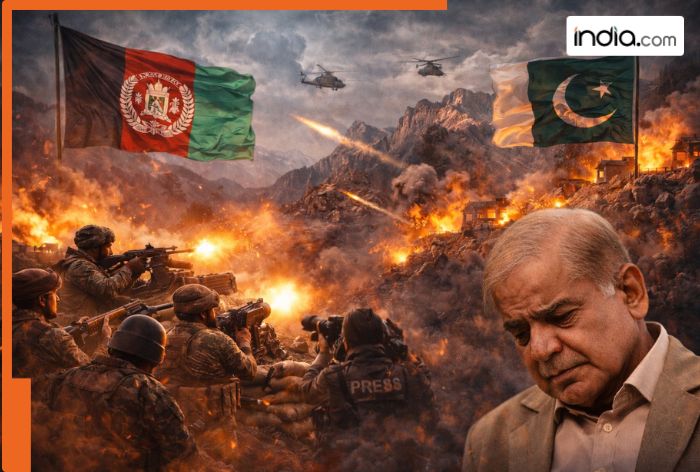
On the night of 16th March, Pakistan launched an air strike on Kabul, the capital of Afghanistan. The Afghan Taliban say that at least 400 people were killed and 250 were injured when a drug rehabilitation hospital was hit. Pakistan denied this and said it only targeted military sites connected to terrorists. But the damage — to lives and to the relationship — was already done.
This is not a sudden fight. Pakistan’s own Defence Minister admitted last month that the rising tensions between these two Islamic neighbours had turned into an “open war.” In February alone, Pakistan carried out multiple air strikes on major Afghan cities, targeting Taliban military posts, headquarters, and weapons storage sites near the border.
So why are two neighbours, who were once close allies, now at each other’s throats?

When the Taliban came back to power in Afghanistan in 2021, Pakistan was happy. Former Prime Minister Imran Khan even celebrated publicly. But joy turned into frustration very quickly.
Pakistan’s biggest complaint is about a group called the Tehreek-e-Taliban Pakistan, or TTP — also called the Pakistani Taliban. The TTP was formed in 2007 and has carried out some of the most brutal attacks inside Pakistan — on markets, mosques, airports, and military bases. They even shot schoolgirl Malala Yousafzai in 2012. Thankfully, Malala survived, received treatment abroad, and later won the Nobel Peace Prize in 2014 for her bravery in fighting for girls’ education.
Pakistan believes that TTP fighters are hiding safely inside Afghanistan, and that the Afghan Taliban are either protecting them or simply looking the other way. Pakistan also accuses armed groups fighting for independence in Balochistan — a large province in southwest Pakistan — of using Afghan soil as a base for launching attacks. Violence has been rising every single year since 2022.
Afghanistan, on the other hand, flatly denies all of this. The Taliban say they are not allowing anyone to use their land against Pakistan. They have also hit back with their own accusation — claiming that Pakistan is sheltering fighters from the Islamic State, which is actually a rival and enemy of the Taliban. Pakistan denies this too.
So both sides are pointing fingers, trust has completely broken down, and bullets and bombs have replaced conversations.
The Durand Line — A 130-Year-Old Wound That Never Healed
To understand why this border is so explosive, you need to know about the Durand Line. In 1893, a British officer named Sir Mortimer Durand drew a line through the mountains to separate British India from Afghanistan. The problem? That line cut right through the middle of Pashtun tribal lands, splitting families, villages, and communities into two countries.
When Pakistan was created in 1947, it inherited this border. But Afghanistan has never officially accepted it. For Afghanistan, the Durand Line is a wound — a reminder of colonial interference that divided their people without their consent.
Today, the border remains one of the most disputed and violent in the world. Pakistan has built a fence along parts of it and regularly closes it, affecting thousands of traders and ordinary people whose entire livelihoods depend on cross-border movement. The Taliban refuse to recognise the fence. They see it as Pakistan trying to permanently impose a border that was never fair to begin with.
Every border clash, every military post attack, every air strike — the ghost of the Durand Line is always somewhere in the background.
What happens next?
The military numbers tell a lopsided story. Pakistan has over 600,000 active soldiers, 6,000+ armoured vehicles, 400+ combat aircraft, and nuclear weapons. The Taliban have around 172,000 fighters, about six aircraft, and a handful of helicopters in unknown condition.
On paper, Pakistan wins easily. But wars on rough mountain terrain with guerrilla fighters are rarely decided on paper.
Earlier, China had stepped in to cool things down. But tensions linked to the wider U.S.-Israel conflict in the region have reignited the fire. Experts say Pakistan may escalate military actions further, while Afghanistan will likely respond with more border raids and guerrilla attacks.
Two neighbours. One broken line drawn by a British officer 130 years ago. And hundreds of people paying the price for it today.
—– E.O.M
(Girish Linganna is an award-winning science communicator and a Defence, Aerospace & Geopolitical Analyst. He is the Managing Director of ADD Engineering Components India Pvt. Ltd., a subsidiary of ADD Engineering GmbH, Germany.)
Source link
#Ghost #Durand #Pakistan #Bombing #Afghan #Soil