
Hadlee Simons / Android Authority
Samsung was one of the first manufacturers to offer a 200MP camera when it launched the Galaxy S23 Ultra back in 2023. We’ve since seen many other brands adopt this tech for use on both primary and telephoto cameras.



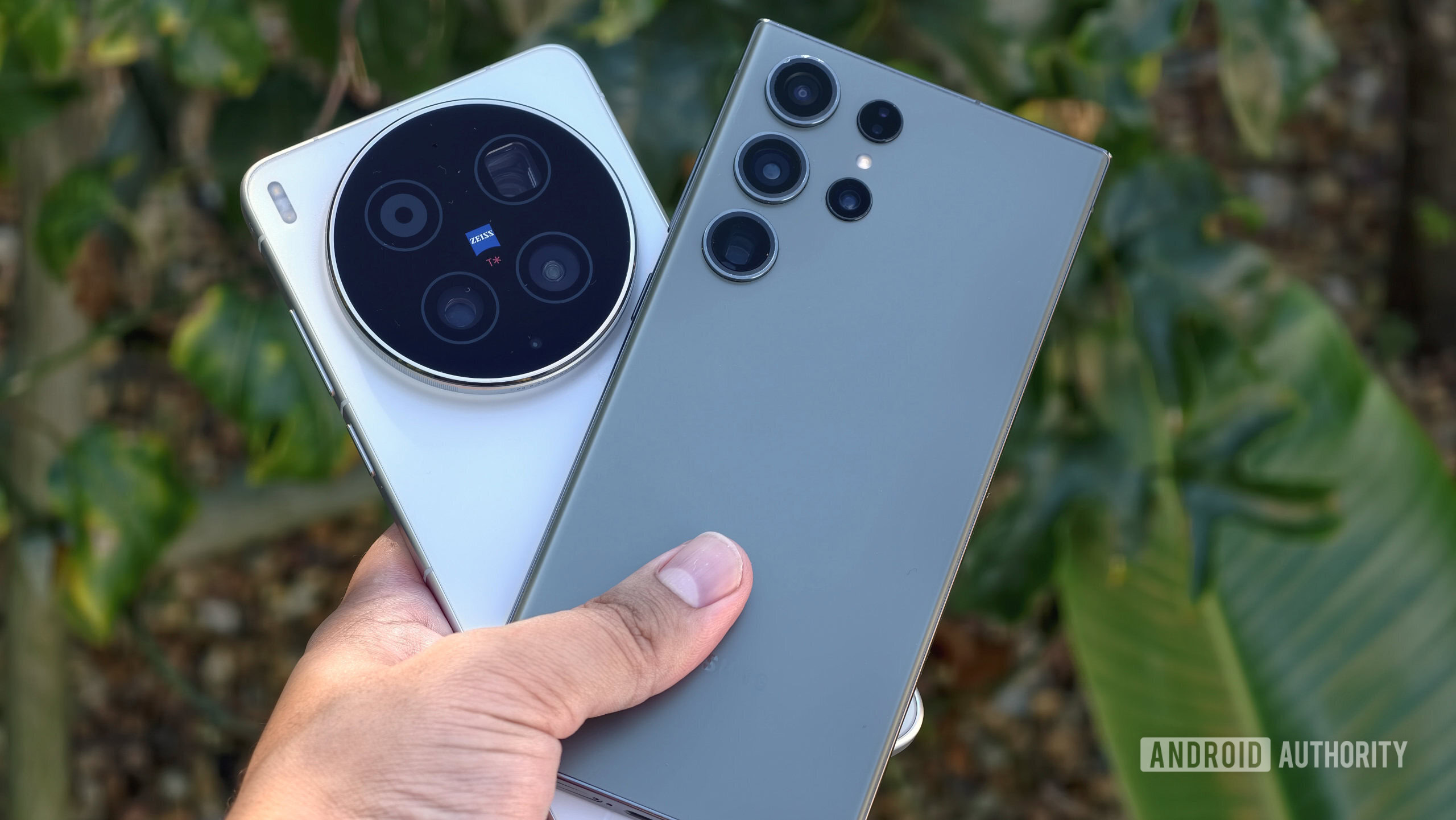
We haven’t seen a major change in the sensor size of 200MP cameras, though. Until now, that is. The vivo X300 Ultra has just been released, and it offers a significantly larger 200MP main camera. But how does this fare in practice compared to the first-generation 200MP main camera on the Galaxy S23 Ultra? I put these two phones to the test in a 200MP camera shootout.
Have 200MP main cameras lived up to the hype?
105 votes
What to know about Samsung and vivo’s 200MP main cameras

Hadlee Simons / Android Authority
The Galaxy S23 Ultra’s main camera features a 200MP Samsung ISOCELL HP2 sensor, which was cutting-edge at the time. This is a large, 1/1.3-inch sensor with tiny 0.6-micron pixels. But it also featured tricks like 16-in-one pixel binning (equivalent to a 12.5MP, 2.4-micron pixel camera) or conventional four-in-one binning (equivalent to a 50MP, 1.2-micron pixel camera). Other notable tricks include Super Quad Phase Detection autofocus, as well as dual-slope gain and Smart ISO Pro for improved dynamic range.
Don’t want to miss the best from Android Authority?


Meanwhile, the vivo X300 Ultra’s main camera uses the Sony LYT-901 camera sensor. This is Sony’s first 200MP camera sensor, and the 1/1.12-inch sensor size makes it notably larger than Samsung’s 200MP cameras. The Sony sensor also offers 0.7-micron pixels, which are still small by the standards of other camera sensors, but larger than those in previous 200MP sensors. Bigger pixels mean greater light capture, which should lead to brighter, cleaner photos with less blur. Sony adds that the sensor offers all-pixel autofocus, DCG-HDR tech for improved single-frame HDR, and Hybrid-Frame HDR.
I approached this shootout by sticking with the Galaxy S23 Ultra’s regular camera settings, save for enabling the Quick Tap Shutter option. I also mostly used the X300 Ultra’s default settings, though I switched from the default Vivid color profile to the Authentic option for more realistic colors.
Galaxy S23 Ultra vs vivo X300 Ultra: Pixel-binned shots
Early 200MP cameras often took full-resolution photos with minimal processing compared to the pixel-binned snap. This meant that there was often a stark difference between the 200MP and 12.5MP photos. Nevertheless, the latest sensors offer more advanced HDR tricks, while today’s flagship processors offer multi-frame processing at 200MP. So how do the two phones and their camera sensors fare in a demanding, backlit scenario?
The difference between full-resolution and pixel-binned shots seems to be narrowing in 2026. vivo’s 200MP and 12.5MP images look very similar, featuring a washed-out appearance that’s ostensibly due to the more realistic color profile. However, the lower-resolution shot offers slightly lifted shadows and a brighter face, likely due to better HDR capabilities at 12.5MP.
There’s a massive difference between Samsung’s 12.5MP and 200MP photos, though. The pixel-binned snap offers an aggressive HDR treatment with very saturated colors, while the full-resolution shot features plenty of blown-out highlights (particularly in the background and around the subject’s head). What’s more concerning is that the Samsung phone’s 200MP photo has grid artifacts when zooming in. Take a closer look at the image below.

Hadlee Simons / Android Authority
It’s clear that vivo’s 200MP shot is the better full-resolution snap, owing to tamed highlights and a lack of grid artifacts. Neither 12.5MP shot was perfect, though, as I felt the ideal picture was somewhere in the middle. Nevertheless, both phones did a solid job of exposing the subject’s face.
I then switched to the standard 12.5MP mode and a more conventional scenario to see how the phone’s pixel-binning capabilities compare. It’s worth noting that the X300 Ultra’s main camera has a 35mm focal length, which is effectively equivalent to 1.5x of the Galaxy S23 Ultra’s 24mm focal length, as seen on the vast majority of smartphone cameras. Colleague Rob Triggs previously noted that he preferred a 35mm camera as he felt the 24mm perspective was too wide, especially when he already has an ultrawide camera on tap for wide shots. So this perspective comes down to your own preference. Check out the gallery below.
The Samsung phone opts for a more saturated shot, while vivo’s authentic color profile understandably delivers a colder, more washed-out look. However, a closer peek also reveals that the vivo handset offers far more detail and less smearing than the S23 Ultra. The 35mm focal length ostensibly works to vivo’s advantage here, but that doesn’t fully explain the gulf in detail.
What about low-light photography, though? Shooting a moving subject after dark is a tough challenge, so how did the two phones handle my cat in the dimly lit backyard? Check out the pixel-binned samples below.
I kept automatic night mode processing enabled on both phones. Needless to say, this scene required a few snaps on both devices, as my cat kept moving her head. Nevertheless, the Samsung phone clearly struggled compared to the vivo handset. Note how the fur in the Samsung photo is basically a noisy smear. The X300 Ultra’s main camera also delivered good subject separation, presumably due to the focal length and larger sensor.
I disabled the automatic low-light processing on both phones for this early morning scene of some flowers. This should give us a rough idea of how well each phone’s camera performs in terms of autofocus, light capture, and more. Unfortunately, neither phone captured truly sharp flowers. However, the Samsung photo has significant splotchiness upon closer inspection compared to the vivo’s cleaner, slightly brighter presentation. The X300 Ultra also delivers a shallower depth of field, helping the flowers stand out from the background.
What about 200MP photos?
I also took plenty of full-resolution 200MP photos during the shootout. The gallery above shows the Camps Bay beachfront in Cape Town, and both phones understandably offer plenty of detail at this resolution. There’s enough headroom here to crop in on either snap. But look closer, and you’ll see that the vivo handset does a much better job of capturing fine detail, which is especially important when it comes to people. By contrast, the people in Samsung’s shot look splotchy and feature color banding.
The vivo device also offers greater definition and detail for the scenery and buildings. Go back to the full scene and take a look at the white houses at the foot of the mountain, as well as the small building on the beach. There’s still some minor fringing in this scene, such as white buildings, as you might expect in the late afternoon. I’m also not a fan of the excess sharpening in some parts of the scene, such as the roofs of some buildings.
Moving on to the next comparison, conventional wisdom says you should stick with the pixel-binned 12.5MP mode when shooting in low-light scenarios. But I decided to shoot a few full-resolution photos at night to see how the first-generation and new-generation sensors perform. Check out the gallery below, showing my gaming shelf in a dimly lit room.
A close look at these 200MP crops reveals that the vivo handset delivers a cleaner, less washed-out rendition of the scene. The X300 Ultra image also offers sharper text, although I think the AI-assisted processing makes some characters look overly sharp and janky.
A trip to the local indoor market after dark also gives us a good full-resolution workout. The Samsung phone’s wider perspective and vivo’s more realistic color profile presumably account for the differences in exposure and white balance. More specifically, the Galaxy S23 Ultra lifted the shadows compared to the vivo shot while offering a warmer scene. Neither phone accurately captures the “Mojo Bar” lighting, though. The vivo rendition is just too dull while the Samsung snap has notable fringing.
Take a closer look at this scene, and it’s clear that the X300 Ultra delivers more resolvable detail. Text is significantly more legible on the bottles and beer taps compared to the Galaxy S23 Ultra shot. The light sources are also kept in check by the vivo handset’s ZEISS lens coatings. You can view the image comparison below for a closer look.
Want to pixel-peep our full-resolution photos? You can view and download all these snaps via our Google Drive folder.
How far have 200MP cameras progressed?

C. Scott Brown / Android Authority
I’m a big proponent of 200MP cameras for zoom, but I’ve otherwise been a 200MP skeptic for a few years now. The first 200MP cameras were capable of capturing decent detail at full resolution, but this was often undone by slow processing times, tiny pixels, and rudimentary processing. While these sensors could capture great pixel-binned snaps in most conditions, so could lower-resolution 50MP cameras with large sensors.
However, our comparison between the first 200MP cameras and the latest hardware suggests that these sensors are finally living up to the hype. Detail is far better, as is HDR and low-light performance, which really make high-resolution photography much more viable. I’m keen to see more phones with cutting-edge 200MP sensors like the Sony LYT-901. In fact, I’d love to see Samsung adopt a similarly large 200MP camera next year.
200MP photography is much more versatile on recent phones.
It’s also worth noting that other factors, such as chipsets and brand-specific camera tuning, can make a big difference. In fact, phones like the vivo X300 series and OPPO Find X9 series support multi-frame image processing at 200MP. This allows for full-resolution photos with improved noise and blur reduction, as well as 200MP portraits and night mode snaps. This was unthinkable just a couple of years ago. I’m therefore interested to see what else phone makers can do with these cameras in the future, thanks to these newfound processing capabilities.
Thank you for being part of our community. Read our Comment Policy before posting.
Source link
#years #200MP #cameras #finally #live #hype