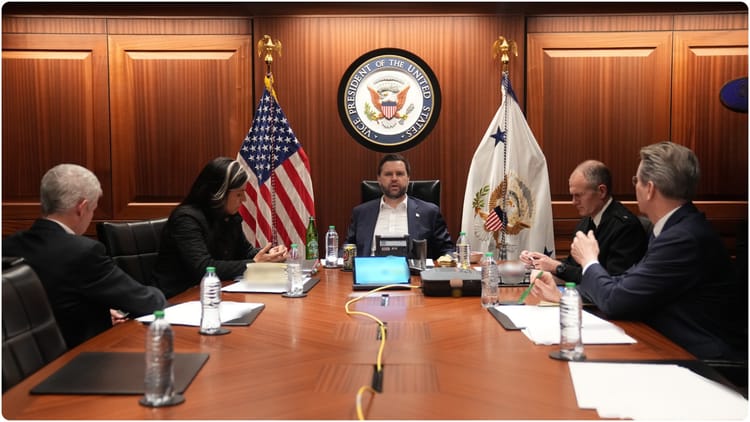
China’s latest blueprint for driving growth in its economy was largely written before the U.S. and Israel instigated the most far-reaching war in the Middle East in decades.
But when Chinese Premier Li Qiang stood up in Beijing’s Great Hall of the People on Thursday to deliver the opening address of the so-called Two Sessions, some last-minute updates appeared evident.
While emphasizing domestic resilience in the world’s second-largest economy and referencing ongoing trade frictions with the United States, Li also noted the “external economic environment” had suddenly become even more “complex.”
By “complex” Qiang could mean that the leadership in Iran, a strategic ally and key supplier of oil, has been decapitated and that the country is under withering bombardment from two of the world’s most advanced militaries.

China has lowered its 2026 economic growth target to 4.5 per cent at the annual ‘Two Sessions’ summit in Beijing, where political heavyweights are strategizing on political, economic and military goals amid U.S. trade tensions, and uncertainty over war in the Middle East.
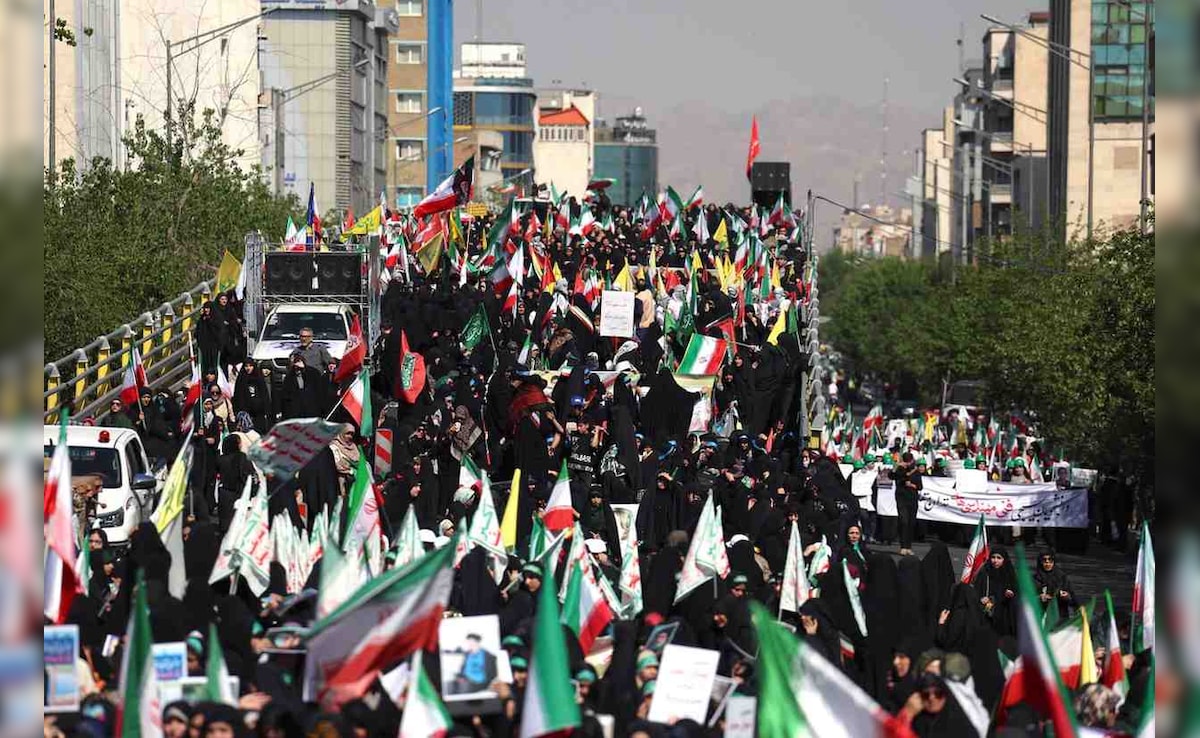
For several years prior to the U.S. and Israeli attacks, China provided Iran with crucial economic and political lifelines.
China bought Iranian oil despite the risks of Western sanctions. It also supplied Iran with key components for its ballistic missile and drone programs. And in 2021, China and Iran signed a long-term economic co-operation agreement.
Taken together, China’s help allowed Iran to continue to field a formidable military while avoiding the full impact of its isolation from the global economy.
China sidelined
After the bombs started falling, Chinese officials condemned the assassination of Supreme Leader Ayatollah Ali Khamenei, lambasted the U.S. for its “blatant military strikes” and dispatched a special envoy, Zhai Jun, to try to de-escalate the war.

But it’s what China isn’t doing that may be more notable.
Despite being the top customer for Iranian oil — 90 per cent of its output is sold to China — and the largest commercial trader with the Persian Gulf nations now sheltering from Iranian missiles and drone attacks, President Xi Jinping has given no indication China plans to be much more than a bystander in this conflict.
The latest economic plan emphasizing Chinese resilience and self-reliance aims for about five per cent annual GDP growth and aspires to dominate emerging fields of robotics, renewables and artificial intelligence. With this plan, the country’s leadership appears to have calculated it can withstand any short-term economic shocks from an oil crisis — and if they do occur, whatever comes to pass will not significantly affect its key economic goals.
Furthermore, positioning the country as a safe haven from the war reinforces China’s emerging narrative as a predictable, reliable trade partner, say analysts.
“China has been preparing for this for a long time,” said Alex Zheng, a consultant with China Macro Group in Shanghai who focuses on China’s political economy.

China has an economic “buffer,” he says, in that it has been building up strategic reserves of oil that will cushion the country from immediate price spikes. Zheng says it can also turn to Russia to offset any oil disruptions from Iran or the Gulf.
“Maybe 50 per cent of China’s energy imports [are] from the Middle East, compared to maybe 80 or 90 per cent 10 years ago,” Zhou told CBC News.
Alessandro Arduino, an associate fellow with the U.K.-based Royal United Services Institute and a China expert, concurs.
“China, for a limited time, has the possibility of strategic reserves of oil and gas to offset the increase in inflation — but it cannot do that forever,” he said.
“China needs stability and less uncertainty in order to develop what they are planning for the next five-year development plan.”
Alternate priorities
Unlike Western countries, China’s government takes a centralized approach to economic growth.
It releases yearly reports and sets targets during the Two Sessions — the meetings of the top legislative and advisory bodies — and then leverages the weight of the country’s enormous population and natural resources to try to achieve them.
While the latest five-year plan didn’t make a specific reference to the Middle East war, it did underscore that China’s most urgent security priority remains a potential conflict area much closer to home — the Taiwan Strait.
In unusually strong language, the document signalled China’s intent to “reunify” Taiwan and said the Xi government will “resolutely combat” — rather than simply “oppose” — any Taiwan independence moves. The Two Sessions blueprint also said China intends to accelerate the “cause of national reunification” with increased military spending.
Taiwan is a democratically governed territory that most of the world does not officially recognize as a sovereign country, and yet still conducts intensive trade and political relationships with.
Xi had previously set 2027 as the date for China’s military to have completed its modernization efforts, which some U.S. observers have interpreted as the timetable for a potential seaborne invasion or naval blockade of Taiwan.
Potentially upstaging the war in the Gulf from a Chinese perspective is U.S. President Donald Trump’s upcoming visit to Beijing, which the White House has indicated will begin on March 31.

China appears to have prioritized improving and stabilizing economic relations with Washington over staging any immediate intervention on behalf of Iran in the Persian Gulf.
Together, the two countries account for 43 per cent of global GDP, and despite Trump’s tariffs and other obstacles, the U.S. remains China’s single-most important trading partner.
Leveraging predictability
With China’s domestic market struggling, the U.S. is a critical — arguably irreplaceable — export market. At the same time, China remains dependent on it for many of the components used to power artificial intelligence, including advanced semiconductors.
“I think China still wants to say [to Trump], ‘OK, let’s talk. Let’s meet. Let’s see what we can do,'” said Henry Wang, founder of the Center for Globalization and China in Beijing.
Trump’s inherent unpredictability has provided China with another diplomatic and economic opportunity that Xi appears intent on exploiting, says RUSI’s Arduino.
“Predictability is something that China is really looking to offer,” Arduino told CBC News.
Canadian Prime Minister Mark Carney, along with the leaders of Germany, Australia and the United Kingdom to name a few, have visited Xi in recent months to try to diversify their markets away from the U.S.

After years of strained relations, Prime Minister Mark Carney has met Chinese President Xi Jinping in Beijing. Carney hailed a tentative agreement with China to co-operate more on clean and conventional energy, but the Canada-China tariff dispute remains unresolved.
Peter Francopan, a professor of global history at Oxford University, recently observed on his Substack that in the lead-up to Trump’s visit, Chinese naval and air activity around Taiwan has markedly declined — suggesting that while China’s claims to the island remain unchanged, the optics of projecting military force around it may have, at least temporarily.
“Dialing down” visible military pressure around Taiwan helps reinforce Beijing’s new narrative and presents China as a cautious and responsible actor, Francopan wrote.
China may yet try to play some kind of role as a mediator in the U.S.-Israeli war on Iran, although it’s far from clear if either side is looking for that at the moment.
For Iran, however, the realization is becoming clear: in Beijing’s pursuit of a new global order, a strategic partner in the Persian Gulf may be nice to have — but a stable economy and a productive meeting with Donald Trump are absolute necessities.
Source link
#ANALYSIS #Trump #visit #coming #China #hedges #bets #helping #Iran #CBC #News