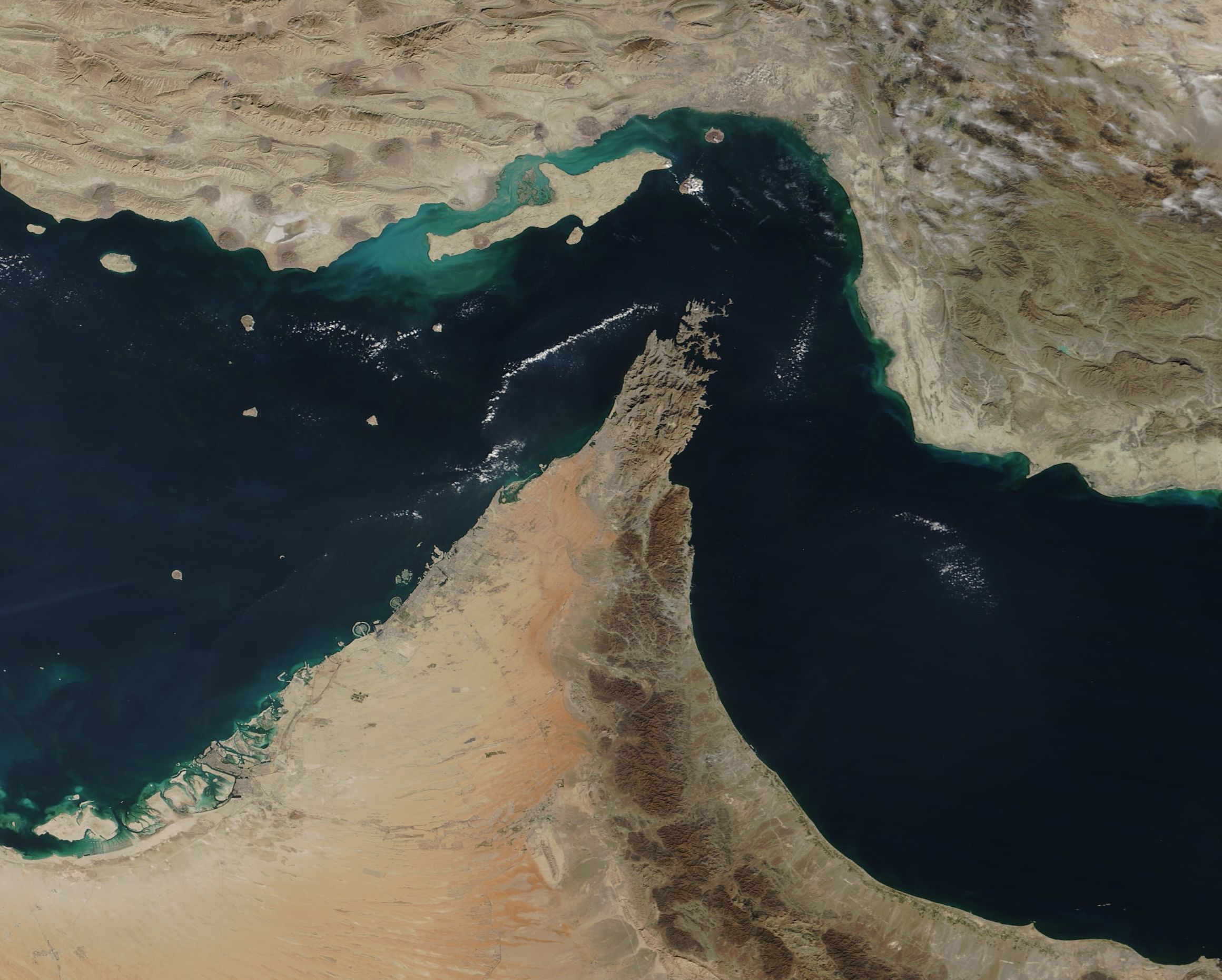
Shipping through the Strait of Hormuz, the vital chokepoint for roughly one-fifth of the world’s oil supply, remained severely restricted Saturday as Iran continued to control access and limit transits more than three days after a fragile U.S.-Iran ceasefire took effect.

Maritime tracking data showed only 5 to 20 vessels passing through the narrow waterway in the past 24 hours — well below the normal daily average of about 60 ships — with the majority linked to Iranian interests. Independent analysts described traffic as operating at less than 15% of pre-crisis levels, leaving hundreds of tankers and bulk carriers stranded or delayed inside the Persian Gulf.



The strait, which lies between Iran and Oman at its narrowest point of just 21 nautical miles, has been under heavy Iranian influence since late February 2026 when Tehran effectively closed it to most international shipping amid escalating conflict. Mines, sporadic attacks on vessels and threats from the Islamic Revolutionary Guard Corps (IRGC) brought commercial traffic to a near halt, disrupting global energy markets and causing oil prices to spike.
A two-week ceasefire announced April 8 between the United States and Iran included commitments to reopen the strait for safe, unrestricted passage. U.S. officials, including President Donald Trump, declared it a victory and reported an initial uptick in movements. However, ship-tracking platforms such as Kpler, Lloyd’s List Intelligence and the dedicated Hormuz Strait Monitor painted a different picture: Iran has imposed a permission-based regime, requiring coordination with its armed forces and reportedly charging tolls exceeding $1 million per vessel in some cases.
On April 11, real-time monitors confirmed the strait remained in a “restricted” status since April 7. Only a handful of Iran-linked tankers — including a crude supertanker capable of carrying 2 million barrels — and dry bulk carriers, some carrying Iranian iron ore to China, managed to transit. Most international operators continued to hold position, citing high insurance risks, lingering mines and uncertainty over safe passage.
Iranian officials have insisted the waterway is not closed but subject to “measures arising from the state of belligerency.” State media reported that vessels must stay closer to Iranian territorial waters and obtain prior clearance. The IRGC has warned ships to avoid routes favored by U.S. or Israeli-affiliated traffic. Tehran maintains that full normalization depends on broader compliance with its conditions, including an end to Israeli operations in Lebanon outside the ceasefire framework.
The limited traffic has worsened an already acute energy crisis. Analysts estimate that roughly 20% of global seaborne oil supply has been disrupted since the closure began. Hundreds of tankers remain backed up in Gulf ports or at anchor, with repairs to damaged infrastructure expected to take months even if full access resumes. Oil prices, which surged during the height of the crisis, have eased slightly on hopes of eventual reopening but remain elevated due to the slow trickle of shipments.
U.S. and British leaders have discussed military options to guarantee freedom of navigation. British Prime Minister Keir Starmer and Trump reportedly reviewed capabilities for potential intervention if Iran fails to honor the ceasefire terms. The White House has repeatedly demanded immediate, safe and full reopening, calling any continued restrictions “unacceptable.” Vice President JD Vance warned Iran against “playing” the United States as he prepared for indirect talks.
Shipping giants and insurers remain cautious. Major operators have told crews to refrain from transiting until risk assessments improve. Even with the ceasefire, war-risk premiums for the region stay prohibitively high. Some vessels that attempted passage reported being turned away or redirected, adding to confusion and hesitation.
The 2026 Strait of Hormuz crisis erupted after Iran declared the waterway closed to ships serving U.S., Israeli or allied ports in response to military actions. Attacks on vessels, including incidents resulting in crew fatalities, further deterred traffic. While Iran continued limited exports of its own oil, international tankers largely stayed away.
Ceasefire talks, mediated in part through third parties and set to intensify in coming days, face multiple sticking points. Disagreements persist over the scope of the truce — particularly regarding Lebanon — and the exact terms for Hormuz reopening. Iran has linked safe passage to cessation of broader hostilities, while Washington insists on unrestricted commercial navigation as a core condition.
Experts caution that even a full reopening will not immediately restore normal flows. Clearing potential mines, rebuilding confidence among shipowners and insurers, and repositioning stranded vessels could take weeks or months. Prediction markets have sharply lowered odds of traffic normalizing before May 1, reflecting widespread skepticism.
For Gulf states and global consumers, the prolonged disruption has ripple effects. Higher energy costs threaten inflation, while delayed shipments affect supply chains far beyond oil. Abu Dhabi National Oil Company officials have publicly stated that the strait is not yet fully operational despite the truce.
As of Saturday morning, live trackers showed a modest number of ships moving under tight Iranian oversight, but no sign of large-scale resumption. The narrow channel, long considered one of the world’s most critical maritime arteries, remains a flashpoint where geopolitics directly collides with global commerce.
International maritime authorities continue to monitor the situation closely. The U.S. Maritime Administration and United Kingdom Maritime Trade Operations have issued advisories urging caution. Navies from multiple nations maintain a presence in the broader region to deter threats and protect commercial shipping where possible.
The fragile ceasefire holds for now, but trust remains low on all sides. Accusations of violations fly regularly, with each party interpreting the agreement differently. For the crews of thousands of vessels waiting to move, and for economies dependent on steady oil flows, the status of the Strait of Hormuz on April 11 offered little immediate relief.
Analysts say sustained diplomatic progress, verifiable de-mining efforts and concrete security guarantees will be needed before the waterway returns to its role as a reliable conduit for global energy. Until then, the world’s oil markets and shipping industry will continue operating under the shadow of uncertainty in one of its most strategically sensitive passages.
Originally published on ibtimes.com.au
Source link
#Strait #Hormuz #Traffic #Remains #Standstill #USIran #Ceasefire #Iran #Limits #Access