UK businesses are weighing up changes to their pay and benefits structure, as more than half cite increases in long-term absence and disability among their staff leading to rising costs. Many are reporting increased focus on wellness in their offerings, as they look to improve employee health outcomes in the longer term.



In times of muted economic growth, businesses usually turn to ramping up productivity as their go-to cure-all. And that usually also means contending with one of the apparently leading causes of a loss in productivity: staff absences.
A study in 2018 centred on this found that on average, employees lost more than 30 days of productive time annually, due to sick days, or underperformance in the office as a result of ill-health. The results demonstrated high levels of productivity loss across all sectors and organisational sizes, despite some variation across industries.
Eight years later, with the country once again in the grip of a sustained period of economic stagnation, employee absence is once again rising on the corporate agenda. A new study by WTW polled 141 organisations across the UK to sound out sentiment on the matter – and found a new issue associated with the matter. A majority of 55% reported difficulties due to the rising costs associated with absence or disability.
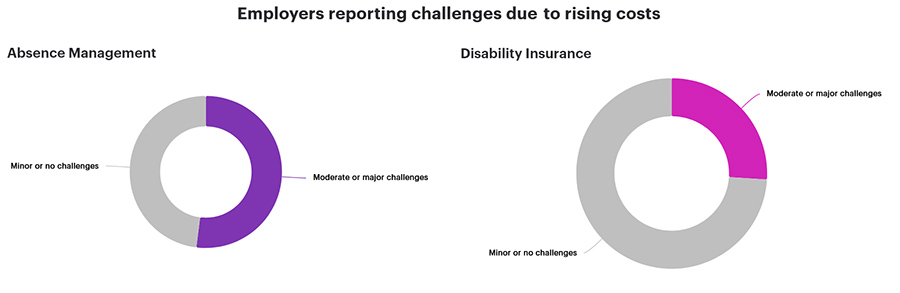
Source: Absence Management Survey 2026, United Kingdom
Charlotte Steventon-Kiy, absence management lead at WTW, said, “The rising number of days lost to absence and long-term ill-health is increasing cost pressures and operational challenges for employers. Many are facing significant barriers, including inconsistent policy implementation and ineffective programmes.”
While 55% also said long-term absence and disability was rising, mental health conditions remain the leading cause of concern for employers when it comes to employee absence. However, 63% also identified musculoskeletal and other chronic conditions to have growing importance – rising from 51% three years previously.
In response, organisations are seeking to better align absence management with their broader HR strategies – believing that shifting from a reactive to a proactive stance can help build a healthier, more productive workforce. With a greater emphasis on prevention and employee wellbeing, 46% said they will now prioritise enhancing wellbeing support.
But a larger 57% said they were planning to more closely “integrate” absence management with pay, benefits and wellbeing over the next two years to manage costs in the meantime. This includes 55% planning to renegotiate terms or switch to better-value benefit providers, and 51% intending to enhance claims reporting by analysing trends as a key step in improving absence management. The use of condition-specific care pathways is also expected to increase.
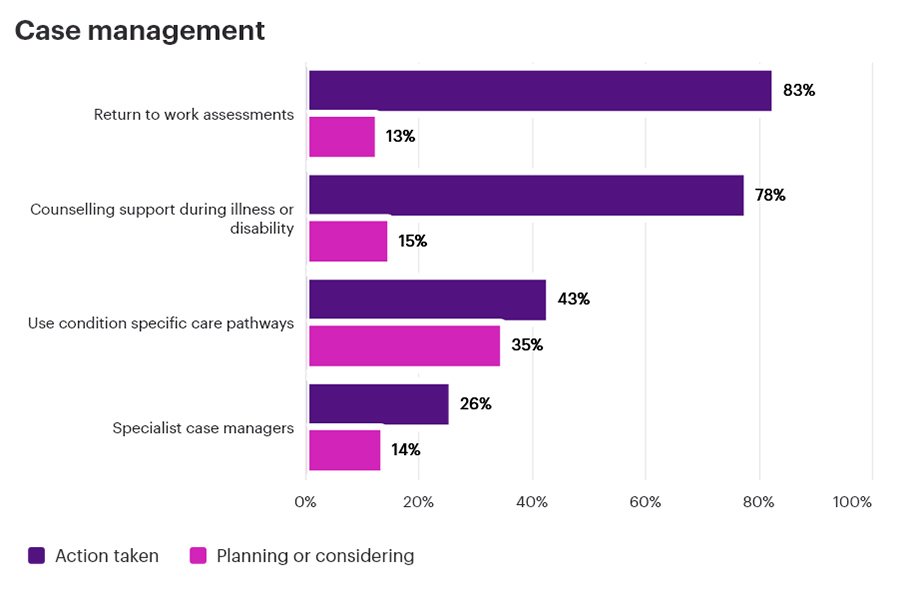
Source: Absence Management Survey 2026, United Kingdom
Employers are also prioritising improvements to the delivery of absence management. The top focus area is enhancing manager capability, with 59% planning targeted training on specific absence-related issues. Other priorities include 50% working on improving employee understanding of absence policies through clearer communication. But according to WTW, organisations that are leading the way in managing absence are placing a particularly strong emphasis on wellbeing. These employers have moved beyond foundational activities such as reviewing policies and streamlining administration, and are increasingly adopting more value-added approaches.
Gaby Joyner, European head of employee experience at WTW, added, “By investing in wellbeing and the overall employee experience, organisations aim to reduce both the incidence and severity of absence and disability. Programmes include mental health initiatives such as resilience training or on-site counselling, ergonomics interventions, and broader wellness campaigns focused on exercise and healthy lifestyles.”
Employers must be careful not to push home the wrong message here, too. Presenteeism can be a significant drain on productivity – with employees remaining at work while sick inhibiting their own productivity, and potentially seeing others becoming ill in the process. Previous studies suggest the pressure to attend at all costs could ultimately cost UK businesses over £77 billion – in part due to the added mental and physical anxiety placed upon staff.
At the same time, public policy needs to take into account the legacy of the pandemic, for both the sake of staff and employers. Opting to simply ‘live with’ Covid-19 does not mean its consequences will disappear – with the virus having left at least 4% of the population with long-Covid; a set of enduring symptoms which can include brain fog, breathlessness, muscle aches and chronic fatigue. While there are around 2 million cases on record with the NHS, recent estimates suggest that as many as 10% of people in Britain could be living with the condition – at a time when vaccine availability is being cut back, and government support for disabilities and long-term conditions also being reduced.
Source link
#Employee #absence #increasingly #challenging #employers