


For years, hospital growth in India has followed a predictable path: expand beds, add super-specialties, and scale up surgeries. In this model, inpatient departments and operating theatres have long been seen as the main engines of both revenue and reputation.
But this mindset misses something important. The real heartbeat of hospital operations isn’t inside the OT—it’s in the OPD.
Every day, OPDs see the highest patient footfall. They are the first touchpoint, the most frequent interaction, and often the most reliable source of revenue. Yet, despite their central role, OPDs remain one of the least structured parts of hospital systems. High volume, yes. But very little visibility.
Ask most hospitals a few basic questions, and the answers are often unclear:
- How many patients actually complete the diagnostic tests they’re advised?
- How many prescriptions translate into in-house pharmacy sales?
- Where exactly is revenue being lost?
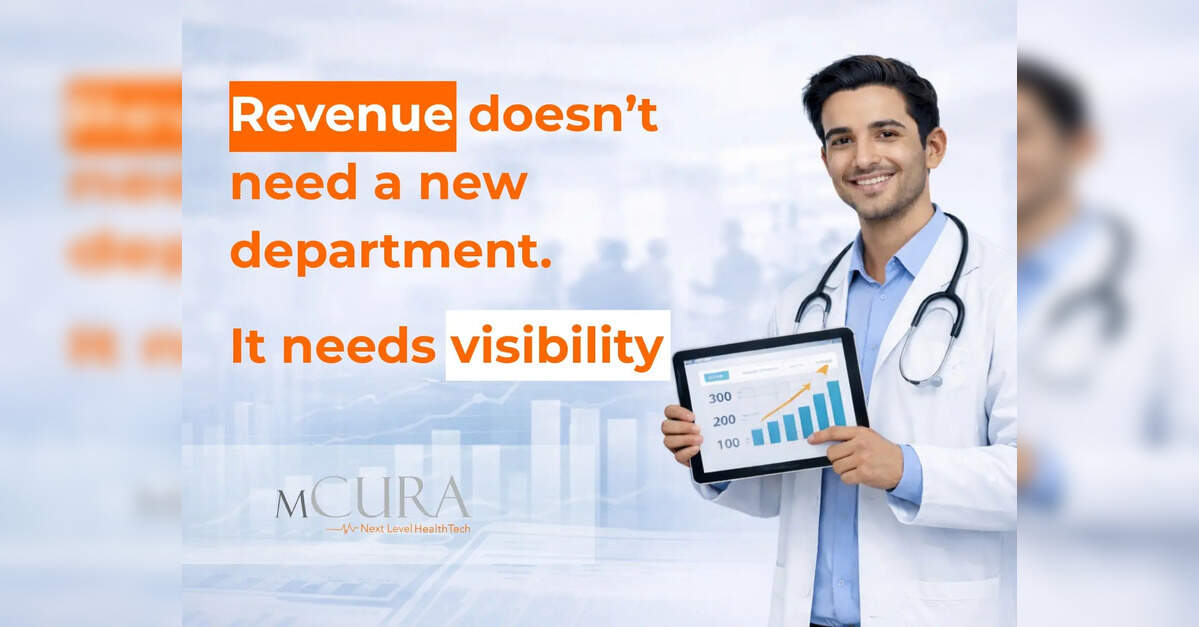
The issue isn’t demand. It’s the absence of systems that can track and manage it—something platforms like mCURA are increasingly attempting to address by bringing visibility into outpatient workflows.
The Invisible Problem
In a typical OPD, inefficiencies don’t always stand out—but they add up quickly.
A patient is advised to take tests but gets them done elsewhere. Another fills a prescription at a nearby chemist. Follow-up visits—critical for both outcomes and revenue—simply don’t happen or go unrecorded.
Individually, these may seem like small gaps. Together, they create a significant financial drain:
- A large share of diagnostic recommendations never convert within the hospital
- Pharmacy sales leak out to external vendors
- Follow-ups slip through the cracks
What makes this more challenging is that most hospitals don’t have a clear way to measure these leakages. So they persist, resulting in erosion of margins—an area where structured OPD intelligence layers, such as those developed by mCURA, are beginning to offer measurable visibility.
Why Digitisation Didn’t Fix It
To be fair, hospitals haven’t ignored technology. Many have invested in EMRs and hospital information systems. But these tools were largely built for documentation and compliance—not for the fast-paced, high-volume nature of OPDs.
The reality on the ground looks very different:
- Consultations are often wrapped up in minutes
- Doctors prioritise patient interaction over data entry
- Patients expect speed and convenience
- Staff are stretched, with little room to enforce structured workflows
In this environment, traditional systems often feel like a burden rather than a support. Adoption remains patchy, and the data captured is rarely complete enough to be actionable. Even when systems exist, without intelligent layers they fail to translate data into usable insights.
The problem isn’t just about technology—it’s about fit.
A Shift in Thinking: From Records to Insights
What’s now emerging is a more practical approach—one that treats the OPD not just as a point of care, but as a source of real-time insights. Newer, AI-led platforms are being designed to work with existing workflows, not against them.
Healthtech company mCURA is focusing on embedding intelligence directly into everyday OPD processes. The idea is simple: don’t force doctors and staff to change how they work—build systems that adapt to them.
That means:
- Capturing consultations through voice, handwriting, or assisted inputs
- Structuring clinical data automatically, without extra effort from doctors
- Tracking whether advised services are actually availed
- Creating a closed loop between consultation, diagnostics, and pharmacy
- Giving clinicians quick, usable patient summaries
The goal isn’t digitisation for the sake of it. It’s clarity about knowing what’s happening, in real time.
When OPDs Start Working Smarter
Once OPDs become more structured and visible, the impact is hard to miss.
Hospitals begin to see better conversion of diagnostics and pharmacy services. Patient drop-offs reduce. Consultations become smoother, supported by better documentation. And perhaps most importantly, decision-making becomes data-driven rather than assumption-based.
What was once a fragmented, opaque system starts to come together. And the OPD, traditionally seen as just a volume centre, begins to deliver real, measurable value —especially when supported by intelligent OPD management ecosystems like mCURA.
The Bigger Picture
India’s healthcare sector is at a turning point. Margins are under pressure, and expanding infrastructure alone is no longer enough to drive growth.
The next phase will be about optimisation to make better use of what already exists. And in that equation, the OPD stands out.
Hospitals don’t necessarily need more patients to grow. They need to do more with the patients they already have.
For too long, the spotlight has been on operating theatres and inpatient care. But the real opportunity—the one hiding in plain sight—lies in the OPD. And those who figure it out first will have a clear advantage.
Disclaimer- The views/suggestions expressed in the article are the sole responsibility of the brand connected, this should not be considered as a substitute for medical advice. Please consult your treating physician for more details.

Source link
#OPD #Indias #Largest #Untapped #Revenue #Engine #Hospitals #Flying #Blind