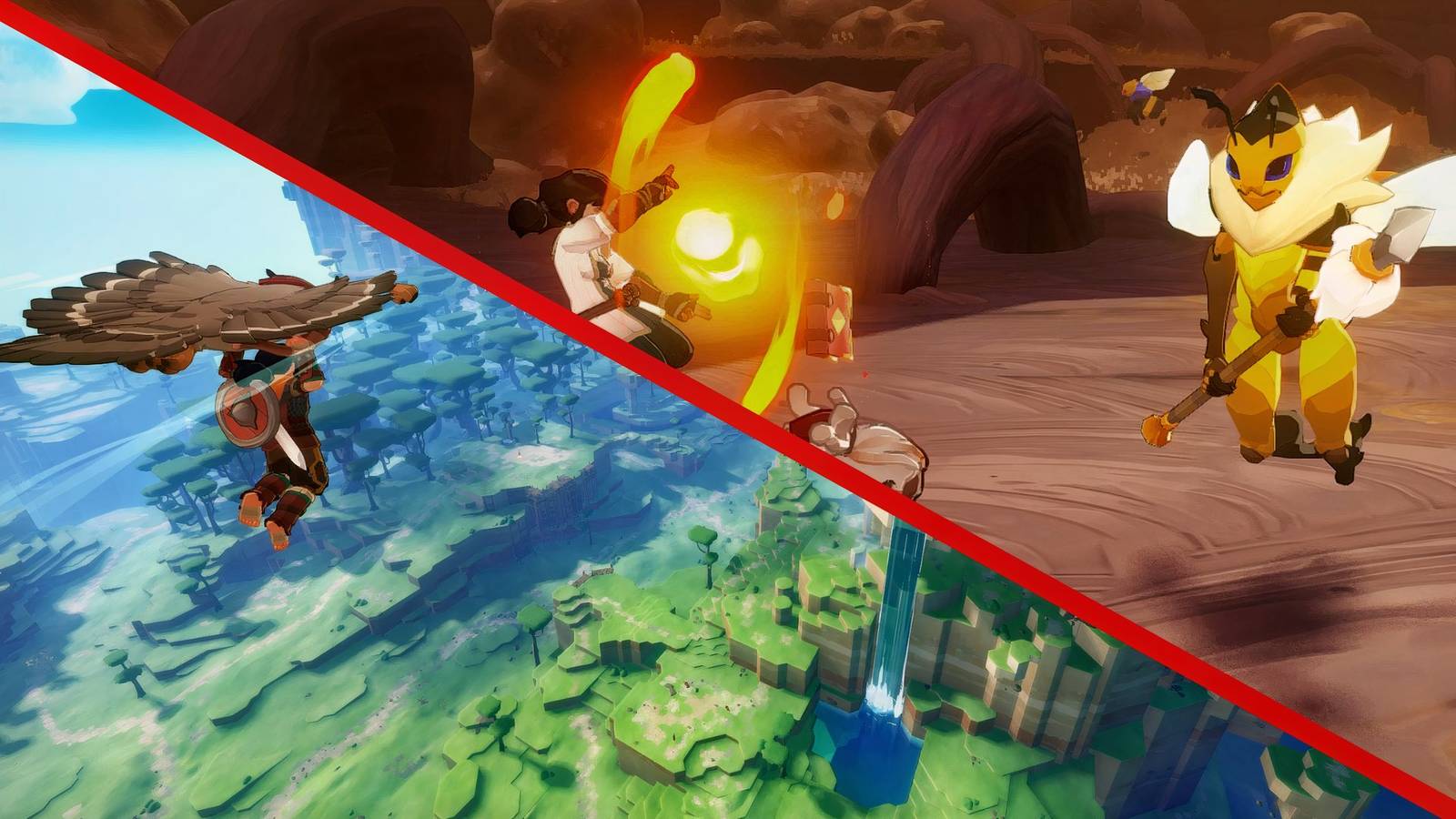
Between thrilling battles, incredible exploration, and nonstop surprises, Farever makes losing track of time dangerously easy. I spent several hours playing Farever, a new MMORPG with delightfully witty NPCs, a heavy focus on exploration, crafting, and combat systems!



Whether you’ve anxiously been waiting for this game to launch, or you’re just catching wind of it, I’m here to tell you all about my experience and hope it can help you decide if you want to do the same or not.
Farever Preview
|
Game Title: |
Farever |
|---|---|
|
Genre: |
MMORPG, Action-Adventure |
|
Developed and Published By: |
Shiro Games |
|
Release Date: |
May 6th, 2026 |
|
Platforms: |
PC (Steam) |
|
Price at the Time of Review: |
$19.99 USD |
Story and Setting
Farever takes place in the charming world of Siagarta, which is considered to be a forgotten realm. Your adventure begins immediately in the game’s character builder, where you can choose from four classes – Warrior, Mage, Rogue, and Priest. Each class comes with its own class attributes, which are certain moves that the player can use in combat. These attributes can be enhanced over time, and once you get to playing, you’ll find even more skills and attributes along the way.

The game’s character customization menu is next, where the player can fine-tune their character’s appearance. At this time, there are only three body types available – a muscular, ‘male’-leaning body type, a curvier, stereotypically ‘female’-presenting body type, and a more lean, androgynous body type. More variety here would certainly be beneficial to the game, and would allow for inclusivity in a way that a game like Black Desert offers. There is a range of nine skin colors available, around a dozen hairstyles, a handful of facial hair options, and over twenty hair colors available.
Farever’s lore centers around humanity’s rediscovery of their ancestral home after centuries of being exiled. The narrative focuses on something that many games do not: there is no Chosen One. There is no singular soul who will save the day, banish evil, and restore a mystical goblet or a throne to its rightful owner. You are a daring pioneer setting out to uncover the mysteries of this wild, wondrous, and colorful landscape, and you, like so many others, are only trying to survive.

While this is a refreshing take, it can make the game feel directionless. With so many endless caverns, dungeons, and oceans to explore the lack of an overarching goal or quest can be felt. When you have completed all the side quests – which consist mostly of gathering materials or combat -, there is no defined endgame, which leaves Farever as open as it began. As of right now, the closest thing we have to any sort of endgame content is being able to fight already defeated bosses at a slightly higher level. Despite this being enjoyable for what it is, some players prefer just a little bit more of a goal to work towards.
Overall, however, the realm of Siagarta is beautiful and vast – full of a multitude of fierce (and adorable) creatures, charming NPCs with clever, punny names, and plenty of secrets to discover. While you might turn a corner and encounter a boar ready to stampede your way, you are just as likely to chat with Ruby Garland the shopkeeper, or stumble across a rogue aptly named Haydn Seek.
Gameplay
Farever is coined as an online, multiplayer action game, though there are not many portions of the game that one cannot play on their own. Because of this, the player truly has the freedom of choice when it comes to their play style – whether that is going head-to-head with Nepsilon, the Envoy of Emperor Nephisto, or taking Crabgantua down with a larger group of players.
There is no right or wrong way to approach combat, and the online, cooperative nature of MMORPGs ensures that if you’re in a pinch during a boss fight, there’s a fairly good chance of a good samaritan coming along and fighting with you. I had just as good of a time playing on my own, as I did playing with a friend.
Farever lacks tutorials. You are, more or less, just thrown into the game, with little instruction on how to fight, navigate the map or the various menus, or craft. It is up to the player to futz and fumble through learning these things on their own, which makes initial combat tedious, and can result in the player not utilizing all of their devices.
Combat
The combat system in Farever is fast-paced, and blends ability rotations with manual dodging and blocking. Weapons are wholly considered the most important part of a player’s build – far more than armor or class, in my opinion. While your class gives your character an active identity and role in combat, your weapon determines your active skills, support value, and how you navigate a fight. I most frequently played as a rogue, and it was essential for me to have both melee weapons and a bow and arrow in my arsenal. You can also enhance and enchant your weapons, though upgrades are generally best spent on skill enhancements, rather than improving a specific weapon that you’re bound to replace. There is also armor available for each specific class – said equipment offers buffs and benefits tailored to the player’s class.

Each boss has its own gimmick – whether that’s their attacks changing at a certain health threshold, adding waves of smaller enemies, or creating area pressure. This keeps boss combat from becoming stale, and requires that the player change up their tactics from time to time. A staple of games with refined combat, such as Elden Ring, is that there is not one single tactic or build that is always effective, and having bosses or gimmicks that counteract a popular build keeps players on their toes.
Jobs
Crafting in this game comes in the form of ‘jobs.’ Upon reaching each area’s encampment, you’ll run across an NPC named Job Welldon (remember the mention of the puny names?). Job Welldon’s task is just that – teaching the player Professions that shape how they craft gear, potions, accessories, weapons, and more. The available professions are Alchemist, Blacksmith, Cook, Enchanter, Jeweller, and Outfitter. Once you learn a job for 300 gold, you will have access to its associated crafting menu. The menu is straightforward and clearly displays what material is needed for various objects, leaving guesswork by the wayside.

Fast Travel, Mounts, Gliders & Companions, and Quests
Fast travel is navigated through an obelisk system, much like the towers in Breath of the Wild. Each area has an obelisk that, when activated, unlocks that area’s map and allows the player to travel to and from that obelisk. My biggest gripe here is that you can only travel from obelisk to obelisk (rather than traveling to an obelisk from any point on the map) unless you’re carrying a specific item that brings you to your preferred obelisk. This method of transportation tends to make fast traveling, well, not so fast.

At encampments, players are able to purchase a mount, which is a creature that you can ride to help you travel across the map a bit quicker than merely walking would allow for. Mounts tend to be fairly steep in price, but they come in an array of horses, crabs, dogs, and more. Gliders are similar – they are kept in the player’s pocket and used as a paraglider so that you can cross gaps and canyons without falling to your death.
Companions are small, aesthetic creatures that you can catch with a butterfly net, and that follow you around during gameplay. They have no value as far as combat bonuses or enchantments – they’re simply just cute.
There are quests to obtain various mounts and companions; however, most quests tend to entail gathering resources, upgrading equipment, and combat. As previously mentioned, there is no true ‘plot,’ so having hunting-and-gathering quests generally feels like busywork, rather than excelling in the game or doing anything of ‘importance.’ While plenty of people enjoy this sort of experience, some players may be more comfortable with a proper goal to work towards, and Farever lacks that.
Design, Visual & Audio, and Performance
Farever is a visually appealing game. The scenery is eye-catching, the lighting warm, and the enemy designs are at that sweet spot between cute and repugnant. Unfortunately, performance, at times, is lacking. The game frequently throws server errors and will boot players out of the game and will struggle to load menus, and even loading screens have frozen and entirely stopped working whilst moving between areas. That considered, the devs have been making quick progress on fixing issues as they surface, so none of these things have made the game unplayable or overtly unpleasant.

There are some instances where words or phrases seem to have been translated poorly, and the dialogue font could stand to be larger. The game lacks voice actors, though this is nowhere near a deal-breaker for me. Farever has a lovely soundtrack with an array of instrumentals that very much adds to the nostalgic, cozy feeling that this type of MMOs seem to exude.
You can toggle music volume over environmental/combat audio, which I found myself doing frequently because the various grunts and groans tend to be much louder than the music. I enjoyed that, regardless of lacking proper voice lines, each enemy type had its own ‘cry’ when in combat. Small details like that are something that Farever has in spades, and you can tell that a great deal of care went into the game.
Final Thoughts
Farever is a delightful game focused around exploration, combat, and often time, cooperative gameplay between players across the world. The combat is responsive and allows for plenty of customization, and the bosses have just enough variety in both design and mechanics to keep things interesting without feeling repetitive. Despite its capabilities as a co-op game, Farever can be played solo without any issues, and without the player missing anything from the experience. However, the lack of guidance and storyline can become stale, and the game needs a number of tweaks to ensure that it runs smoothly.
All in all, while not free of its issues, Farever is absolutely worth its price tag, and I’m looking forward to seeing how the game develops during its Early Access stages. Farever may still be finding its footing, but the journey ahead certainly looks promising.
Source link
#Farever #Review #MMORPG #Combat #Crafting #Exploration #CoOp #Gameplay