

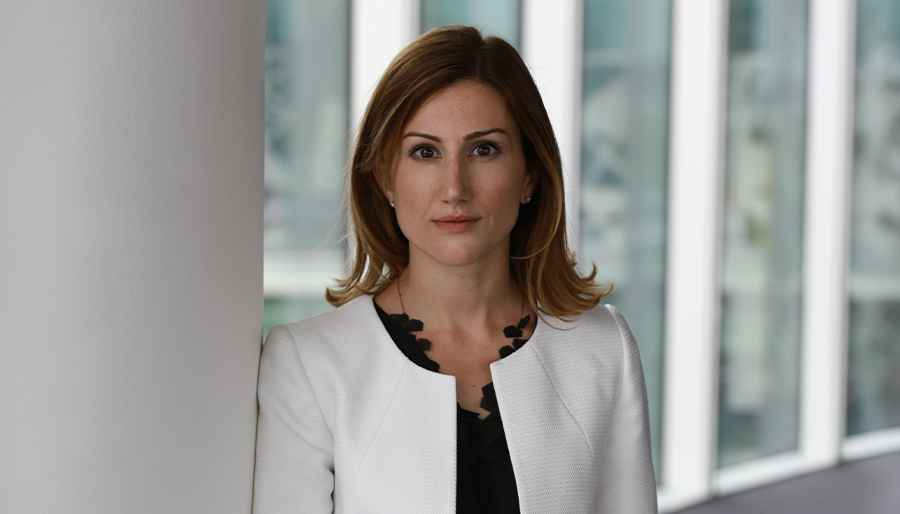
The consulting industry is being reshaped by AI, from delivery models and talent strategies to performance. As Head of Consulting for Europe and Global Managing Partner for Strategy & Transformation at Wipro, Caroline Monfrais is witnessing these shifts first-hand from the top. We sat down with her to explore these trends and her vision for what comes next.

The consulting industry has been reshaping its talent model for years. What makes the current moment a structural shift rather than another adjustment in the cycle?
For more than a century, the industry has worked the same way, with large teams of junior staff handling the analysis and research, senior consultants framing the problems, and partners managing client relationships. This formed the classic pyramid.
Then, as automation and analytics reduced the need for entry-level labour, many firms shifted towards a flatter diamond: hiring fewer people at entry level, relying on a bigger band of mid-career specialists, and thinning out the path to partner.
Several global firms have since cut or paused graduate hiring while dealing with unprecedented senior attrition. Others have created new senior titles that retain expertise without growing the partnership, severing the old link between time served and climbing the ladder. This isn’t ordinary cyclical adjustment; it points to a deeper change in where value lies.
The clearest signal comes from outside the industry: technology companies that once supplied tools to consultants now compete for the advisory work itself, running AI inside client operations and charging for outcomes rather than time.
The future talent architecture in the industry is described as an ‘X’. What does that mean in practice?
Much of what used to fill a junior consultant’s week – research, analysis, modelling, write-ups – is now done by AI, which is what pushed firms towards the diamond. But the diamond brings its own problems: it weakens the apprenticeship, concentrates risk, and still doesn’t fully meet client expectations. It was built to optimise cost; the next model must optimise value.
In the X model, AI becomes the engine that does, at scale, the work that once justified large teams – gathering data, benchmarking, drafting, testing and coordinating tasks. It is the new entry-level tier: always available and far faster than any team. What it can’t do is build judgement through experience, so that responsibility shifts up the firm.
At the base, consultants now direct and check the AI rather than producing the analysis themselves. The crossing point of the X is the most critical segment: people who combine deep expertise with commercial accountability, working like a control room, where they monitor dashboards, direct AI, and step in where judgement is required. This is where consulting shifts from producing recommendations to running the transformation itself.
At the top, the partner role changes too: less time checking work, more time shaping what the client wants to achieve, coordinating the people and AI delivering it, and owning the decisions people and machines now make together. Partners who can’t make this shift will be sidelined by clients who no longer see their value.
There is a risk that ‘AI replaces junior talent’ becomes the dominant headline. How does the X model reframe what early career development looks like?
The shift to an X model doesn’t deprioritise early-career talent; it reflects renewed investment in human development at the start of a consulting career.
New joiners no longer spend their first years building slides and running analyses. Instead, they configure AI agents, sense-check what it produces, and work on whole problems far sooner. This speeds up learning rather than diluting rigour. It is also driven by what someone can demonstrate rather than how long they’ve served, and backed by AI copilots that give feedback as they go.
The apprenticeship is reshaped into something more deliberate, capability-led and open to a wider range of people, giving graduates not just technical skills but the adaptability, judgement and ethical grounding the work demands.
If AI compresses delivery timelines and shrinks teams, what happens to the economics of consulting?
Historically, consulting firms were paid for time, so more people on a job meant more hours to bill.
The X model breaks that logic. Once AI collapses delivery times, effort stops being a believable stand-in for value. Clients question why they should pay for teams when intelligent systems produce the same output faster and at far lower marginal cost. Pricing moves towards fixed fees, subscriptions, products, and outcome-linked models.
With that gone, margin has to be engineered deliberately: through how well AI is deployed, how clearly human judgement is applied where a machine shouldn’t decide alone, and how tightly work is scoped. Accountability moves upward, with partners answering for the commercials of an engagement from start to finish.
What are the key shifts in what leadership looks like inside the X model, and what are the questions firms need to be asking themselves to make that transition?
As AI absorbs analytical and executional work, leaders create value less through expertise and oversight and more through context, judgement and system design. Their role shifts in three ways: from command to context, setting direction before empowering teams and AI to execute; from answers to judgement, deciding which questions matter and when to step in; and from managing talent to building capability, accountable for skills, trust and resilience at scale.
This only works if learning stops being a separate function: embedded in daily work, validated continuously, with AI coaching in real time and progression based on impact rather than tenure. Leaders must then confront four questions. Where does judgement matter most, and how do we protect it? How do we train future leaders when repetition disappears? How do we price value when AI collapses effort? And how do we build trust at scale?
Finally, if effort is no longer a reliable measure of value, what does high performance look like in the X model?
In older consulting cultures, high performance meant intensity: long hours, heroic effort, individual brilliance. In the X model, it shifts from effort to orchestration. That means being clear about the result, trusting AI while staying accountable for it, building learning into everyday work, and keeping people for the judgement, creativity and ethical reasoning machines can’t offer.
Not all firms start from the same place. Traditional consultancies, built around billing for time, must change how they price, deliver, hire and operate all at once, while protecting the model that made them money.
A firm sitting inside a bigger technology and services group starts more easily: closer to where results are delivered, with AI already part of how the job gets done. The firms that treat AI as just an efficiency tool will slowly become less relevant; those willing to rethink how they develop people, learn and make money are the ones most likely to lead.
Source link
#Caroline #Monfrais #Wipro #reshaping #consulting #talent #model





