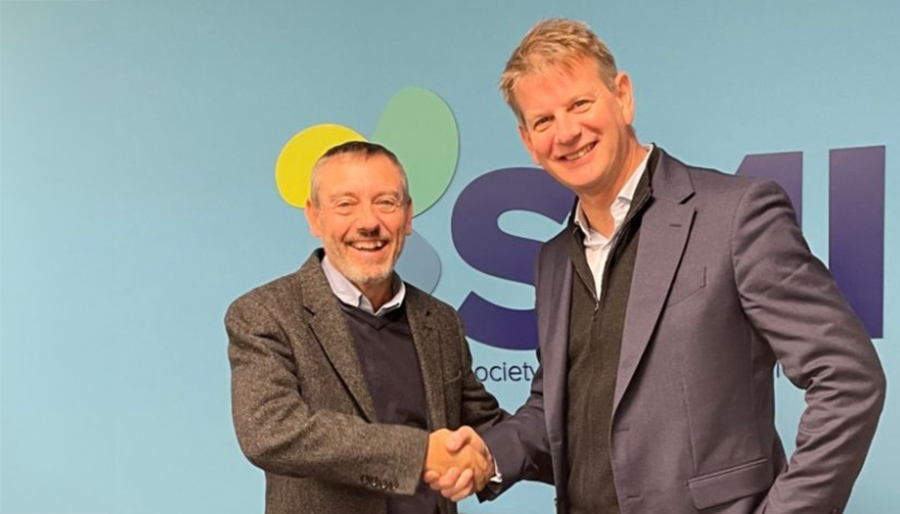
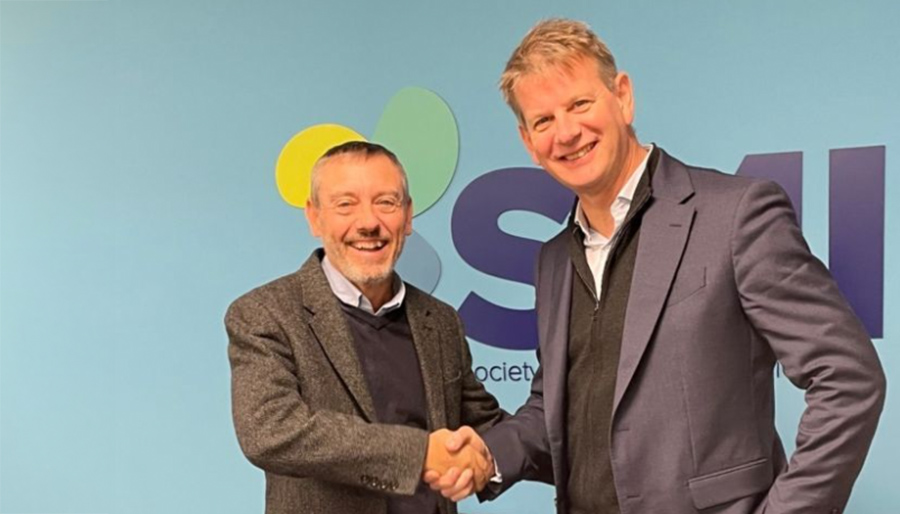
The UK’s maritime sector faces a period of key challenges, but also major opportunities, as matters of national security and supply chain sovereignty see generational demands placed on the currently under-resourced sector. Develop Consulting’s Maritime Sector Director Darren Jones sits with Consultancy.uk to discuss how the firm’s newly established maritime practice is preparing to put Lean principles to work, to help the sector rise to the occasion.



Develop Consulting is a consultancy focusing on applying Lean principles, primarily in the manufacturing and healthcare spaces. For example, Develop Consulting’s partnership with NHS England on “Transforming General Practice: Time, Access and Care” has supported over 1,000 practices through more than 15,000 improvement sessions across 40+ Integrated Care Boards over more than five years. The firm also applies these principles for clients who are among the world’s leading organisations across rail, aerospace, automotive and now, maritime.
But while in each of the previous industries it has entered, Develop has shown the value of low-volume, high-value manufacturing and maintenance, its methods aren’t always universally welcomed at first. Speaking after the official roll-out of the firm’s maritime practice, Maritime Sector Director Darren Jones explains that winning trust in the sector will naturally take time, and patience.
“I visited a yard recently, and I asked them about some changes they were making. I said, are you going to change the flow? And they said, no, we’ve been doing it like this for 100 years.”
Conceding that Britain’s remaining shipyards have “a lot of history”, Jones notes that this can see manufacturers naturally lean on time-honoured traditions, which they feel have worked for them for generations. But “history doesn’t necessarily mean you evolve and get better”. Sometimes, he warns, it can lead to entropy, and with the nation’s maritime sector suddenly coming under a level of demand it hasn’t seen in decades, not being used to the operational excellence seen in other industries could prove costly when it comes to capitalising on the opportunities ahead.
Develop formalised its maritime practice precisely in anticipation of this. The sector “isn’t entirely new” for the firm, with Jones noting that many of its consultants have worked in maritime before, but they judged the time was right to “really bundle it up” because the sector needed help getting up to speed. The conflict in Iran has since further emphasised the urgency of the situation, throwing into sharp relief the UK’s vulnerability around what Jones calls “sovereign capability and capacity”. In other words, “can we actually build ships?”
Time and tide
Amid the globalisation of the economy, and the offshoring of manufacturing seen over the last four decades, UK shipyards have become “under-resourced”, as has the local supply chain, which increasingly hinges on imports. Recent years have seen dramatic and repeated shocks to the ecosystems around the materials needed for ships and their production, meaning that things are not as simple as just nearshoring. The situation also requires manufacturers to adapt to maximising resource efficiency. And in this case, time and tide simply cannot wait.
“Even if we can assemble ships, much of the supply chain is from overseas, and that’s at risk in the modern world we live in, so that’s a national security risk,” Jones expands. “The Cabinet Office has even put maritime as a key industry for national security. In that context, we’ve got to find ways to do more with less. And learning the lessons to do just that is where Develop Consulting comes in.”
Pointing to Japan following the Second World War, Jones notes that among the wreckage, the nation “didn’t have anything”, so doing more with less became central to one of the most remarkable economic recoveries of the last century. Toyota was at the heart of that, developing the Lean production methodology which catapulted its brand to the forefront of the global automotive market.
Originally developed by Toyota in the 1950s, Lean refers to any method, measure, or tool that helps in the identification and elimination of waste. While these methodologies have been particularly popular in car manufacturing, they also have applications in other sectors, something which Steve Boam, an alumnus of the UK and Japan branches of Toyota prior to founding Develop Consulting, placed at the centre of its offering to clients across the industrial spectrum. As demand booms and supplies diminish, maritime is now a prime example of the importance of that idea.
Jones adds, “Toyota will introduce a new car in 18 months* from somebody saying we’re going to put a car in a showroom. Other car companies used to take five years. If you take that view of, let’s take all the waste out of the process of how we’re going to get there, you can transform timelines entirely.”
One of the ways shipyards could soon be doing more with less is through modular solutions, another area of expertise at Develop. Modular construction involves producing standardised components of a structure in an off-site factory, then assembling them on-site. It is a viable way for sectors under pressure to meet rising demand with less input, and it has “huge crossovers” with ship manufacturing.
Jones notes that Develop already works with two of the major prime manufacturers in the UK who have designed and collaborated with shipbuilders to create essentially a base vessel platform, with everything above it built to be modular depending on what equipment, weaponry or crew accommodation is required. This approach could transform maritime production, particularly as the industry moves towards autonomous vessels.
“If you can have a deck and then modularly put different things on that platform, it’s hugely attractive, and that is the way we can ramp up production. Our manufacturing experience is crucial here, because that’s more construction than it is shipbuilding. If shipbuilders continue working in the same way they’ve built parts of ships for 150 years, it’s not going to be economically viable to do that in the UK.”
Rising tides
This is not just about grinding through change for the sake of survival, however. Jones contends that the UK’s maritime sector could position itself to flourish in a way it hasn’t for generations, if it succeeds in its Lean transition now. Pointing to the work Develop has done in the rail sector, a similarly “lumpy” industry where domestic manufacturing demand is inconsistent, he notes that an efficient operational model has transformed the prospects of many of the firm’s clients.
“We’ve done work in a yard where they’d been building trains for 150 years, and we managed to get operational excellence in there,” Jones recalls. “Their throughput went up, their quality went up, their costs went down. They’re now able to export, which, when you’ve got lumpy order books, is key. You can flatten out demand, always have busy yards, and then upskill. The only way we’re going to export, because we can’t compete against subsidised yards overseas on price, is by being the best in the world, and that means operational excellence.
“That means every penny has got to count. We’ve proven we can do it in rail. We can do this in UK maritime too, and I think we’ve now got the ambition to do that. Now it’s about delivery, and it’s about embracing new ideas from outside the maritime industry.”
This presents major opportunities for the communities around the yards too. Jones maintains that efficiency here “doesn’t mean employing less or fewer people”. A stronger, Lean maritime industry should mean “we’ll employ more people”, he argues, as “we’ll be putting more vessels in the ocean.”
“This is good for employment, but the truth is we have to do more with less, because we can’t compete on subsidies or low cost labour unless we do that, and that’s going to be operational excellence. It’s the only way forward.”
At the same time, the maritime sector does not only centre on shipbuilding. It also plays a key role in the UK’s energy transition, with the government noting that 80% of the nation’s energy will somehow have a connection to the ocean, whether through pylons with wind turbines, floating wind, or the distribution network from overseas connectors on the seabed.
“Alongside the pylons and turbines, we need new vessels to service and maintain that infrastructure, and we need to be building them here, because that’s how we get security of our energy supply too. There’s a view that these things have to take decades, and we take the view that they don’t. Using Lean processes, we can get new energy sources on stream quicker.”
“When you’ve got a sector saying they’ve got a skills gap in the hundreds of thousands, actually when we look at it, we go, no, you’ve got really skilled people doing lots of unskilled jobs. Let’s change the process, and let’s change the culture. We can have a strong maritime sector in the UK if they adopt operational excellence, but only if they do that.”
Winning trust
Even as Develop’s pitch for the sector centres on speed and efficiency, the firm still has work to do when it comes to winning the ear of the industry as a whole. Larger consultancies are long established in the sector, including the Big Four and the world’s largest strategy consultancies, but according to Jones, Develop’s unique selling point offers something that no generalist can match, whatever their scale.
“There’s all sorts of consulting, on where the market’s going or on tax advisory, but what you don’t find in the sector is anybody really going in and looking at the client’s process, their culture and their operation. Frankly, Develop Consulting has the only consultants who will be standing next to a welder, or on a night shift, to understand the pressures they are under and where they can be helped. That’s the difference. You can’t just write a report and magic happens. You can’t just deal with the board and magic happens. You’ve got to work from the board to the shop floor.”
Getting to that point will still take a little time, but Jones remains confident in the process, thanks to the firm’s previous experiences in similar sectors. All it takes is “finding one or two people that it clicks with”, and once they argue for their company to “roll the dice”, their results will draw other clients in.
“When you have one bit of success, people come knocking at your door. We’ve heard you’re doing a great job. People notice. And then, of course, people move around sectors, and they take that word with them. So it is very much a case of getting the first couple of prime movers.”
One such prime mover is the Society of Maritime Industries, which Develop became a member of at the turn of the year. Founded in 1966, the Society of Maritime Industries is the voice of the UK’s maritime engineering and business sector, promoting and supporting companies which design, build, refit and modernise ships, and supply equipment and services for all types of commercial and naval ships, ports and terminals infrastructure.
The two organisations have already launched a podcast together discussing the key trends in the maritime space, and the partnership presents important opportunities to showcase how Develop can drive growth and operational excellence across the UK’s maritime sector.
“We’re doing a tour of the BMW Mini factory in Oxford, in conjunction with the Society of Maritime Industries in April,” Jones says. “We’ve got some of the leading maritime people from the UK coming to understand how a car factory works and what lessons from high-volume automotive manufacturing can be brought into the low-volume world of shipbuilding. Those are the people who are going to come away and say, do you know what, you’ve got a point. Let’s give this a go.”
Looking ahead, he is quietly confident in what Develop can offer the sector.
“It will happen. It will take a little bit of time. I’m not expecting a mass rush, but when we get there, we will make a difference. We have in rail, we’ve done it in aerospace too, but maritime has got this really burning platform around national security, and that’s why I think the inertia will cease to be a problem a little more rapidly.”
Source link
#Darren #Jones #Develop #Consulting #building #leaner #maritime #sector