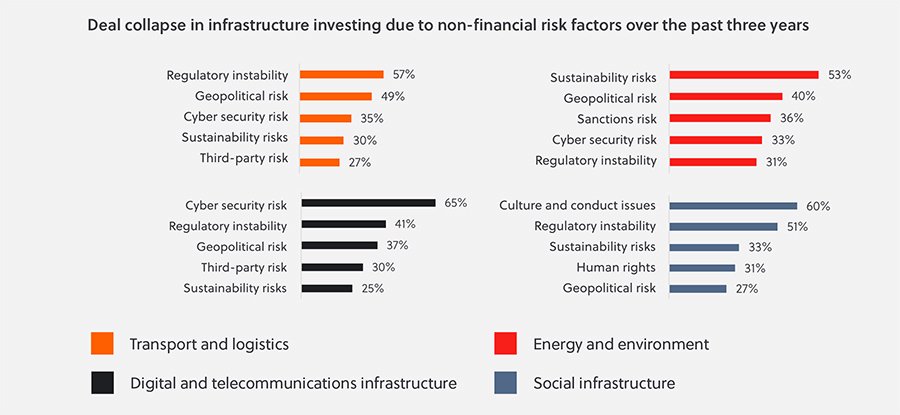
New research from S-RM suggests culture and conduct concerns are growing deal risks in social infrastructure investment. While regulatory instability is also causing difficulties, the study found that 60% of investors have seen a social infrastructure deal collapse because of culture or conduct concerns at the target company.

According to S-RM, governments have increasingly recognised the need for investing in social infrastructure, like education and healthcare facilities, in addressing socioeconomic challenges such as unemployment and ageing populations. However, many continue to leave the heavy lifting to the private sector – something which, due to the profit motive, has mixed results.
However important an aspect of infrastructure might be, perceived risks around a deal that might make it more difficult, or longer to see returns on an investment, often see funds get cold feet. According to S-RM, which polled 150 investors through 2025, the majority of investors looking to avail themselves of social infrastructure opportunities walked away from deals due to their belief there was ‘culture or conduct’ issues at their targeted acquisition.
Source: S-RM global survey of 150 investors.
S-RM is a global corporate intelligence and cyber security consultancy. Founded in 2005, it has over 400 experts and advisors across nine international offices, and advise companies ranging from blue-chip corporates to large financial institutions, and beyond.
The consultancy found 60% of investors noted culture or conduct issues as the cause of a social infrastructure deal falling through in the past three years – ahead of regulatory instability on 51%, and sustainability risks or adverse environmental impact, at 33%. And investors are becoming more and more fixated on these non-financial risks too – with 80% of investors in social infrastructure (such as hospitals, schools, or social care facilities) saying these risks were either “extremely important” or “very important” when making investment decisions.
Investors in social infrastructure also identified several specific regulatory and human rights-related factors affecting investment decisions in this sub-sector. ‘Political interference’ in regulatory decisions was the most significant regulatory concern, cited by 67% of social infrastructure investors, while 52% pointed to human rights risks across supply chains and 42% highlighted reputational risks linked to human rights controversies – something which again might imply that perhaps the private sector is not the right fit for every job that needs doing – particularly when it comes to infrastructure that is key to the public’s welfare.
Source: S-RM global survey of 150 investors.
Ian Massey, head of corporate intelligence, EMEA at S-RM, said, “Unlike other infrastructure sectors, the assets involved – from healthcare and education facilities to housing and community services – are closely tied to public trust and social impact, which means culture and conduct issues can quickly become material investment risks. As scrutiny from regulators, communities and investors continues to grow, firms are placing greater emphasis on governance, compliance, and – in particular – culture during due diligence. Investors that can identify and manage these risks early will be better positioned to protect value and avoid disruption throughout the investment lifecycle.”
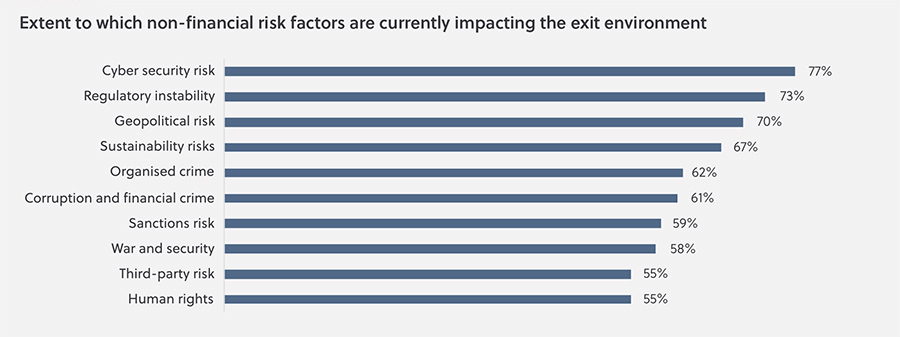
At the same time, worries around possible shifts in exit environments have also put investors off. When exploring the non-financial risks impacting this across all areas of potential investment, 77% respondents noted cyber security fears, while again 73% noted they were afraid of ‘regulatory instability’.
Despite these challenges, investor appetite for social infrastructure remains strong. On average, more than 70% of investors rate the sector as an attractive investment opportunity over the next five to ten years, behind digital and telecoms infrastructure at 79%, and energy and environment infrastructure at 75%.
Source link
#Majority #social #infrastructure #investors #deals #collapse #culture #concerns