
With profits close to £2 billion in 2025, the motor insurance market enjoyed a year of over-performance – as cut-rate premiums were offset by a decline in major claims. The road ahead may be bumpier, though, with researchers expecting profits to fall to just over £1.3 billion in 2026, with rising claims and changing expenses hitting the sector.


The UK motor insurance market found itself at a crossroads in 2025. Amid rising inflation, regulatory scrutiny and evolving risks related to crumbling transport infrastructure and climate change, firms also had to contend with consumer demands for affordability and fairness.
While this left many companies in the sector facing shrinking margins, however, in spite of this, new research from Oxbow Partners suggests that 2025 was still a record year for underwriting profit. The estimated £1.961 billion in sectoral profits may mask a difficult period in the years ahead, though.
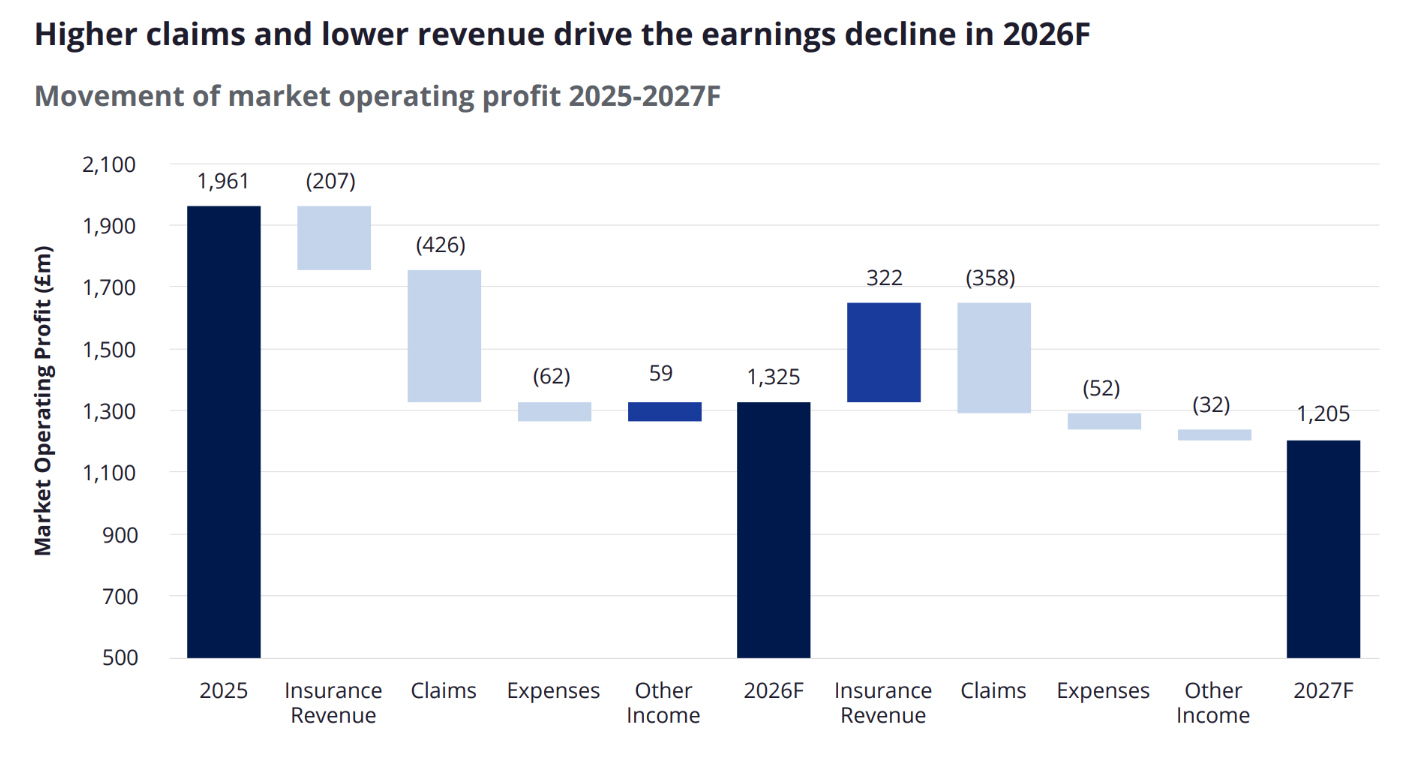
Source: Oxbow Partners analysis. Other income includes investment returns. Insurance revenue and claims figures are net of reinsurance
In the black
The record UK motor insurance market profit of £2 billion is credited partially to a step-change in pricing in 2023 and 2024, according to Oxbow Partners. Amid a period of rebalancing costs, a number of firms looked to reduce premium rates to drum up business – and while this might have been expected to result in a year or two of leaner times, the move coincided with a period of lower major claims.
In fact, during 2025, every claim category saw growth in costs fall – except one. Bodily injury, property damage and accidental damage all entered negative growth – while theft and windscreen only claims saw the rate of expansion shrink to less than 5%. Only replacement vehicles saw an upward-trend, rising from just under -30% growth in 2024 to around 4% in 2025.
According to the researchers, this helped offset the rise in small claims which occurred – with customers may have been “more willing to make smaller claims without the fear of incurring large premium increases as was the case in 2024”. However, the road ahead is less certain – as the experts expect these circumstances will not be sustainable for the current or coming period.
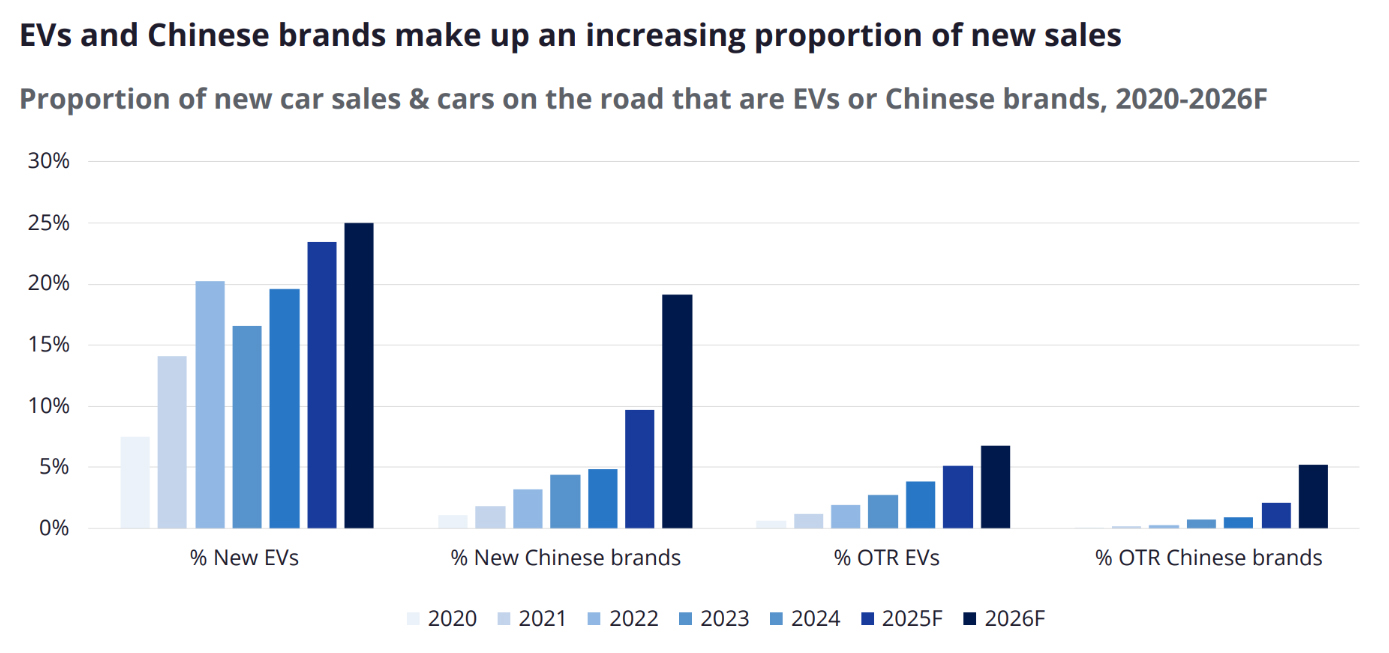
Source: SMMT, DfT, Oxbow Partners analysis
Oxbow Partners anticipate that claims severity inflation will be in store – impacted by the US-Iran war, which is constricting supply chains, and the flow of both fuel and automotive parts into the UK. That is set to see severe claims cost rise to 7% in 2026, according to the study.
Meanwhile, the rise of electronic vehicles, and Chinese brands in the automotive space are also having unexpected impacts on these prices that will continue into 2027. The proportion of electrical vehicles in new car sales is now at 23% – and while that means only 5% of cars on the road are electric, that means insurers must take into account now that there will be rising demand for specific parts that combustion engines do not have.
Similarly, the rise of Chinese brands to 10% of new cars sales will cause this issue. As one insurer polled by Oxbow Partners explained, in “many cases” the parts “are not backwards compatible” – so when a new model is released “it has often been designed from the ground up, increasing the inventory of parts that will be needed.”
To contend with these new costs, the researchers believe that after a period of market softening, pricing has started to turn in 2026. Citing the latest update from Pearson Ham, indicating a 1% rate increase across the first quarter of 2026, as insurers find the bottom of the latest cycle – the firm concludes that it expects that “the market will look to reprice upwards for the rest of 2026, with rate increases to be accelerated by the conflict in Iran and its potential impact on inflation.”
Commenting on the outlook, Tony Sault, partner and author of the report, commented, “Our 2026 analysis shows the market is now shifting into a more stable and less profitable phase. As premiums normalise and claims costs and loss ratios rise, driven by ongoing severity inflation, insurers are facing a structurally tougher environment. We believe the market will move to shorter, less volatile pricing cycles, where profitability depends less on sharp pricing swings and more on disciplined underwriting and cost control.”
Source link
#Motor #insurance #premiums #set #rise #insurers #face #cost #pressures