

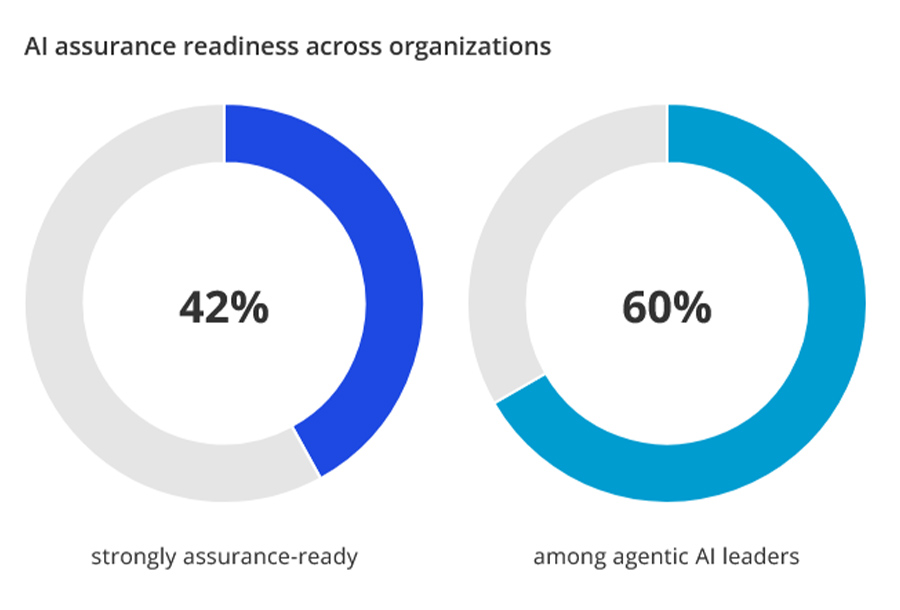
A new report from KPMG claims three-quarters of finance teams are now using AI in their tasks. However, when it comes to utilising the technology for assurance – the crucial function of verifying standard financial statements – just two-fifths admit the function is ‘strongly ready’.


As organisations across every industry rush to plumb artificial intelligence into their operations, scrutiny has also mounted around the technology’s perceived short-comings. After years of hype about the rapid improvement of AI, generated content is still regularly found to be filled with ‘hallucinations’ – approximations AI uses to fill in gaps in data – or other inaccuracies, in as many as 45% of cases.
While some content creators still see this as a risk worth taking for the speed of production, certain industries can ill afford to shrug off ‘only’ being wrong just under half of the time. A recent report from EY, for example, caused a stir, when it was found to be more than 70% AI generated – something given away by its invention of ‘research citations’ to Forbes, McKinsey, Gartner, TechCrunch and WIRED which simply never existed. The report covered cyber security – an area in which false or inaccurate information could be especially damaging – and the consultants subsequently removed it from circulation.
Source: KPMG
Another line of services which seems particularly ill-suited to automation as it stands now is finance. This is something which the US’ Financial Stability Oversight Council warned about in 2023, formally classifying AI as an “emerging vulnerability” in the sector – and while this primarily was concerned with risks to data privacy, the institution also warned that the rush to “drive efficiency” also had “complicating factors” like hallucinations to consider.
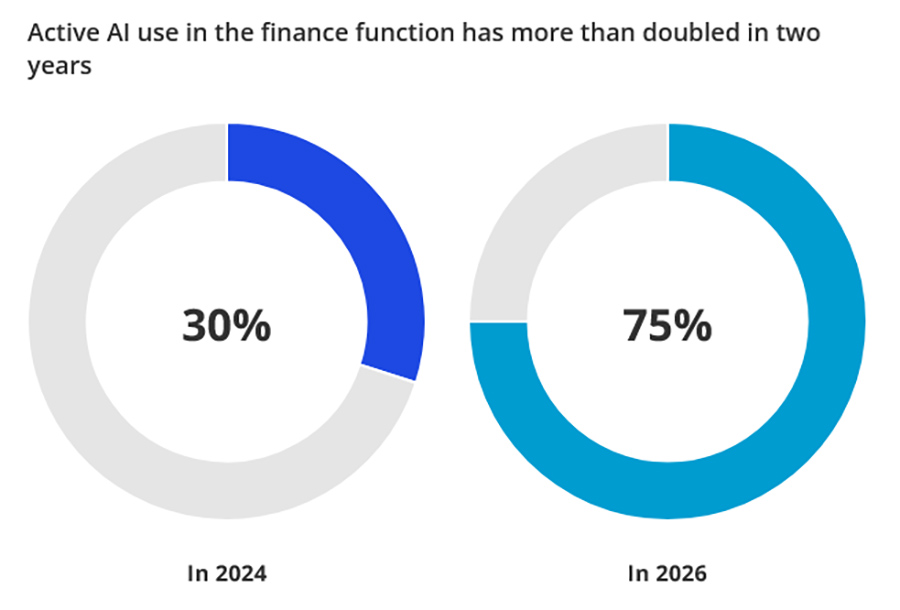
Despite this, new research from another Big Four firm now claims 75% of finance teams are now actively using AI – leaping from 30% in 2024. Polling more than 1,000 senior leaders around the world, the research showed many were willing to throw caution to the wind for the prospect of immediate productivity boosts.
Risk and return
According to the study, 71% of respondents reported they had seen a return on investment from their AI efforts – and while there is a tendency for business leaders to overestimate the impact of AI in the first place, that is still markedly higher than in many other sectors. But while leaders are convinced of the success of their AI gamble in finance, many admitted that they are not exactly ready to have applied the technology to this extremely sensitive function.
Source: KPMG
With governance often framed as a brake on AI adoption, only 42% of respondents described their AI as ‘strongly assurance-ready’. That means that there must be at least a portion of crossover between the three-quarters of firms who are forging ahead with AI adoption in finance, and the three-fifths who are less than prepared when it comes to making sure they can adequately verify the quality of financial statements, and the ability to cover future liabilities at a company.
On top of the risks this may expose finance leaders too, however, it may also miss the power of the tools they are rushing to commit to. KPMG also found that organizations that can produce AI audit evidence efficiently report three-to-six times the rate of significant improvement compared to those that cannot – 33% versus 6% on error reduction, 42% versus 14% on confidence in scaling; all meaning assurance readiness is “a stronger predictor of performance than KPI tracking alone.”
This is especially important, as data quality is among the most cited barrier and the most cited opportunity in KPMG’s study. While 36% of organisations identify improving data quality, integration and system interoperability as their greatest opportunity to extract more value from AI in finance — and as one of the most frequently named vulnerabilities – it is clear getting the most of AI requires hedging against errors that it remains prone to.
Source link
#Threequarters #finance #leaders #deploying #tools #work