

Almost half of the profit warnings for FTSE-listed companies related in the first three months of 2026 related to policy change and geopolitical uncertainty, a new study suggests. As the US war with Iran drags on, EY-Parthenon found a 15% rise year on year in businesses suggesting this kind of risk was harming their results.



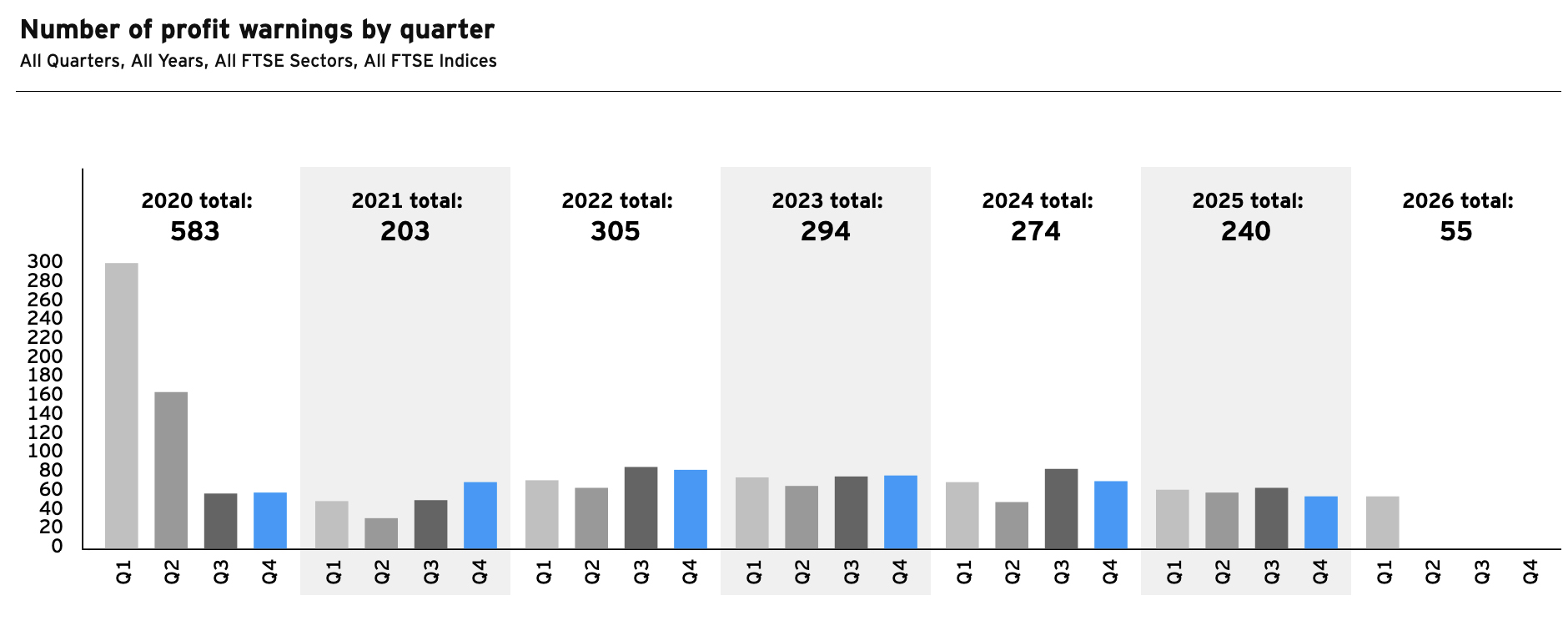
The number of profit warnings from listed companies in the UK fell to its lowest in four years in 2025, with 240 firms issuing them. That meant that despite another 12 months of trade wars, geopolitical aggression and an inflation rate which stubbornly refuses to fall, there were 34 fewer profit warnings among listed firms than in 2024.
2026 has seen this trend continue, with the first quarter seeing 55 profit warnings – a fall from the first three months of 2025, which saw 62. But as the year commenced with another barrage of surprise policies from the US’ second Trump administration, mounting geopolitical uncertainty suggests the picture is more complicated than it otherwise might be for FTSE firms.
Source: EY, Profit Warnings Q1 2026 report
Jo Robinson, EY-Parthenon financial restructuring leader, commented, “The slower pace of profit warnings at the end of last year may have continued into early 2026, but UK-listed companies now face a prolonged period of uncertainty following the conflict in the Middle East. Higher costs and supply chain disruption will take time to filter through to earnings and order books, as customers delay, pause, renegotiate or reduce spending, but will overlap with existing business challenges and amplify the strain on earnings for some.”
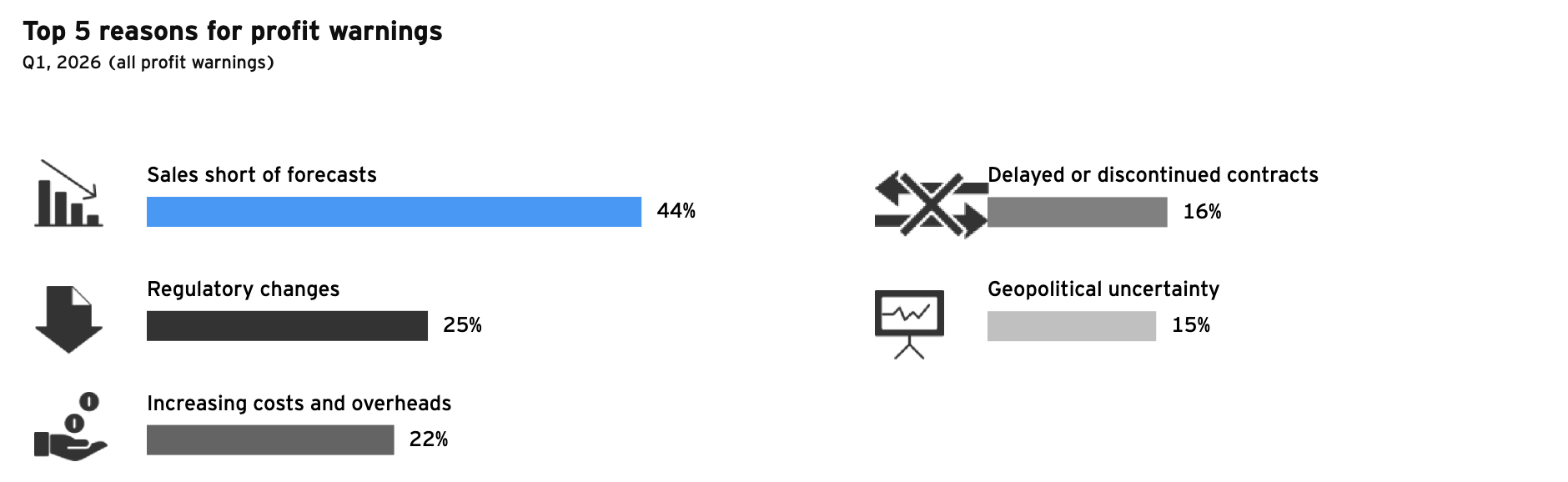
A record 49% of the 55 profit warnings issued by UK-listed companies in 2026’s first quarter cited the impact of policy change and geopolitical uncertainty as a leading factor. According to EY-Parthenon, this marked the highest quarterly proportion recorded for this cause in more than 25 years of analysis, and is a significant increase on the 34% of warnings to reference this reason during the same period last year.
Robinson added, “Sustained uncertainty is likely to embed a risk premium in exposed markets, with pressure concentrating in cash‑constrained, highly leveraged and operationally stretched businesses. As challenges mount, companies need to be constantly redefining what resilience means in this lower‑growth, higher‑cost and unpredictable business environment.”
Source: EY, Profit Warnings Q1 2026 report
Since the start of the conflict war on Iran on the 28th of February, 42% of the 24 warnings issued by listed firms have cited its impact. Elsewhere, the report also identified rising costs as the other main driver behind profit warnings in the first quarter, which was referenced in 22% of warnings, followed by contract and order cancellations or delays, in 16%.
Due to the precarious nature of their supply chain, the FTSE sector with the highest number of profit warnings during the first quarter was software and computer services, which saw seven warnings. At a time when firms are coming under pressure to demonstrate value for the landmark amounts to be invested into AI and digital tools over the last three years, this might bode poorly for the sector – which is facing mounting accusations of being over-hyped.
Source link
#Twoinfive #profit #warnings #UKlisted #businesses #linked #Middle #East #war





