

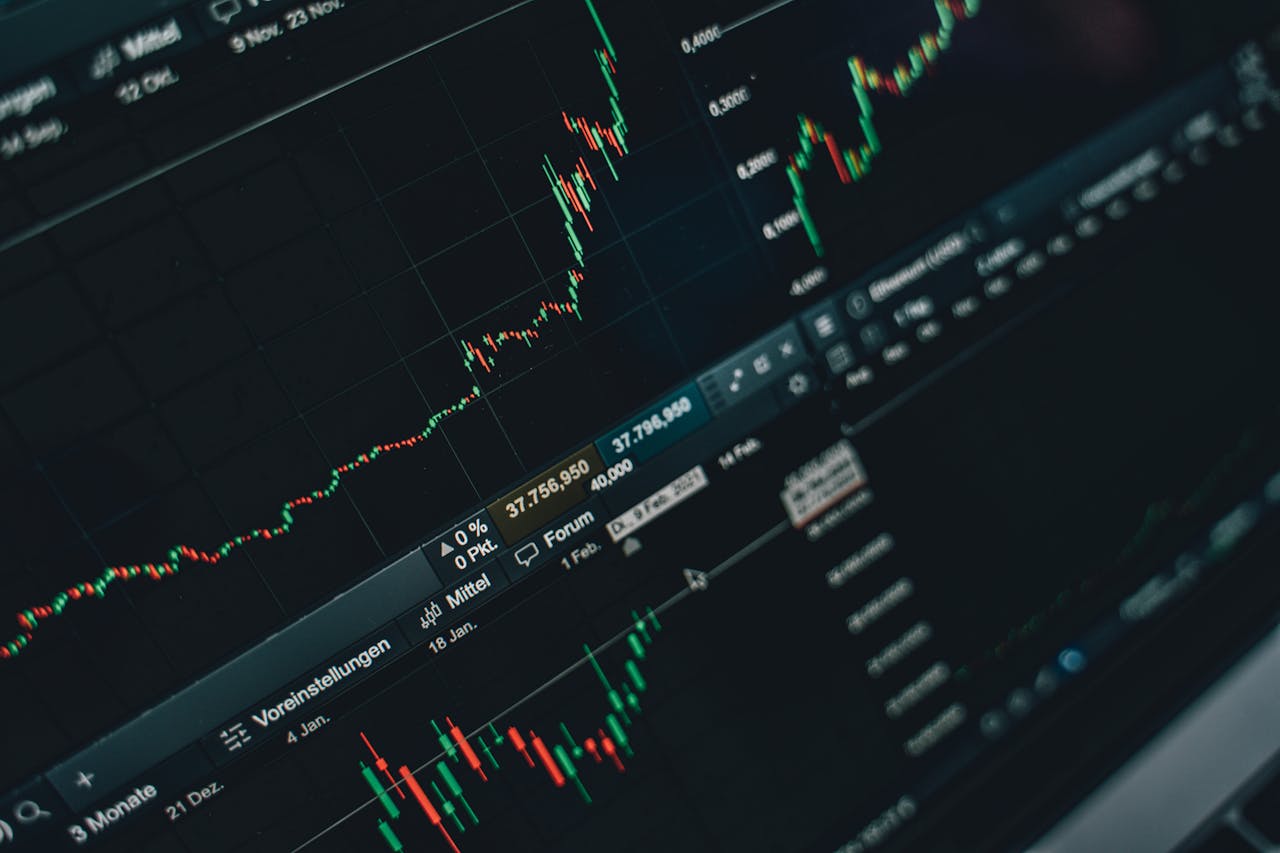
The digital age has completely flipped the script on how we interact with the financial world.
Not long ago, trading was a gated community reserved for big banks and institutional players with deep pockets.


Today, that scenario has become ancient history.
High-speed internet and intuitive apps have blown the doors wide open, letting anyone with a smartphone take a swing at global price movements.
This explosion of access is exciting, but it’s also a bit overwhelming.
Most people starting out find themselves caught between two heavy hitters: Forex and CFDs.
Both offer a way to profit from market swings, but they don’t work the same way.
Picking the right one isn’t about finding the “best” market.
It’s more about finding the one that actually matches your personality, your schedule, and how much risk you’re comfortable taking.
What Is Forex Trading?
Think of Forex (foreign exchange) as the ultimate global marketplace.
It’s the largest and most liquid financial arena on earth, where currencies are constantly being swapped.
When you trade Forex, you’re essentially betting on the strength of one country’s economy against another.
Because it’s a decentralized network, the market never sleeps during the work week, running 24 hours a day.
The real draw here is liquidity.
Since so much money is moving, you can usually jump in or out of a trade instantly without worrying about the price jumping away from you.
This makes it a favorite for those who want a fast, focused environment.
Today, platforms offering online forex trading have opened up access to currency markets for a much broader range of investors.
What Are CFDs and How Do They Work?
A Contract for Difference, or CFD, is a bit more flexible.
With a CFD, you aren’t actually buying the gold, the oil, or the shares in a tech giant.
Instead, you’re just speculating on the price change.
You enter a contract to exchange the difference in an asset’s price from the moment you open the trade to the moment you close it.
The coolest part about this setup? You can profit whether the market is going up or down.
If you think a stock is going to tank, you can “short” it just as easily as you’d buy it.
Using an online CFD trading platform, traders can access multiple global markets from a single account.
Whether you want to trade the S&P 500, crude oil, or individual stocks, you can do it all from one place.
Forex vs CFDs: The Differences That Actually Matter
Let’s get practical. The biggest difference is scope.
Forex is highly specialized; you’re looking at currency pairs like the euro vs. the dollar.
CFDs, however, cover almost everything else—indices, commodities, and equities.
Then there’s the cost. In Forex, you’re mostly paying the “spread” (the tiny gap between the buy and sell price).
With CFDs, depending on what you’re trading, you might run into small commissions or fees for holding a position overnight.
Both use leverage, which lets you control a large position with a small deposit.
It’s a powerful tool, but it’s also why things can get risky if you aren’t careful.
Which One Suits Your Trading Style?
So, where do you belong? Forex is usually the go-to for the “macro” thinkers.
If you’re the type of person who stays glued to international news, interest rate hikes, and geopolitical shifts, you’ll probably find the currency market fascinating.
It requires focus and a love for deep-dive analysis.
On the flip side, CFDs are perfect for the generalist.
If you’d rather jump between tech stocks one day and gold prices the next, the variety of CFDs is hard to beat.
It’s for the trader who wants to go where the action is, regardless of the asset class.
Common Risks Traders Overlook
No matter which path you take, the markets don’t hand out free lunches.
The biggest trap is over-leveraging.
It’s tempting to use high leverage to chase big wins, but it can wipe out your balance just as fast.
Then there’s the emotional side of things.
It’s easy to have a plan when things are going well, but sticking to that plan when a trade goes south is where most people fail.
Discipline and a solid stop-loss strategy aren’t just “good ideas,” they are survival requirements.
The Importance of Choosing the Right Platform
Your platform is your primary tool, so it needs to be reliable.
You want something with lightning-fast execution; in a fast-moving market, a two-second delay can cost you.
Beyond speed, look for a clean layout and solid charting tools. If the interface is a mess, you’re going to make mistakes.
A good platform should feel like it’s working with you, not against you.
Final Thoughts: It’s About Fit, Not “Better”
At the end of the day, neither Forex nor CFDs is objectively better.
They’re just different. Forex is deep and specialized, while CFDs are broad and versatile.
The key to staying in the game is education. Don’t rush in.
Take the time to learn the mechanics, build a strategy, and, most importantly, understand your own habits.
Once you find the instrument that fits your rhythm, the whole process becomes a lot more manageable.
Source link
#Forex #CFDs #Key #Differences #Trader





