

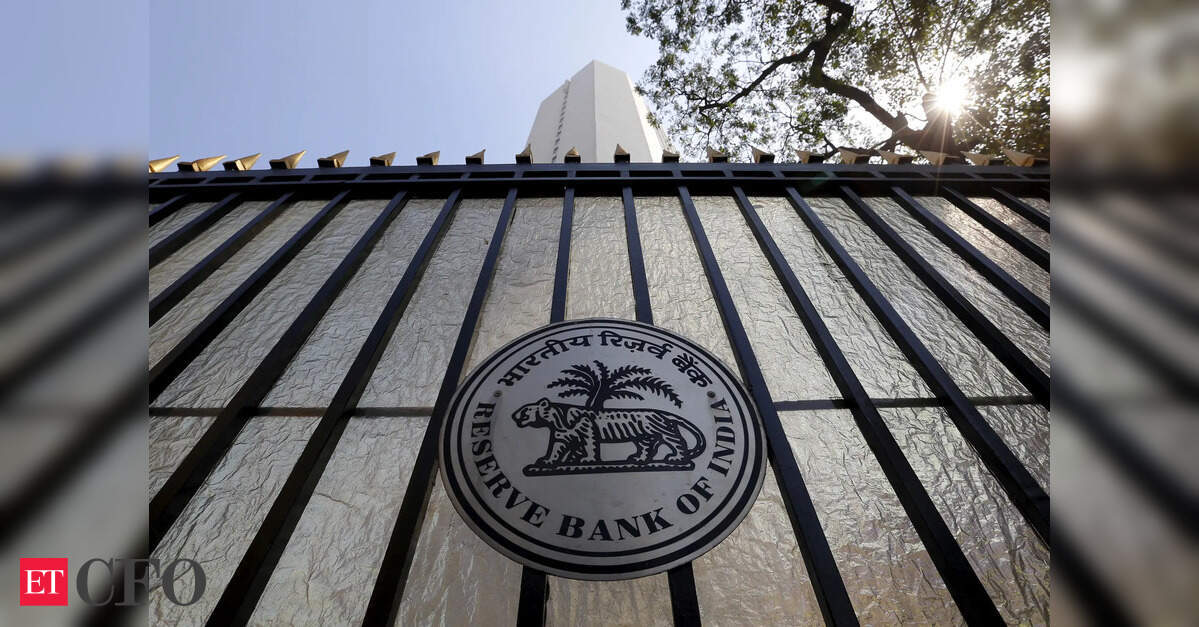



India Inc’s finance heads welcomed the Reserve Bank of India’s decision to hold the repo rate at 5.25% stating that the move reflects a prudent approach of fiscal management amid increased geopolitical uncertainty due to the war in West Asia.
While the RBI Governor Sanjay Malhotra and the CFOs alike acknowledged the ceasefire announcement between Iran and US, they also agreed that the uncertainty for the energy markets is far from over.
“Its a prudent step taken by RBI given the geopolitical risks, while things changed overnight, such decisions are taken with a broader view. RBI is signaling here that inflation is manageable. Otherwise, it would have signaled a rate increase. At the same time, it is also indicating to the corporate world that it is looking at growth and not anticipating any rate hike anytime soon,” said Anand Agarwal, CFO, V-Mart Retail.
Agarwal added that had the geopolitical situation been better, one could have even expected a more accommodative stance.
According to the finance chiefs, the status quo provides a steady rate environment, supported by adequate liquidity, and should continue to support credit growth across retail and MSME segments, while also strengthening asset-liability management for lenders.
Speaking on interest rates Agarwal said there isn’t any visible pressure as there is enough liquidity in the system, adding that the neutral stance indicates banks also will not increase rates unless there are liquidity shocks due to inflows or outflows.
“Overall, the policy strikes a prudent balance between growth support and inflation vigilance, reinforcing confidence in India’s macroeconomic resilience amid persistent external headwinds,” said Vinod Francis, SGM & Chief Financial Officer, South Indian Bank.
India Inc to face pressure in Q1
The central bank revised GDP growth estimates downward for the first and second quarter of financial year 2026-27, from the estimates it had given in February. For Q1, the real GDP growth rate is now projected at 6.8% versus 6.9% earlier and for Q2 at 6.7% versus 7% earlier. Meanwhile, the retail inflation is projected at 4.6% for FY27.
According to the RBI, elevated energy and other commodity prices, and also shocks to availability of inputs due to disruptions in the Strait of Hormuz are likely to impact growth in 2026-27. Owing to energy dependency, CFOs too estimate some demand shocks in Q1.
While the CFOs backed RBI’s growth estimates they flagged a concerning assumption where crude is taken at $85 per barrel and rupee at 94 per dollar, adding that this can evolve over the next few quarters depending on global developments.
“We are seeing disruption in the inbound supply chain side. There are several customers who have energy dependency — LPG, industrial diesel — and there we are seeing shortage in demand. Because of that, the production supply chain is being impeded. The impact was not visible in Q4, but obviously in Q1, especially in April, there would be some impact coming from these disruptions,” said Ashish Tiwari, Group CFO, Transport Corporation of India.
Private consumption to lead long term growth story
While there will be softness in merchandise exports in coming quarters, according to RBI, the private consumption will only solidify with a robust rural consumption and further strengthening of urban consumption due to GST rationalisation and buoyant services sector activity.
Moreover, the central bank said that the revival in private sector investment is expected to sustain on the back of high capacity utilisation, strong credit growth and benign financial conditions.
CFOs agree, saying that the domestic consumption-led investment story will retain its flavour going forward as India has emerged more resilient compared to many other developing nations even during the West Asia crisis.
“At the same time, we must acknowledge that for import-heavy or FDI-dependent sectors, decision-making may slow down due to political and global uncertainties. But I see no deterrence to the long-term India story,” Agarwal said.

Source link
#India #CFOs #RBIs #rate #hold #flag #pressure #West #Asia #uncertainty





