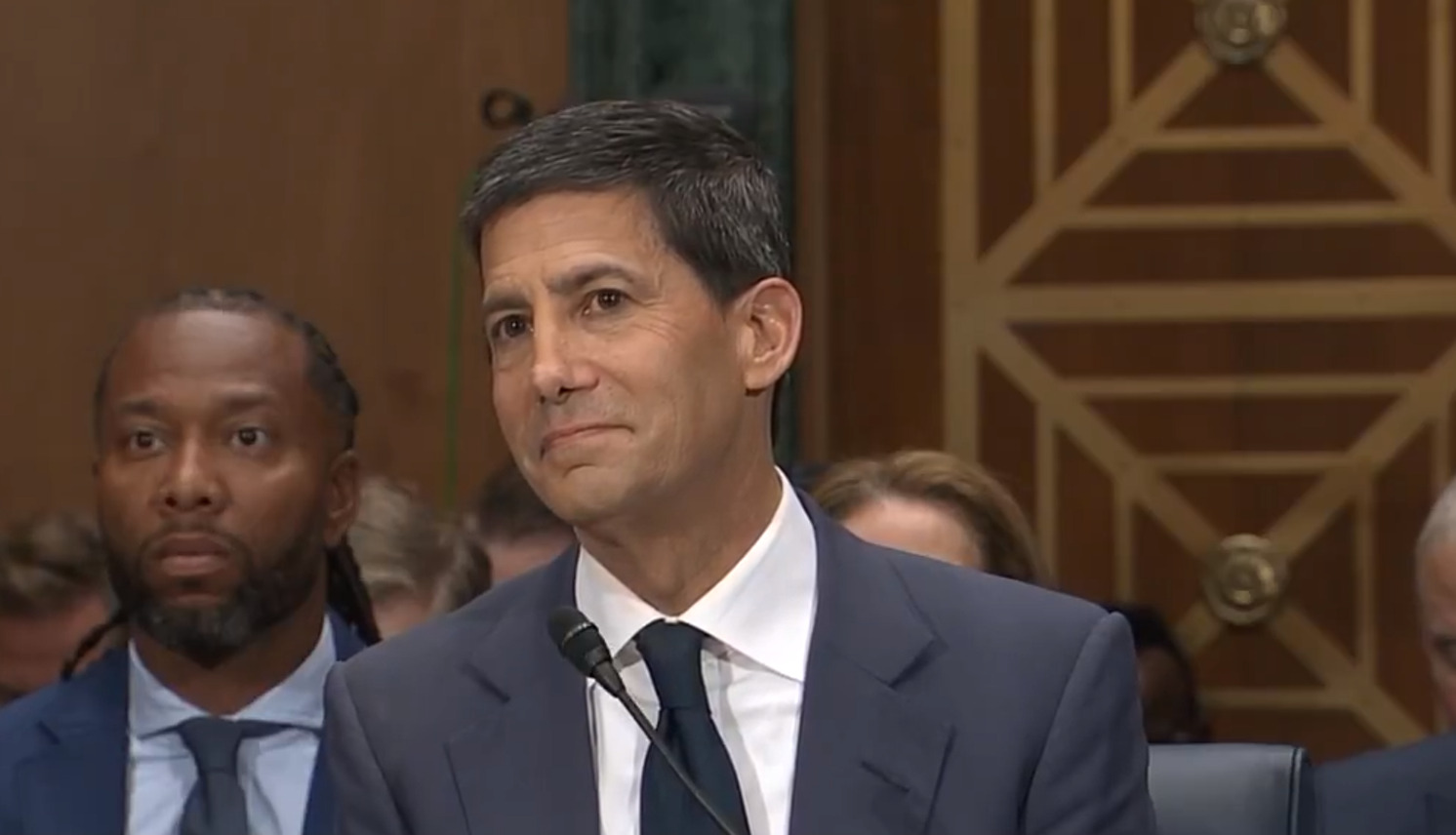
Kevin Warsh’s views on Federal Reserve independence are drawing fresh scrutiny as he moves closer to becoming the next chair, with former policymakers questioning how his approach could affect the central bank’s authority during periods of economic stress tied to war and inflation.
Warsh, nominated by President Donald Trump to replace Jerome Powell as the head of the central bank, has said the Fed should remain “strictly independent” in setting monetary policy, while signaling openness to cooperation with Congress and the administration in other areas. In written responses to lawmakers, he said, “Fed officials are not entitled to the same special deference in areas affecting international finance, among other matters,” according to CNBC.



That distinction has left economists and former Fed officials uncertain about how Warsh defines the limits of independence. Several former officials told the outlet his framework is difficult to interpret, with one warning, “If followed to its logical conclusion, the Fed could lose control of its balance sheet.”
The debate is unfolding against a complex economic backdrop shaped by geopolitical tensions. The war in Iran has driven oil prices higher and complicated the Fed’s efforts to balance inflation and growth, while also contributing to the central bank’s decision to hold interest rates steady at recent meetings, according to a report by Politico.
Recent reporting has also highlighted divisions within the Fed. Policymakers kept rates unchanged in what was likely Jerome Powell’s final meeting as chair last week, with multiple officials dissenting, an indication of growing disagreement over the path forward, according to IBT.
Warsh is set to inherit those divisions if confirmed. His nomination has already cleared a key Senate Banking Committee vote along party lines, reflecting political polarization around the central bank’s leadership, as noted by Quartz.
At the same time, Powell has indicated he intends to remain on the Fed’s Board of Governors even after stepping down as chair, a move that could shape internal dynamics at the central bank, IBT reported.
Warsh has also proposed a new “Fed/Treasury accord” that could influence how the central bank manages its balance sheet, though details remain limited. Former Richmond Fed President Jeffrey Lacker said such an agreement could be beneficial in narrowing the Fed’s focus but warned of risks. “I can also imagine a less constructive agreement that lets the Treasury use the Fed’s balance sheet to bypass Congress, perpetuating bad practices and compromising the Fed’s independence,” Lacker said, according to CNBC.
A key issue in that debate is the use of tools such as dollar swap lines, which provide liquidity to foreign central banks. These programs expanded significantly during past crises and directly affect the Fed’s balance sheet. Their use has taken on added significance as the U.S. navigates alliances during the Iran conflict, particularly with Gulf nations seeking financial backstops.
Some former officials warned about the broader implications of blurring monetary and geopolitical objectives. “In the worst outcome,” one former official said, “the Fed’s balance sheet becomes an arm of foreign aid,” according to CNBC.
Warsh’s nomination also comes amid sustained political pressure on the Fed. Trump has repeatedly pushed for lower interest rates and clashed with Powell, raising concerns about the central bank’s independence, according to Quartz. At the same time, Trump has signaled little concern about Powell remaining at the Fed in a reduced role, IBT reported.
Warsh’s own views on the Fed’s role have been shaped by his earlier tenure during the financial crisis and his resignation in 2011 over disagreements about the central bank’s balance sheet. He has argued that large-scale asset purchases expanded the Fed’s footprint in financial markets and has indicated support for reducing that role, according to Motley Fool.
His background has also drawn attention. With an estimated net worth exceeding $130 million, Warsh would be the wealthiest Fed chair in history, though analysts note that prior Wall Street ties do not necessarily dictate policy decisions, the Motley Fool report said.
Source link
#Kevin #Warshs #Stance #Feds #Independence #Draws #Scrutiny #Nomination #Push #Report