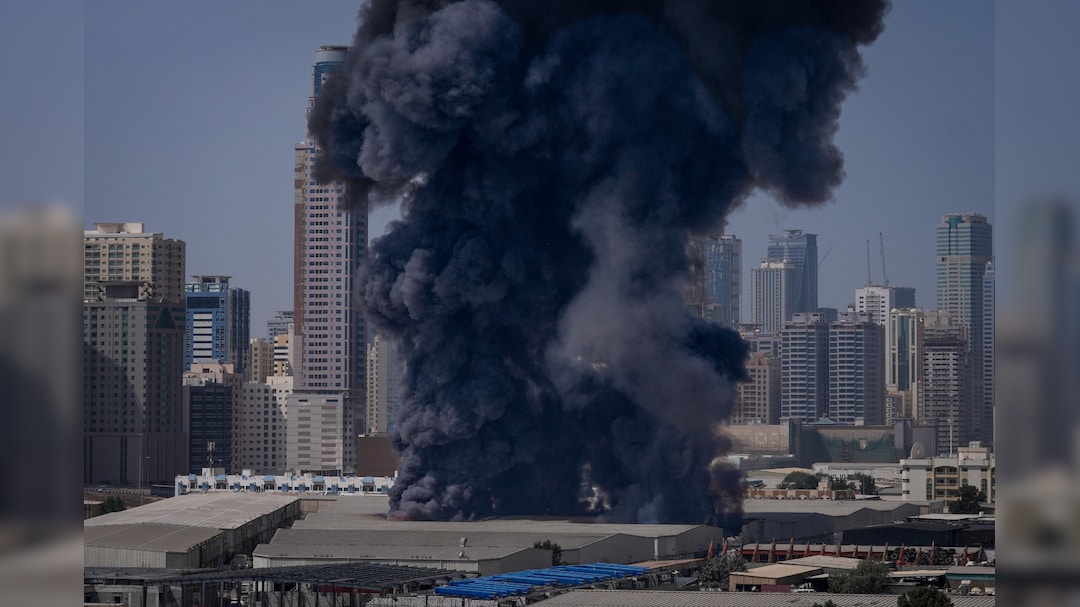
In the hours after the roar of fighter jets and massive blasts tore through an otherwise unusually silent Tehran on Sunday, the sulphurous smell of explosives still lingered in the air.
Apart from the plumes of grey and black smoke twirling into the sky, Tehran’s skyline — typically obscured by smog and pollution — was unusually clear, the backdrop of mountains encircling the city still sharply visible.



In areas around Vanak Square in central Tehran, where a towering bronze statue depicts the hero of Persian mythology Arash the Archer loosing his arrow, people were busy sweeping glass to the curb from windows shattered by strikes.
But others, emerging from a sleepless night, were leaving the city. Major exit routes towards northern cities were converted to one-way roads filled with outbound traffic after the government urged residents to evacuate Tehran if possible. Families who remained largely stayed indoors. Between the sounds of explosions, a normally chaotic city had turned eerily quiet.
Shirin, a Tehran resident who had initially planned to stay, quickly packed up to leave for Damavand, east of Tehran, after a bombing close to her home on central Sohrevardi Street.
“I cannot stay here and cope with this fear,” she said.
Israel and the US launched a massive aerial campaign against Tehran on Saturday morning, targeting key security and military sites. The strikes, which killed Ayatollah Ali Khamenei and several senior military commanders, continued into Sunday.
Maryam, who lives in the Jordan neighbourhood in central Tehran, said she felt devastated after Sunday’s intense bombardments.
As an opponent of the regime, she had initially advocated for US-Israeli attacks on Iran, but now said tearfully: “I can’t bear this. I fear most for my kids . . . It feels like we are being taken hostage by this regime.”
The strikes brought back traumatic memories of Israel’s 12-day war against Iran last year, which the US briefly joined.
Iranians were also still coming to terms with the authorities’ crackdown on anti-regime protesters in January, which killed thousands.
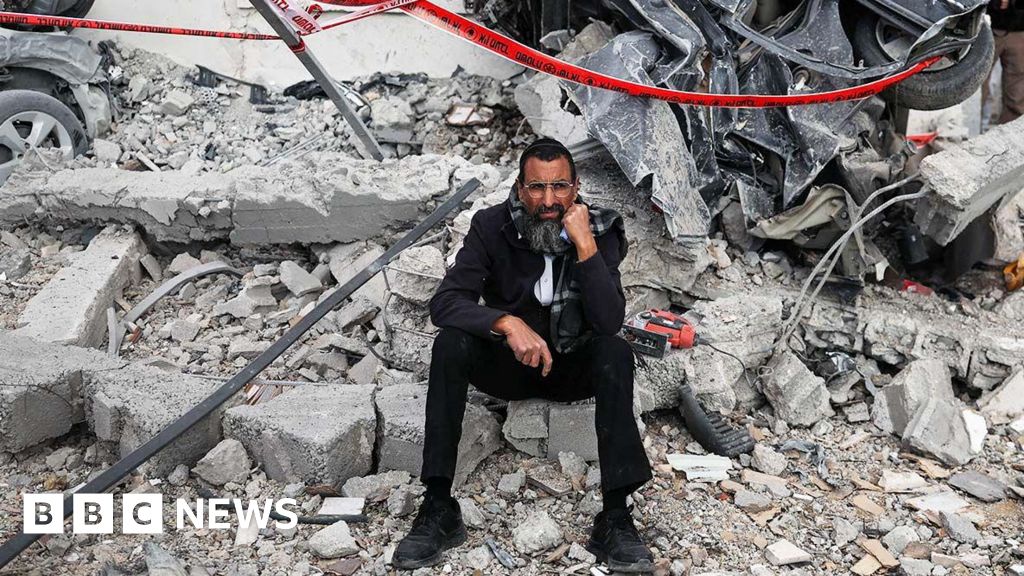
Around Tehran, plainclothes officers redirected traffic away from bombed areas. Along the Niayesh highway in northwestern Tehran, orange-clad municipal workers cleared bombing debris, while security forces directed motorists to proceed with caution. Ambulances and fire trucks were stationed along the highway.
A heavy security presence was visible across the city. Security forces on motorcycles and armoured vehicles were deployed on the main streets. In Vanak, an armed soldier stood atop a pick-up truck scanning the surroundings. Security checkpoints inspected vehicles on some roads.

Only a small number of residents ventured out to buy basic supplies on Sunday. All public places were closed with the exception of grocery stores and supermarkets, as authorities declared a seven-day public holiday to mourn Iran’s supreme leader.
Several members of the Ayatollah’s family, including his daughter-in-law, son-in-law and a grandchild, were also confirmed dead in the attack.
Outside a large mosque in Sa’adat Abad’s Kaj Square in western Tehran, which was undergoing renovation after it was damaged during January’s anti-regime protests, large posters of Khamenei were erected.
In the square, one of the planned mourning venues, makeshift stations were set up to distribute food and drinks for the Ramadan iftar meal.
At a municipal fresh produce market in northern Tehran, only a handful of shoppers moved quietly between stalls. Long lines had formed outside petrol stations.
In the otherwise quiet city, pro-regime demonstrations were some of the only activities. Thousands of regime supporters gathered at the iconic Enghelab Square for a mourning procession, waving national flags and holding up images of Khamenei. More ceremonies were scheduled for Sunday evening in several of Tehran’s main squares.
Officials sought to reassure the public that essential goods — from food to petrol, medicine and even baby formula — would remain available. They said mobile fuel delivery services would be deployed along inter-city roads.
Reports of civilian casualties added to residents’ fears. In the southern town of Minab, in Hormuzgan province, more than 150 schoolgirls were killed in a strike on Saturday, authorities reported. On Sunday, Iran’s Red Crescent said 57 people had been killed by noon in Tehran province, without specifying how many were civilians.
Cash was available at some ATMs, but many others were shut. The central bank said it would continue supplying cash to banks, adding that the daily ceiling for online banking transfers had been doubled.

Fresh strikes hit eastern, southeast and central Tehran on Sunday evening, the IRNA news agency reported.
Around the city, the prevailing sense was of shock. Zohreh, a resident of Tehran’s Shariati street, where a strike hit on Sunday, said the explosion was “massive”. “The shockwave from the explosion was so strong that it felt like we were lifted off the ground and thrown up to the ceiling,” she said.
Source link
#Tehran #city #war