At A Glance
Eligibility-related claim denials are increasing, leaving providers scrambling to improve data accuracy and insurance verification across the revenue cycle. This article explores common causes of eligibility issues in healthcare billing and strategies to reduce denials.

Key takeaways:



- Eligibility-related claim denials that begin at the front end of the revenue cycle during patient intake and insurance verification can result in downstream denials and reimbursement delays.
- Manual processes, payer requirements and heavy administrative burden often make it hard for busy billing teams to catch and correct mistakes.
- Automation and artificial intelligence (AI) revenue cycle management solutions, like Insurance Eligibility Verification and Patient Access Curator™ (PAC) can help providers improve data accuracy in real time and prevent eligibility-related claim denials.
Eligibility-related issues are among the top causes of claim denials and often begin with mistakes during patient intake. But other factors can also cause eligibility issues in healthcare billing – from outdated manual insurance verification checks to evolving payer rules and staffing shortages. Eligibility errors that lead to denials can wreak havoc on cash flow—and the entire revenue cycle. Understanding what causes eligibility issues and how to prevent them can help providers submit cleaner claims, minimize denials and maximize reimbursements.
What are eligibility-related claim denials?
Eligibility-related claim denials happen when a payer denies a claim submission for reimbursement due to patient insurance issues. Inaccurate or missing patient insurance information is a top denial trigger and often starts at the front end, during registration. Evolving payer eligibility requirements and new regulatory mandates also make it challenging for providers to avoid eligibility issues that can lead to denials.
The front-end data problem behind claim denials
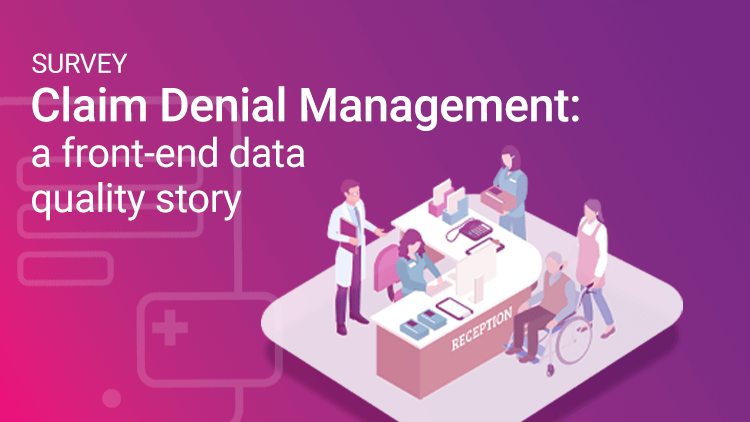
Experian Health surveyed 200 healthcare leaders from January to February 2026 to better understand the reasons for claim denials and opportunities for improvement.
The most common causes of eligibility errors in healthcare billing
Here’s a closer look at some of the most common reasons behind eligibility errors in healthcare billing.
| Common causes of eligibility errors in healthcare billing: |
| 1. Mistakes made during patient intake: Eligibility-related issues often begin during patient intake – especially when providers use manual registration processes, like paper forms. Incorrect patient information entered on the front-end can cause eligibility issues that lead to billing mistakes, reimbursement issues and denials. Experian Health data shows that incomplete or missing insurance patient registration data is a top cause of claim denials, accounting for 32% of denials in 2025. |
| 2. Manual processes and disjointed systems: The risk of bad data due to human error increases significantly when providers rely on manual processes for registration and insurance eligibility verification. Already strained staff may also need to manually toggle between multiple vendor systems for intake and eligibility checks – resulting in errors, delays and communication challenges between front-end and back-end operations. |
| 3. Coordination of Benefits (COB) errors: When patients have multiple active health plans, billing teams must coordinate benefits across several payers. The process is complex and time-consuming, especially when handled manually. Mistakes made during this coordination of benefits process can lead to eligibility errors that impact billing and claims. |
| 4. Payer requirement changes: Payer rules are constantly changing, often without notice. High volumes of updates, an increasing number of players and policies and inconsistent or fragmented communications channels further add to the complexity and boost the potential for eligibility errors during billing and services not being covered. Experian Health data shows that uncovered services make up 23% of denied claims. |
| 5. Coverage record mismatches: Insurance details in the payer’s record may not always match the provider’s system due to factors like job changes, insurance plan switches or forgotten secondary coverage. This can cause eligibility issues that affect billing, claims and collections. |
| 6. Prior authorization issues: Problems with prior authorizations are to blame for 35% of claim denials, according to Experian Health data. When prior authorization requirements aren’t met, it can lead to billing issues and eligibility-related claim denials. If services aren’t covered due to prior authorization issues, patients can end up on the hook financially, and providers may have to chase self-pay collections to avoid bad debt. |
How eligibility issues affect revenue cycle performance
The healthcare revenue cycle revolves around determining who pays, how they pay and when they pay. But when eligibility issues arise, they can create a serious wrinkle in revenue cycle performance – affecting everything from patient billing to claims processing.
Delayed or denied claims disrupt cash flow. Patients may have more financial responsibility than expected and be unable to pay their bills in full. This can lead to providers chasing collections or worse, racking up bad debt for uncompensated care.
Eligibility-related errors also impose a costly operational burden on providers, especially when staffing shortages already exist. When errors occur, billing teams need to re-run insurance eligibility checks, a process that takes at least 10 minutes per re-check, according to 55% of providers. And after a denial, nine out of ten claim denials require human review before resubmission, according to Experian Health data.
Best practices for reducing eligibility-related denials
Healthcare providers can use the following strategies to help reduce eligibility-related denials.
Improve front-end data accuracy
Capturing more accurate patient data and insurance information at the front-end can help providers prevent eligibility errors downstream. Solutions like Experian Health’s Patient Access Curator use artificial intelligence (AI) and machine learning to automatically find and correct patient data in real time across eligibility, demographics, COB primacy, Medicare Beneficiary Identifiers (MBI) and insurance discovery. This not only reduces the potential for eligibility-related claim denials down the line but also frees staff from outdated manual intake processes.
Standardize eligibility checks
Insurance eligibility verification is an important part of patient intake that can help prevent eligibility claim denials. But a lack of standardization and manual processes can increase the risk of errors and the need for rechecks. Automated solutions like Experian Health’s Insurance Eligibility Verification make it easy for staff to run real-time checks at every stage of the revenue cycle. Billing teams can instantly confirm patient insurance details and surface outdated information to help avoid the common eligibility verification errors that lead to claims denials.
Replace outdated manual processes
Minimizing manual touchpoints across key revenue cycle processes reduces eligibility errors. Adopting solutions that rely on technology like automation and AI can not only improve accuracy but also save valuable administrative time so staff can prioritize other tasks. Implementing prior authorization software helps busy billing teams stay on top of payer updates in real time to avoid prior authorization issues, while adopting AI-powered data validation tools helps catch and prevent eligibility-related issues that can lead to denials.
Looking forward: Using intelligent technology to reduce denials
Healthcare organizations that adopt technology to reduce denials are already seeing positive results, despite only 63% of providers having introduced AI into their workflows, according to a separate Experian Health AI adoption survey. The latest State of Claims survey from Experian Health finds that 69% of healthcare organizations using AI report reduced denials and/or improved resubmission success. A recent CAQH index report also shows that swapping manual processes with intelligent technology could save the healthcare industry at least $20 billion.
FAQs
Patient eligibility verification is a key part of the healthcare revenue cycle that verifies patient insurance information. The process confirms insurance status, coverage details and medical service benefits, along with billing information. When information is inaccurate or missing, it can lead to billing issues, claims delays or denials – and affect the bottom line.
Common causes of eligibility-related denials include inaccurate, missing or outdated patient information. Mistakes often happen at patient intake due to manual registration processes or incomplete insurance verification. Keeping pace with fast-evolving payer rules and rising patient volumes can also lead to eligibility issues that result in denials.
Providers can take steps to reduce eligibility denials, like adopting technology to improve front-end data accuracy, streamlining eligibility checks with automated processes and leaning into AI-powered tools across the revenue cycle.
Learn how Experian Health’s Patient Access Curator helps healthcare organizations improve front-end data accuracy and reduce eligibility-related denials.
Contact Experian Health
Complete the form below to be connected with a member of our Sales team. For Customer Support, including password resets, please visit our Support page.
Source link
#Common #eligibilityrelated #claim #denials #healthcare #Healthcare #Blog