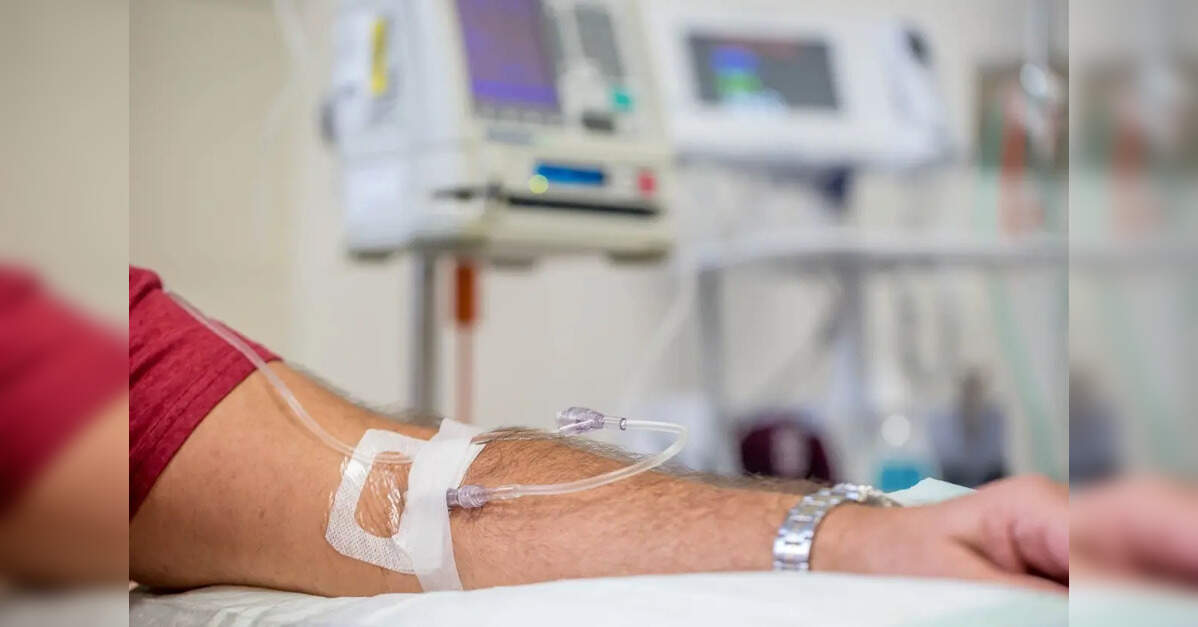

New Delhi: For many cancer patients in India, advanced treatments such as immunotherapy have long remained financially out of reach. The emergence of biosimilar immunotherapy drugs is now beginning to change that landscape, significantly lowering treatment costs and enabling more patients to access cutting-edge cancer therapies.
India’s cancer burden continues to rise sharply. The country recorded nearly 1.56 million new cancer cases in 2024 with around 874,000 deaths, and the number of cases is projected to reach 2.46 million by 2045, underscoring the urgent need for more affordable and accessible treatment options.
Biosimilar immunotherapies are highly similar versions of original biologic cancer drugs that stimulate the body’s immune system to recognise and attack tumour cells. As they follow a streamlined regulatory pathway after the originator biologics, biosimilars are typically priced significantly lower while maintaining comparable safety and efficacy, making them an important tool for improving treatment access in cost-sensitive markets like India.
Oncologists say the growing availability of biosimilar immune checkpoint inhibitors is already reshaping cancer care by enabling a larger number of patients to receive treatments that were previously unaffordable.
Nitesh Rohatgi, Principal Director, Medical Oncology, Fortis Gurugram, said the hospital has witnessed a steady rise in the use of biosimilar Nivolumab in recent months.
“We are using Nivolumab across cancers such as colorectal, gastric, esophageal cancers and Hodgkin lymphoma among others. With the availability of the biosimilar version, about 60–70 per cent of new patients being started on Nivolumab are now receiving the biosimilar,” he said.
According to Rohatgi, modern oncology has progressed significantly with the integration of immunotherapy, targeted therapy, advanced radiation techniques and minimally invasive surgeries, which together have improved treatment outcomes in many cancers.
However, the high cost of immunotherapy has limited its use in India.
“The Nivolumab biosimilar is about 60–70 per cent cheaper than the original drug, which should significantly increase access for Indian patients,” Rohatgi said, adding that patient assistance programmes have further improved affordability.
Ankur Bahl, Principal Director, Medical Oncology at Fortis Gurugram, said the lower price has already driven a major shift in treatment uptake.
“Approximately 80 per cent of our new immunotherapy patients are now using biosimilar Nivolumab, largely because of its lower cost. Earlier, nearly 80 per cent of eligible patients could not afford immunotherapy, limiting its use to only a small fraction of patients,” said Dr. Bahl
Adding that immunotherapy is now used across a wide range of cancers and is not limited to lung cancer, Dr.Bahl said, “Nivolumab is used in several cancers including head and neck, lung, esophageal, stomach, urinary bladder, kidney and anal cancers. We have observed strong clinical responses in head and neck and lung cancers.”
India continues to face a heavy burden from cancers such as lung, breast, oral cavity, oesophagus and cervical cancers, which together account for a substantial share of cases nationwide.
Despite advances in treatment, oncologists warn that late-stage diagnosis remains a major challenge.
“Late-stage presentations definitely affect patient prognosis negatively. Increasing awareness about cancer screening programmes and encouraging regular health check-ups is critical for early diagnosis,” Rohatgi said.
Experts estimate that 60–70 per cent of cancer patients in India are diagnosed at advanced stages, significantly reducing survival outcomes and limiting treatment options.
India Emerging as a Key Market for Biosimilar Immunotherapy
Experts say India occupies a unique position in the development and adoption of biosimilar immunotherapies.
India is among the first countries where an immunotherapy biosimilar has been developed and introduced into clinical practice, allowing oncologists to generate large volumes of real-world data.
“We have started collecting data on biosimilar immunotherapy, although the data is not mature enough yet to draw firm conclusions,” Rohatgi said.
He added that Indian oncologists also have experience using lower-cost immunotherapy drugs developed in China, which have shown meaningful responses and are significantly cheaper than some western therapies.
Dr. Bahl noted that widespread biosimilar adoption could help Indian oncologists build substantial real-world expertise over the next five to ten years, strengthening treatment strategies across cancer types.
Awareness Still Limited Among Patients
While awareness of immunotherapy is gradually improving, many patients remain more familiar with traditional treatments such as chemotherapy.
According to Bahl, patients often express relief when they learn that advanced therapies like immunotherapy are now available at significantly lower cost through biosimilars.
“Patients are invariably happy when we can offer traditionally expensive treatments like immunotherapy at a fraction of the cost,” Rohatgi said.
International oncologist observing treatment trends say India’s high patient volumes and rapid uptake of biosimilar immunotherapy could significantly influence global evidence on these therapies.
Bassim Al Bahraini, Senior Consultant- Medical Oncology, Royal Hospital Oman and Vice Chairman of Treatment Abroad, Ministry of Health Oman, informed that India’s adoption of affordable biosimilar immunotherapies is already expanding treatment access.
“I am encouraged by the rapid adoption of affordable biosimilar immunotherapies such as Zydus Nivolumab, where around 80 per cent of new eligible patients now receive it—up from just 10–20 per cent earlier due to cost barriers,” he said.
According to him, the shift has been particularly visible over the last three to four months, supported by patient assistance programmes that have made treatment more accessible.
“These therapies are being used across cancers including head and neck, lung, esophageal, stomach, bladder and kidney cancers, with the strongest clinical data currently in head and neck and lung cancers,” he added.
Policy Support Could Expand Access Further
Experts believe targeted policy interventions could further improve affordability and access to advanced cancer therapies.
Rohatgi said institutions such as NITI Aayog could play a transformative role by incentivising domestic research and development, mandating real-world evidence generation, and supporting wider patient access.
Dr. Bahl added that public–private partnerships could further reduce immunotherapy prices, potentially bringing the cost to ₹20,000–25,000 per dose, making treatment accessible to a much larger population. Also, highlighted the growing use of blood-based cancer screening tests, some of which are already approved in international markets.
These tests, used for conditions such as colorectal cancer screening, have demonstrated sensitivity comparable to colonoscopy in certain settings and are currently used in countries including the United States, Singapore, Vietnam and parts of the Middle East.
However, he emphasised that these tests complement rather than replace standard screening methods such as colonoscopy, Pap smears and mammography. Reducing the cost of such tests could significantly improve screening uptake in India.
Experts say the pace of innovation in cancer treatment is accelerating rapidly.
“We are at very exciting times in oncology. Extensive research is ongoing worldwide, and new data is emerging at remarkable speed,” Rohatgi said.
“While we have come a long way in the last 10–15 years, the next decade will likely bring even more advanced treatment options and improved outcomes for patients.”
As biosimilar immunotherapies expand in India, oncologists believe they could play a critical role in bridging the affordability gap and bringing cutting-edge cancer care to a far larger patient population.

Source link
#India #Emerging #Major #Market #Biosimilar #Immunotherapy #Patient #Awareness #Lags #Oncologists